
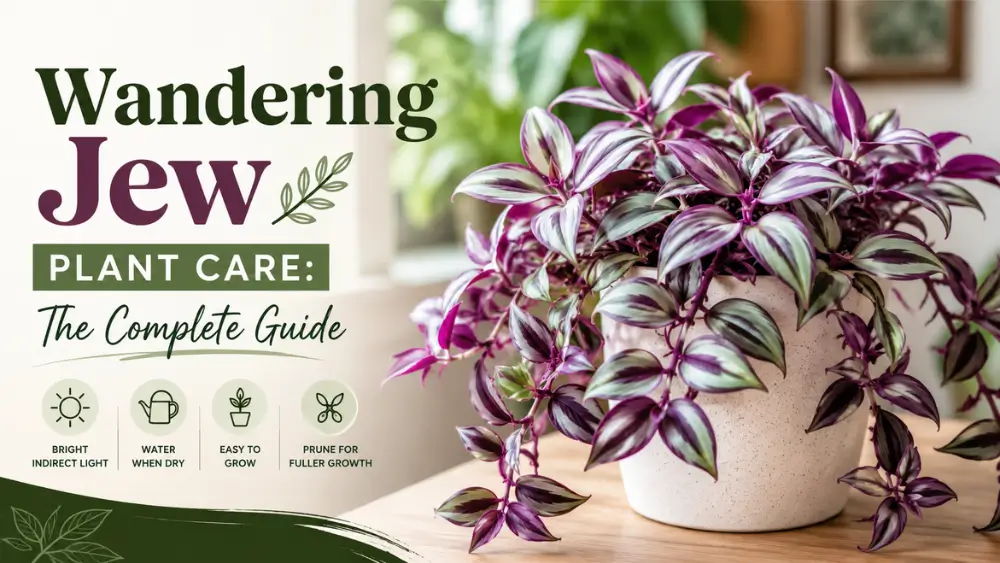
Wandering Jew (Tradescantia zebrina) thrives in bright, indirect light, moist-but-not-soggy well-draining soil, and temperatures between 65-75°F (18-24°C). Water it when the top inch of soil dries out, feed it monthly during spring and summer, and pinch back the stems regularly to keep it full instead of leggy. It’s one of the easiest trailing houseplants to grow, and one of the easiest to propagate from a simple cutting in water.
Table of Contents
Quick Care Facts
| Care Factor | Requirement |
|---|---|
| Scientific name | Tradescantia zebrina (also T. pallida, T. fluminensis) |
| Common names | Wandering Jew, Inch Plant, Wandering Dude, Spiderwort |
| Light | Bright, indirect light; some gentle morning sun |
| Water | When top 1 inch of soil is dry; keep evenly moist, never soggy |
| Soil | Well-draining potting mix with perlite |
| Temperature | 65-75°F (18-24°C); protect below 50°F (10°C) |
| Humidity | Moderate to high, but adaptable to average home humidity |
| Fertilizer | Balanced liquid feed monthly, spring through summer |
| Toxicity | Mildly toxic to cats and dogs; can irritate skin |
| Growth habit | Fast-growing trailing vine, ideal for hanging baskets |
| Difficulty | Beginner-friendly |
About the Wandering Jew Plant
Wandering Jew is the common name for a small group of trailing plants in the Tradescantia genus, most often Tradescantia zebrina, recognizable by its silver-and-purple striped leaves and deep purple undersides. Native to Mexico and Central America, it’s a fast, forgiving grower that’s become a staple in hanging baskets, shelves, and office desks precisely because it tolerates a wide range of conditions and bounces back quickly from neglect.
The traditional common name has become controversial in recent years because of the outdated slur it references, and many growers, retailers, and plant communities now prefer alternatives like “Wandering Dude,” “Inch Plant,” or simply the genus name “Tradescantia.” This guide uses “Wandering Jew” primarily because it remains the most widely searched term, but “Wandering Dude” refers to the exact same plant if you see it labeled that way at a nursery or online.
You may also see it sold as Tradescantia pallida (Purple Heart, solid purple leaves) or Tradescantia fluminensis (smaller, plain green-and-white leaves). Care for all three is nearly identical, so this guide applies whether your plant has striped, solid purple, or plain leaves.
Wandering Jew Varieties: Zebrina, Pallida, and Fluminensis Compared
Because several different plants share the “Wandering Jew” nickname, it helps to know which one you actually have:
Tradescantia zebrina is the most common variety sold as “Wandering Jew.” Its leaves have distinctive silver and purple zebra-like stripes on top with a solid deep purple underside. It’s a moderate-sized trailer, well suited to hanging baskets.
Tradescantia pallida, sold as “Purple Heart,” has solid deep purple, elongated leaves with no striping. It tends to be more upright and sun-tolerant than T. zebrina, and is often grown outdoors as a groundcover in warm climates.
Tradescantia fluminensis has smaller, plain green leaves, sometimes with light cream or white variegation, and lacks the purple coloring entirely. It’s a vigorous, fast-spreading grower, which is part of why it has become invasive in parts of the world (more on that below).
All three share the same core care needs described in this guide; the main differences are leaf appearance, growth habit, and sun tolerance.
Light Requirements
Wandering Jew needs bright, indirect light to keep its signature purple and silver striping. Low light causes the leaves to fade back to solid green.
An east- or west-facing window is ideal. A little direct morning sun is fine and can actually deepen the purple coloring, but avoid intense afternoon sun, which scorches the thin leaves. If your plant is stretching toward the light with pale, sparse leaves, that’s a sign it needs a brighter spot.
If natural light is limited, Wandering Jew also responds well to supplemental grow lights. A basic full-spectrum LED grow light placed 12-18 inches above the plant for 10-12 hours a day can maintain vivid coloring through darker winter months or in low-light rooms.
Watering
Water your Wandering Jew when the top inch of soil feels dry, roughly once every 7-10 days indoors.
This plant prefers consistent moisture over a strict schedule. Check the soil rather than counting days, since light, pot size, and season all change how fast it dries out. Wandering Jew is more tolerant of underwatering than overwatering: soggy, waterlogged soil is the most common reason these plants develop root rot. Always use a pot with drainage holes.
During the active growing season (spring and summer), you may need to water slightly more often as the plant uses moisture faster. In fall and winter, growth slows and watering frequency should drop accordingly, sometimes to every 10-14 days.
Soil and Potting
A standard well-draining potting mix works well. A basic indoor potting soil mixed with perlite or coarse sand improves drainage and prevents the soggy conditions this plant dislikes. Repot annually in spring, or whenever roots start circling the bottom of the pot, moving up just one pot size at a time.
Best pots for Wandering Jew: Because trailing stems can get heavy over time, hanging baskets, tall pedestal pots, or shelf-top containers all work well for showing off the plant’s cascading growth. Terracotta pots are a good choice if you tend to overwater, since the porous material helps excess moisture evaporate. If you prefer plastic or glazed ceramic pots, simply water a bit more conservatively.
Temperature and Humidity
Wandering Jew is comfortable in typical indoor temperatures, ideally 65-75°F (18-24°C). It isn’t cold-hardy. Protect it from drafts, cold windowsills, and temperatures below 50F (10C), which can cause leaf drop and damage.
It tolerates average household humidity just fine, though it will look its lushest with a bit more moisture in the air. If your home is very dry, which is common near heaters in winter, occasional misting or a nearby humidity tray helps prevent crispy leaf tips.
Fertilizing
Feed with a balanced, water-soluble liquid houseplant fertilizer once a month during the active growing season (spring through summer). Skip fertilizing in fall and winter, when growth naturally slows. Feeding a dormant plant can build up excess salts in the soil and stress the roots.
Pruning
Pinch or trim the growing tips every few weeks to keep the plant bushy instead of long and sparse.
Wandering Jew grows quickly and can get “leggy,” meaning long bare stems with leaves only at the tips, if it’s never trimmed. Regular pinching encourages the plant to branch out from lower nodes, and any healthy cutting you remove can immediately be propagated into a new plant (see below).
How to Propagate Wandering Jew
Wandering Jew is one of the easiest houseplants to propagate, which is a big part of why it’s so widely shared among plant lovers:
- Snip a 4-6 inch stem cutting just below a leaf node.
- Remove the lowest one or two leaves so a bare node is exposed.
- Place the cutting in a glass of water, or directly into moist potting soil.
- Keep it in bright, indirect light and change the water every few days if rooting in water.
- Roots typically appear within 1-2 weeks; once they’re an inch or so long, transplant water-rooted cuttings into soil.
A single mature plant can produce dozens of new starts this way, making it an easy plant to fill out a hanging basket or share with friends. Many growers simply tuck several rooted cuttings back into the original pot to keep it looking full, rather than starting new plants each time.
Growing Wandering Jew Outdoors
In warm climates (USDA zones 9-11), Wandering Jew can be grown outdoors year-round as a groundcover, border plant, or trailing accent in containers. It spreads readily, roots easily wherever a stem touches soil, and tolerates partial shade to filtered sun outdoors.
One important note: Tradescantia fluminensis in particular has become an invasive groundcover in parts of the world with mild, humid climates, including areas of New Zealand, Australia, and the southeastern United States, where it can crowd out native plants in shaded, moist areas. If you’re growing it outdoors in a warm, humid climate, it’s worth keeping it contained to garden beds or pots rather than letting it spread into natural areas, and disposing of trimmings in the trash rather than compost or green waste.
In cooler climates, Wandering Jew can spend summer outdoors on a patio or balcony but should be brought inside before nighttime temperatures drop below 50F (10C).
Is Wandering Jew Toxic to Pets or Humans?
Wandering Jew is considered mildly toxic to cats and dogs, and its sap can irritate skin.
The clear sap inside the stems and leaves can cause contact dermatitis, meaning redness, itching, or a mild rash, in both people and pets who brush against a broken stem. If a cat or dog chews on the plant, it can also cause mild gastrointestinal upset such as drooling or vomiting. It’s not considered severely poisonous, but it’s worth keeping out of reach of curious pets and wearing gloves if you have sensitive skin while pruning or propagating.
Common Problems and How to Fix Them
Leggy, sparse growth Usually caused by insufficient light combined with a lack of pruning. Move the plant to a brighter spot and pinch back the stems to encourage fuller, bushier growth.
Fading or reverting to solid green leaves This is a light issue, not a disease. The purple and silver striping depends on bright light. Increasing light exposure will restore the coloring in new growth, though older leaves won’t recolor.
Brown, crispy leaf tips Typically caused by low humidity, tap water sensitivity (chlorine or fluoride), or inconsistent watering. Try filtered or distilled water and a more consistent watering routine.
Pale, washed-out, or scorched leaves This usually means the plant is getting too much direct, intense sun, especially in the afternoon. Move it a few feet back from the window or add a sheer curtain to diffuse the light.
Root rot or mushy stems A sign of overwatering or poor drainage. Let the soil dry out more between waterings, and make sure the pot has drainage holes. In severe cases, take healthy cuttings to propagate a fresh, healthy plant.
Slow or no growth in winter This is usually normal rather than a problem. Wandering Jew naturally slows down in fall and winter as light levels drop; growth resumes on its own in spring.
Pests Spider mites, aphids, and mealybugs occasionally show up, especially on stressed or overly dry plants. Wipe leaves down and treat with insecticidal soap at the first sign of pests.
Seasonal Care Summary
| Season | Watering | Fertilizing | Light Notes |
|---|---|---|---|
| Spring | Every 7-10 days | Monthly | Resume feeding as new growth appears |
| Summer | Every 5-7 days (may need more) | Monthly | Watch for scorching in intense afternoon sun |
| Fall | Every 10-14 days | Stop by early fall | Growth naturally slows |
| Winter | Every 10-14+ days | None | Consider a grow light if color fades |
Frequently Asked Questions
How often should you water a Wandering Jew plant?
Water when the top inch of soil is dry, which is typically every 7-10 days indoors, adjusting for light, season, and pot size.
Can Wandering Jew grow outdoors?
Yes, in warm climates (USDA zones 9-11) it can grow outdoors year-round as a groundcover or hanging plant. In cooler climates, it’s best grown outdoors only during warm months and brought inside before frost.
Is Wandering Jew an easy plant to care for?
Yes. It’s considered one of the most beginner-friendly trailing houseplants, tolerating a range of light levels and forgiving occasional missed waterings.
Why is my Wandering Jew losing its purple color?
Low light is the most common cause. Move it to a brighter spot with indirect or gentle morning sun to restore vibrant coloring in new growth.
Can you grow Wandering Jew in water permanently?
Yes, it can live indefinitely in water with occasional water changes and light liquid fertilizer, though it typically grows more vigorously in soil.
How fast does Wandering Jew grow?
It’s a fast grower, especially during spring and summer, often producing several inches of new trailing growth per month under good light.
Is Wandering Jew the same as Purple Heart plant?
Not exactly. Purple Heart (Tradescantia pallida) is a closely related species with solid purple leaves and no striping, while the plant most commonly labeled “Wandering Jew” is Tradescantia zebrina, which has striped leaves. Both share the same genus and very similar care needs.
Why does my Wandering Jew look leggy even though I water it regularly?
Legginess is almost always a light and pruning issue rather than a watering issue. Move the plant to brighter light and pinch back the stems regularly to encourage bushier growth from the base.
Do Wandering Jew plants flower?
Yes, they can produce small three-petaled pink, purple, or white flowers, most often in spring and summer under good light, though many indoor plants are grown primarily for their foliage rather than blooms.
Related Care Guides
- Hoya Plant Care: Complete Guide
- Neon Pothos Plant Care: Complete Guide
- String of Hearts Plant Care: Complete Guide
- Office Plant Care: Complete Guide