
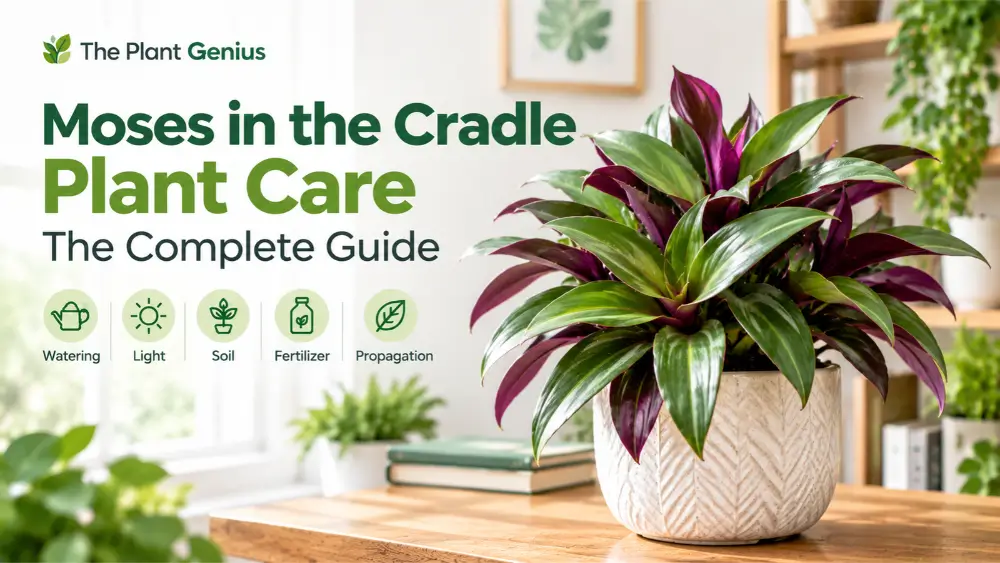
Moses in the Cradle (Tradescantia spathacea) needs bright, indirect light, soil kept evenly moist with the top inch allowed to dry between waterings, warm temperatures of 65-80°F (18-27°C), and moderate to high humidity. It’s grown for its upright rosette of lance-shaped leaves, rich dark green on top with a vivid purple underside, and its small white flowers tucked inside boat-shaped bracts that give the plant its most famous common name. It’s fast-growing, low-maintenance, and genuinely easy to keep healthy indoors.
Table of Contents
Quick Care Facts
| Care Factor | Requirement |
|---|---|
| Scientific name | Tradescantia spathacea (formerly Rhoeo spathacea, Rhoeo discolor) |
| Common names | Moses in the Cradle, Oyster Plant, Boat Lily, Moses in a Boat, Moses in a Basket |
| Light | Bright, indirect light; tolerates some direct morning sun |
| Water | When top inch of soil is dry; keep evenly moist, not soggy |
| Soil | Well-draining potting mix |
| Temperature | 65-80°F (18-27°C); protect below 55°F (13°C) |
| Humidity | Medium to high preferred |
| Fertilizer | Balanced liquid feed monthly in spring and summer |
| Toxicity | Mildly toxic to pets and humans; sap can irritate skin |
| Growth habit | Upright rosette; grows outward and upward, not trailing |
| Difficulty | Easy; fast-growing and forgiving |
About Moses in the Cradle
Moses in the Cradle, botanically Tradescantia spathacea, is native to the humid tropical forests of Central America, Belize, Guatemala, and southern Mexico. It forms a compact, upright rosette of lance-shaped leaves that are a deep, glossy green on top and a striking, vivid purple underneath. This purple underside is one of the plant’s most distinctive features, and it deepens in color with good light exposure, fading toward green if the plant is kept too dim.
The plant’s most evocative common name comes from its small white flowers, which bloom in the center of the rosette, nestled inside paired, boat-shaped, purple-green bracts. The flowers themselves are modest and relatively inconspicuous, but the image of white blooms cradled in a purple boat struck early growers as resembling the biblical story of the infant Moses placed in a basket among the bulrushes, giving rise to the name that’s stuck ever since. Other common names, Oyster Plant, Boat Lily, and Moses in a Boat, all reference different aspects of this same flower-in-bract arrangement.
Unlike the many trailing Tradescantia varieties, such as Wandering Jew (Tradescantia zebrina), Moses in the Cradle grows upright rather than trailing downward, which means it won’t work well in a hanging basket but does beautifully in a standard pot or as a low-maintenance ground cover in warm outdoor climates.
Moses in the Cradle vs. Wandering Jew: Same Genus, Different Habit
Both Moses in the Cradle and Wandering Jew belong to the Tradescantia genus and share a family resemblance in their foliage coloring, with purple pigmentation playing a prominent role in both. The key difference is growth habit: Wandering Jew is a trailing vine that cascades down from a hanging basket, while Moses in the Cradle grows upright in a tight rosette and spreads outward from the base rather than trailing. This makes them complementary plants for a collection, suited to different display situations, but they’re definitely not the same plant despite the similar coloring and shared genus name.
Where to Display Moses in the Cradle
The upright, rosette-forming habit makes Moses in the Cradle a natural fit for windowsills, shelves, and tabletops where its contrasting green-on-top, purple-underneath leaves can be viewed from multiple angles. Placing it near a bright window where both the top and the underside of the leaves catch the light shows off its striking two-tone coloring most effectively. In warm climates (USDA zones 9 and above), it also makes an excellent low-maintenance outdoor ground cover in partial shade, where it spreads steadily via offsets to fill a border.
Why the Purple Underside Is Worth Protecting
The vivid purple color on the underside of Moses in the Cradle’s leaves is directly linked to light exposure, and it’s one of the first things to fade when the plant isn’t getting enough light.
In good light, the purple can be quite saturated and dramatic. In low light, the same leaves produce less purple pigmentation and may fade toward a dull burgundy or even plain green. Providing adequate bright, indirect light isn’t just about growth rate with this plant — it directly affects the color contrast that makes it interesting to look at.
Light Requirements
Moses in the Cradle does best in bright, indirect light year-round, which supports both its best leaf coloring and regular flowering. A spot near an east- or west-facing window, or back from a bright south-facing window, works well. It tolerates some direct morning sun, but prolonged, intense afternoon sun can cause the leaves to bleach or scorch. In low light, the purple underside fades and the plant becomes leggy.
Watering
Water when the top inch of soil has dried out, then water thoroughly until it drains from the bottom of the pot. Moses in the Cradle prefers consistently moist soil, not as drought-tolerant as a true succulent, but not liking waterlogged conditions either. In spring and summer, checking the soil every few days and watering as needed is a reliable approach; in autumn and winter, reduce frequency and allow slightly more drying time between waterings as the plant’s growth naturally slows.
Soil and Potting
A well-draining, all-purpose potting mix suits Moses in the Cradle well. It grows relatively quickly and can become potbound within a year or two, at which point the center of the rosette may die out and new growth appears mostly at the edges. Repotting in spring into a pot one size larger, or dividing the plant at this stage, keeps it looking its best.
Temperature and Humidity
Moses in the Cradle prefers warm conditions, ideally 65-80°F (18-27°C), and should be protected from temperatures below about 55°F (13°C) as well as cold drafts. Keep it away from air conditioning vents and cold windowpanes in winter.
It thrives with medium to high humidity. A pebble tray, occasional misting, or a room humidifier all help maintain adequate moisture in the air, which this plant genuinely appreciates over the dry indoor conditions common in winter.
Fertilizing
Feed with a balanced, water-soluble liquid fertilizer monthly in spring and summer while the plant is actively growing. Reduce or stop feeding in autumn and winter. This is a fast grower that responds well to regular feeding during its active season.
Pruning
Prune back leggy stems in spring to encourage fresh, compact new growth. Remove any yellowed, damaged, or spent leaves as they appear, since they won’t recover and their removal keeps the plant looking tidy and directs energy toward healthy growth.
How to Propagate Moses in the Cradle
Moses in the Cradle is straightforward to propagate by two main methods:
Division The most reliable approach, especially for a plant that’s begun to die out in the center. Remove the plant from its pot, separate the offsets growing around the outside of the main rosette, making sure each has some roots attached, and pot them individually into fresh, well-draining soil. Spring is the ideal time.
Stem cuttings Take a cutting with several leaves, remove the lowest leaves to expose a node, and plant in moist potting soil. Keep warm and in bright, indirect light while it roots, usually within a few weeks.
Is Moses in the Cradle Toxic to Pets?
Moses in the Cradle is mildly toxic to cats and dogs, and its sap can irritate skin on contact in humans.
Ingestion typically causes mild gastrointestinal upset, including drooling, vomiting, and appetite loss in pets, rather than severe toxicity. That said, it should still be kept out of reach of animals that chew on houseplants, and a veterinarian should be contacted if significant ingestion occurs. Separately, the plant’s sap, which is released when stems or leaves are broken, can cause skin irritation or contact dermatitis in sensitive individuals, so wearing gloves when pruning or repotting is a sensible precaution.
Common Problems and How to Fix Them
Fading purple color on the leaf undersides Almost always caused by insufficient light. Move the plant to a brighter spot with several hours of indirect light daily.
Leggy, bare stems A sign of low light and a need for pruning. Cut back leggy stems in spring and move to a brighter location.
Yellowing leaves Typically caused by overwatering. Reduce watering frequency and ensure the pot drains well.
Center of the rosette dying out Normal when a plant becomes rootbound or quite mature. Divide the offsets growing around the edges and repot them separately for renewed growth.
Pests Mealybugs and spider mites can occasionally appear, particularly in dry conditions. Treat promptly with insecticidal soap and maintain adequate humidity to discourage reinfestation.
Seasonal Care Summary
| Season | Watering | Fertilizing | Notes |
|---|---|---|---|
| Spring | When top inch is dry | Monthly | Ideal time to divide, repot, or take cuttings |
| Summer | When top inch is dry | Monthly | Peak growth; keep humidity up with AC running |
| Fall | Reduce slightly | Taper off | Growth slows; reduce watering frequency |
| Winter | Reduce further | None | Keep above 55°F; watch humidity with indoor heating |
Frequently Asked Questions
How do you care for a Moses in the Cradle plant?
Give it bright, indirect light, water when the top inch of soil is dry, provide medium to high humidity, and feed monthly in spring and summer.
Why is it called Moses in the Cradle?
The plant’s small white flowers bloom inside boat-shaped, purple-green bracts that early growers thought resembled the biblical story of the infant Moses placed in a basket, giving rise to the name.
Why is my Moses in the Cradle losing its purple color?
The vivid purple underside fades in insufficient light. Move the plant to a brighter spot with indirect light to restore and maintain the color in new growth.
Is Moses in the Cradle toxic to cats and dogs?
Yes, mildly. Ingestion can cause stomach upset and drooling, and the sap can irritate human skin on contact. Keep it out of reach of pets that chew on plants.
Does Moses in the Cradle trail like other Tradescantia?
No. Unlike trailing Wandering Jew and similar relatives, Moses in the Cradle grows upright as a rosette and does not trail, making it better suited to standard pots than hanging baskets.
How often does Moses in the Cradle flower?
It can bloom at almost any time of year when given good bright, indirect light. The flowers are small and white, nestled in purple boat-shaped bracts, and appear in the center of the rosette.
Is Moses in the Cradle the same as Wandering Jew?
No. Both belong to the Tradescantia genus but are different species with different growth habits. Moses in the Cradle grows upright in a rosette, while Wandering Jew trails and cascades from a hanging basket.
Can Moses in the Cradle grow outdoors?
Yes, in USDA zones 9-11 it can grow outdoors year-round as a ground cover in partial shade, where it spreads steadily via offsets to fill a border. In cooler climates, it works well outdoors in summer but should come inside before temperatures drop.
Why is the center of my Moses in the Cradle dying out?
This often happens naturally when a plant becomes rootbound or reaches maturity, with new growth appearing at the outer edges. Dividing the outer offsets and repotting them in spring gives you renewed, vigorous plants.