
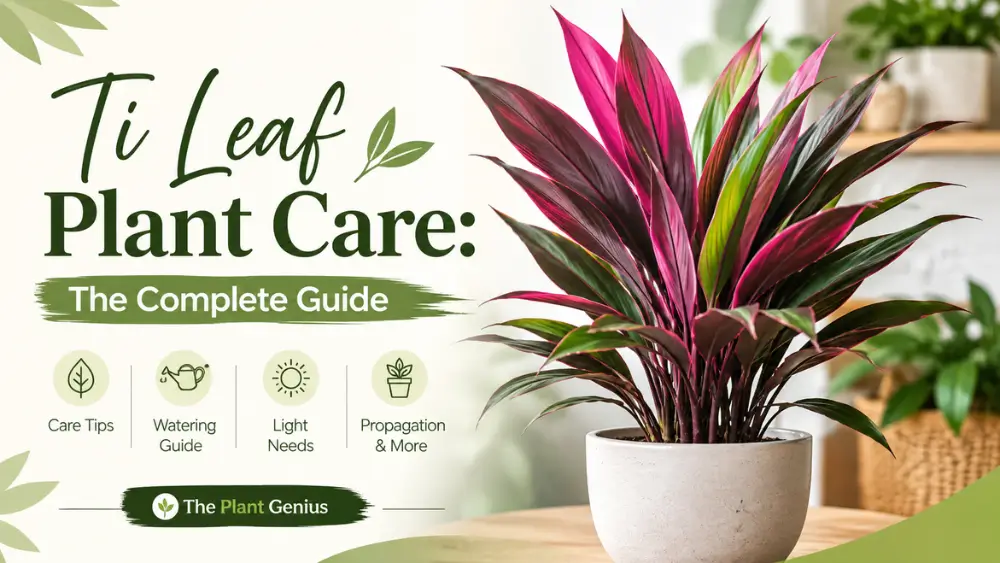
Ti Leaf plant (Cordyline fruticosa) needs bright, indirect light with some gentle direct sun to bring out its vivid pink, red, or purple coloring, soil kept consistently moist but well-draining, and warm temperatures with moderate to high humidity. It’s especially sensitive to fluoride in tap water, which is the leading cause of the brown, burnt-looking leaf tips this plant is known for. Deeply significant in Hawaiian and Polynesian culture, Ti Leaf has been grown for centuries as a symbol of good luck and protection, in addition to its ornamental use as a colorful houseplant today.
Table of Contents
Quick Care Facts
| Care Factor | Requirement |
|---|---|
| Scientific name | Cordyline fruticosa (also Cordyline terminalis) |
| Common names | Ti Leaf, Ti Plant, Hawaiian Ti Plant, Good Luck Plant |
| Light | Bright, indirect light with some gentle direct sun |
| Water | Keep consistently moist, well-draining; sensitive to fluoride and chlorine |
| Soil | Well-draining, slightly acidic potting mix |
| Temperature | 65-80°F (18-27°C); not cold tolerant |
| Humidity | Moderate to high preferred |
| Fertilizer | Light balanced feed monthly, spring through summer |
| Toxicity | Toxic to cats (notably more severe) and dogs if ingested |
| Growth habit | Upright cane with colorful sword-shaped leaves in a rosette |
| Difficulty | Beginner-friendly, with careful attention to water quality |
About the Ti Leaf Plant
Ti Leaf, botanically Cordyline fruticosa, is grown for its striking, sword-shaped leaves, which come in vivid shades of green, pink, red, magenta, and purple, sometimes with cream or yellow variegation, arranged in a rosette atop a slender woody cane. It’s closely related to Dracaena, sharing a similar growth habit and general appearance, and the two are commonly confused with each other at nurseries; in fact, Cordyline was classified together with Dracaena for many years before being recognized as its own distinct genus.
Ti Leaf holds deep cultural significance across Hawaii and the broader Pacific Islands, where it’s traditionally considered a symbol of good luck, protection, and spiritual significance, often planted around homes for exactly that reason. Its leaves have long been used practically as well, woven into hula skirts and leis, and used to wrap food for cooking, most notably in traditional Hawaiian dishes prepared in an underground oven, where the sturdy leaves help protect and flavor the food inside. Today, it’s grown both as a meaningful cultural plant in its native range and as a popular ornamental houseplant valued for its vivid, saturated color.
This dual identity, deeply meaningful cultural plant and vibrant houseplant, means that many growers who bring a Ti Leaf into their home are connecting with a tradition that stretches back centuries, even if they’re simply drawn to it for its striking foliage. Numerous named cultivars are available today, bred to emphasize particular color combinations, from nearly solid deep burgundy varieties to those with bold pink and cream variegation running through green leaves.
Ti Leaf vs. Dracaena: How to Tell Them Apart
Because Ti Leaf and Dracaena share such a similar growth habit, canes topped with rosettes of long, colorful leaves, it’s easy to mix them up. In general, Ti Leaf tends to have somewhat broader, more strongly colored leaves in shades of pink, red, and purple, while many common Dracaena varieties like Dragon Tree lean toward narrower, more subtly striped or edged foliage. Care between the two genera is fairly similar overall, with both preferring bright indirect light and being sensitive to fluoride in tap water, so a small amount of uncertainty about which one you have won’t lead you too far astray in day-to-day care.
Light Requirements
Ti Leaf needs bright, indirect light, and benefits from a bit of gentle direct sun, to maintain its most vivid coloring.
A spot near an east- or west-facing window works well indoors. Outdoors, filtered light or partial sun suits it better than harsh, intense full sun, particularly for plants that have been grown primarily indoors and haven’t been gradually acclimated to stronger outdoor light. In low light, Ti Leaf’s color tends to fade toward plain green, and growth becomes noticeably more leggy and sparse.
Watering
Keep the soil consistently moist, but well-draining, and avoid letting it become soggy.
Ti Leaf prefers steadier moisture than many drought-tolerant houseplants, so check the soil regularly rather than letting it dry out completely for extended periods. At the same time, standing water and consistently waterlogged soil can lead to root rot, so good drainage matters just as much as consistent watering.
Water quality is especially important for this plant. Ti Leaf is notably sensitive to fluoride, and to a lesser extent chlorine, commonly found in tap water, and this sensitivity is widely considered the single leading cause of the brown, burnt-looking leaf tips and margins so often seen on this plant, even more consistently than in some of its Dracaena relatives. Using filtered water, distilled water, or rainwater whenever possible makes a meaningful difference in keeping the foliage looking clean and healthy over the long run.
Soil and Potting
A well-draining potting mix with a slightly acidic pH works well, ideally amended with perlite to help prevent waterlogging. Repot every year or two, or once the plant becomes rootbound, generally in spring as active growth resumes. Because Ti Leaf can develop fairly dense root systems relative to its pot size, choose a container with ample drainage holes, and avoid sizing up too dramatically at once, since overly large pots can hold excess moisture the roots aren’t yet able to use.
Temperature and Humidity
Ti Leaf does best in warm conditions, ideally 65-80°F (18-27°C), and isn’t cold tolerant; exposure to cold drafts or temperatures much below 50F (10C) can cause leaf damage and drop. Keep it away from drafty windows, exterior doors, and air conditioning vents.
It prefers moderate to high humidity, and low humidity can compound the leaf tip browning already associated with water quality issues, making both factors worth addressing together if you’re seeing consistent tip damage on new and old leaves alike. A humidifier or pebble tray can help, particularly during dry winter months.
Fertilizing
Feed with a balanced, water-soluble liquid fertilizer once a month during spring and summer while the plant is actively growing. Avoid over-fertilizing, since excess fertilizer salts building up in the soil can contribute to the same kind of leaf tip and margin browning caused by poor water quality. Reduce or stop fertilizing in fall and winter as growth slows.
Pruning
Ti Leaf can be cut back to control height or to remove leggy, sparse growth, and it typically responds well by sprouting new growth from the cut point on the cane, similar to its Dracaena relatives. Pinching young plants can also encourage bushier, fuller growth from the base rather than a single tall cane, which many growers prefer for a more compact, rounded shape.
How to Propagate Ti Leaf
Ti Leaf can be propagated from cane cuttings, using the same general technique as many Dracaena relatives:
- Cut a 4-6 inch section of cane, ideally including at least one node.
- Let the cut ends callus over for a day in a dry spot to help prevent rot.
- Plant the cutting a couple of inches deep in moist, well-draining soil, or lay it horizontally with the node facing up.
- Keep it warm and in bright, indirect light; new shoots typically emerge from the nodes within several weeks to a couple of months.
Is Ti Leaf Toxic to Pets?
Ti Leaf is toxic to cats and dogs if ingested, with cats generally showing more pronounced symptoms.
Ingestion can cause vomiting, sometimes with blood present, along with depression, loss of appetite, excessive drooling, and incoordination, particularly in cats. Keep the plant out of reach of pets that chew on houseplants, and contact your veterinarian promptly if you suspect ingestion and notice these symptoms, especially in a cat.
Common Problems and How to Fix Them
Brown, burnt-looking leaf tips and edges The most common Ti Leaf complaint, most often caused by fluoride sensitivity from tap water, sometimes compounded by low humidity or excess fertilizer. Switching to filtered or distilled water is usually the single most effective fix.
Fading color, more green than pink or red Typically a sign of insufficient light. Move the plant to a brighter spot with some gentle direct sun to help restore more vivid coloring in new growth.
Leggy growth Also usually a light issue. Increasing light exposure and pinching or pruning back leggy stems both help encourage fuller growth.
Leaf drop Often caused by cold drafts or a sudden temperature change. The plant typically stabilizes once conditions are consistent again.
Root rot A sign of overwatering or poor drainage. Let the soil dry out slightly more between waterings and confirm the pot drains well.
Pests Spider mites, mealybugs, and scale can occasionally appear. Wipe down leaves periodically and treat promptly with insecticidal soap if pests are spotted, paying particular attention to new growth and the undersides of leaves.
Seasonal Care Summary
| Season | Watering | Fertilizing | Notes |
|---|---|---|---|
| Spring | Keep consistently moist | Monthly | Good time to prune, propagate, or repot |
| Summer | Keep consistently moist | Monthly | Watch for dry-out in bright, warm rooms |
| Fall | Reduce gradually | Taper off | Growth naturally slows |
| Winter | Reduce slightly | None | Keep away from cold drafts and heater vents |
Frequently Asked Questions
How do you care for a Ti Leaf plant?
Give it bright, indirect light with some gentle direct sun, keep the soil consistently moist with good drainage, use filtered or distilled water, and provide moderate to high humidity for the best color and health.
Why does my Ti Leaf plant have brown tips on the leaves?
This is most often caused by sensitivity to fluoride in tap water, sometimes made worse by low humidity or over-fertilizing. Switching to filtered or distilled water typically improves it significantly.
Is Ti Leaf the same as Dracaena?
They’re closely related and were historically classified together, but Cordyline (Ti Leaf) and Dracaena are now recognized as separate genera. Ti Leaf tends to have bolder pink, red, and purple coloring, while many common Dracaena varieties have more subtly striped or edged foliage.
Why is Ti Leaf considered a good luck plant?
In Hawaiian and Polynesian culture, Ti Leaf has long been considered a symbol of good luck and protection, traditionally planted around homes and used in ceremonial items like leis and hula skirts.
Is Ti Leaf toxic to cats and dogs?
Yes, it’s toxic to both, with cats generally showing more pronounced symptoms than dogs if the plant is ingested.
How often should you water a Ti Leaf plant?
Water often enough to keep the soil consistently moist, checking regularly rather than letting it dry out completely, while making sure the pot drains well to avoid waterlogged soil.
Why is my Ti Leaf plant losing its pink or red color?
Fading color is usually a sign of insufficient light. Moving the plant to a brighter spot with some direct sun typically restores more vivid coloring in new growth.
Can Ti Leaf be grown outdoors?
Yes, in warm, frost-free climates (roughly USDA zones 10-11) it can grow outdoors year-round. In cooler climates, it’s best kept as a houseplant or moved outdoors only during warm months.
How tall does Ti Leaf grow?
Indoors, it typically reaches a few feet tall over time, though outdoors in ideal tropical conditions it can grow considerably taller, sometimes reaching 10 feet or more over many years.