
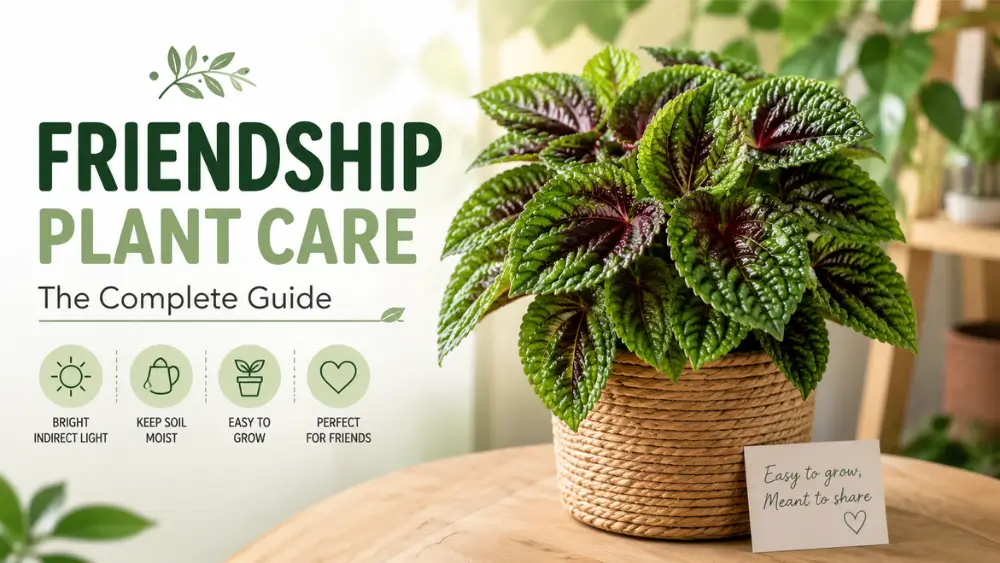
Friendship Plant (Pilea involucrata) grows best in bright, indirect light, soil kept lightly moist and never soggy, and humidity above 50%, since it’s a compact tropical plant valued for its deeply quilted, textured foliage in shades of green, bronze, and copper that catches the light beautifully from different angles. It stays small, rarely more than about 12 inches tall, making it a good fit for shelves, terrariums, and desks. True to its name, it roots so easily from cuttings that sharing a piece with a friend is practically part of owning one.
Table of Contents
Quick Care Facts
| Care Factor | Requirement |
|---|---|
| Scientific name | Pilea involucrata (popular cultivar ‘Moon Valley’, also sold as Pilea mollis) |
| Common names | Friendship Plant, Moon Valley Pilea |
| Light | Bright, indirect light; tolerates lower light reasonably well |
| Water | When top inch of soil is dry; sensitive to both over- and underwatering |
| Soil | Peat-based mix or African violet potting mix |
| Temperature | 65-80°F (18-27°C); tolerates down to 55°F (13°C) in winter |
| Humidity | Above 50% preferred |
| Fertilizer | Balanced liquid feed monthly, diluted to half strength, spring through summer |
| Toxicity | Non-toxic to cats, dogs, and humans |
| Growth habit | Compact, trailing or upright depending on variety, dense mat-forming |
| Difficulty | Beginner-friendly; very easy to propagate |
About the Friendship Plant
Friendship Plant, botanically Pilea involucrata, is a small tropical perennial native to Central and South America, grown almost entirely for its distinctive, deeply quilted foliage. Its dark green leaves, textured with raised, crinkled ridges, are often accented with silver, bronze, or copper highlights on top and a reddish-pink hue underneath, giving each leaf a rich, almost three-dimensional appearance that catches the light differently depending on the angle you view it from. It stays quite compact, generally reaching only about 6 inches tall and rarely exceeding 12 inches, making it well suited to shelves, terrariums, and small containers where larger houseplants simply wouldn’t fit.
The species itself has a low, trailing, spreading growth habit, forming dense mats where it has room to grow, while the especially popular cultivar ‘Moon Valley’ (sometimes sold as Pilea mollis) grows somewhat more upright, with apple-green leaves marked by deep bronze veins. Both are cared for the same way, and it’s common for growers to have either form, or both, in their collection.
Why It’s Called the Friendship Plant
Friendship Plant earns its name from just how readily it roots from cuttings, making it one of the easiest houseplants to propagate and share.
A single healthy plant can produce enough cuttings to give away to friends and family many times over, and this ease of propagation has genuinely shaped the plant’s identity and popularity: it’s a common gift among plant enthusiasts, often passed from person to person the same way a treasured recipe or houseplant lore might be shared within a family. If you’re new to propagating plants at all, Friendship Plant is one of the most forgiving and rewarding places to start, since success rates from simple stem cuttings are generally quite high.
It’s worth knowing that Pilea peperomioides, commonly called Chinese Money Plant, is sometimes informally nicknamed “friendship plant” too, for the same reason: it readily produces baby offshoots that get shared among growers. The two are different plants from different corners of the Pilea family, so if your plant has round, coin-shaped leaves on long individual stems rather than the deeply textured, quilted foliage described here, you likely have Chinese Money Plant rather than the Pilea involucrata covered in this guide.
Where to Display Friendship Plant
Given its small size and dense, textured foliage, Friendship Plant works especially well as a terrarium specimen, where its compact growth and love of humidity fit naturally with the enclosed, moisture-retaining environment. It’s equally at home on a desk, a bathroom shelf with good light, or grouped together with other small tropical plants where the extra humidity from clustering benefits everyone in the group. Because it stays so compact, it rarely needs to be moved to a larger space the way many faster-growing houseplants eventually do.
Light Requirements
Friendship Plant does best in bright, indirect light, which brings out the richest coloring and texture in its leaves. A spot near a north- or east-facing window works especially well, providing filtered light without the risk of leaf scorch from direct sun. It tolerates lower light conditions reasonably well too, making it a flexible option for desks and shelves that don’t get much direct natural light, though growth will be somewhat slower and less vigorous than in brighter conditions.
Watering
Water when the top inch of soil feels dry, and be attentive, since this plant is sensitive to both overwatering and underwatering.
Friendship Plant prefers evenly moist soil rather than alternating between fully dry and thoroughly soaked. Water evenly across the soil surface until it drains from the bottom of the pot, and always make sure the container has good drainage, since standing water can lead to root rot fairly quickly. During the growing season, this often means watering once or twice a week, tapering off in winter as growth slows.
Soil and Potting
A peat-based potting mix or an African violet potting mix both work well for Friendship Plant, providing the light, moisture-retentive texture this plant prefers. Repot as needed when the plant becomes crowded in its container, which, given its compact size, isn’t especially often. A shallow, wide pot suits its spreading growth habit well, giving the trailing stems room to fill out attractively over the pot’s edge.
Temperature and Humidity
Friendship Plant does best in warm, average room temperatures, ideally 65-80°F (18-27°C), and will tolerate a low of around 55°F (13°C) in winter without lasting damage, though it isn’t suited to colder conditions than that. Keep it away from heating and air conditioning vents, as well as drafty doors and windows.
Humidity above 50% is important for keeping this plant looking its healthiest. If your home’s humidity regularly drops below that, placing the pot on a tray of wet pebbles or running a cool-mist humidifier nearby can help maintain the moisture in the air this plant prefers, particularly during dry winter months when indoor heating tends to pull moisture out of the air throughout the home.
Fertilizing
Feed monthly during spring and summer with a balanced, water-soluble fertilizer diluted to half the recommended strength. Reduce or stop fertilizing in fall and winter, when the plant’s growth naturally slows.
Pinching for Fuller Growth
Regularly pinching back the growing tips of a Friendship Plant encourages denser, bushier growth rather than long, sparse stems. This is a simple, low-effort habit that makes a real visible difference over time, particularly for the more trailing straight species, and it also happens to produce the perfect small cuttings for propagating and sharing with someone else who might enjoy growing one of their own.
How to Propagate Friendship Plant
Friendship Plant roots readily from stem tip cuttings, generally taken in late spring, making it one of the most reliable and rewarding houseplants to practice propagation with:
- Take a stem tip cutting a couple of inches long, ideally including at least one leaf node.
- Plant the cut end into moist potting mix, gently firming the soil around the stem so it stands upright on its own.
- Cover the pot loosely with a clear plastic bag to help hold in humidity while it roots.
- Keep it warm and in bright, indirect light, checking occasionally that the soil stays lightly moist.
- Roots typically develop within about a month, at which point the plastic covering can be removed.
The plant also naturally produces small offsets, or “pups,” around its base, which can be gently separated and potted individually as an alternative to stem cuttings.
Is Friendship Plant Toxic to Pets?
Friendship Plant is considered non-toxic to cats, dogs, and humans, making it a genuinely safe choice for households with pets and children. As with any plant, eating a large amount could still cause mild digestive upset, but there’s no significant toxicity risk associated with this species.
Common Problems and How to Fix Them
Leggy, sparse growth Usually caused by insufficient light combined with a lack of pinching. Increase light exposure and pinch back growing tips regularly to encourage fuller growth.
Root rot or mushy stems A sign of overwatering or poor drainage. Let the soil dry out slightly more between waterings and make sure the pot drains well.
Brown, crispy leaf edges Typically linked to low humidity. Increasing humidity with a pebble tray or humidifier usually resolves it.
Wilting despite moist soil Can occasionally indicate root rot has already set in, in which case checking the roots and repotting into fresh, well-draining soil may be necessary.
Pests Mealybugs, spider mites, and aphids can occasionally appear, particularly in dry conditions. Wipe down leaves periodically and treat promptly with insecticidal soap if pests are spotted, checking new growth and leaf undersides closely.
Seasonal Care Summary
| Season | Watering | Fertilizing | Notes |
|---|---|---|---|
| Spring | Once or twice weekly | Monthly, half strength | Good time to propagate cuttings |
| Summer | Once or twice weekly | Monthly, half strength | Watch humidity closely with AC running |
| Fall | Reduce gradually | Taper off | Growth naturally slows |
| Winter | Reduce further | None | Tolerates down to 55F but avoid colder |
Frequently Asked Questions
How do you care for a Friendship Plant?
Give it bright, indirect light, water when the top inch of soil is dry, use a peat-based or African violet potting mix, and maintain humidity above 50% for the healthiest growth.
Why is it called the Friendship Plant?
It gets its name from how easily and quickly it roots from cuttings, making it a popular plant to propagate and share with friends and family.
Is Friendship Plant the same as Chinese Money Plant?
No, though both are sometimes informally called “friendship plant” because they’re easy to propagate and share. Friendship Plant (Pilea involucrata) has deeply textured, quilted leaves, while Chinese Money Plant (Pilea peperomioides) has smooth, round, coin-shaped leaves.
Is Friendship Plant safe for cats and dogs?
Yes, it’s considered non-toxic to cats, dogs, and humans, making it a safe choice for households with pets.
How often should you water a Friendship Plant?
Water when the top inch of soil is dry, typically once or twice a week during the growing season, being careful to avoid both letting it dry out completely and keeping it waterlogged.
How do you propagate a Friendship Plant?
Take a stem tip cutting with at least one leaf node, plant it in moist potting mix, and cover it loosely with plastic to hold in humidity; roots typically develop within about a month.
Why does my Friendship Plant look leggy?
This is usually caused by insufficient light and a lack of regular pinching. Increasing light and pinching back the growing tips encourages fuller, bushier growth.
Does Friendship Plant flower?
It can occasionally produce small, inconspicuous pink-green flower clusters, typically in spring, but it’s grown almost entirely for its foliage rather than its blooms, which are easy to miss.
What’s the difference between the straight species and ‘Moon Valley’ Friendship Plant?
The straight species has a low, trailing, spreading growth habit, while ‘Moon Valley’ grows more upright with apple-green leaves and deep bronze veining. Both share the same care requirements.
Can Friendship Plant grow in a terrarium?
Yes, its compact size and love of humidity make it an excellent terrarium plant, thriving in the enclosed, consistently humid environment a terrarium naturally provides.