
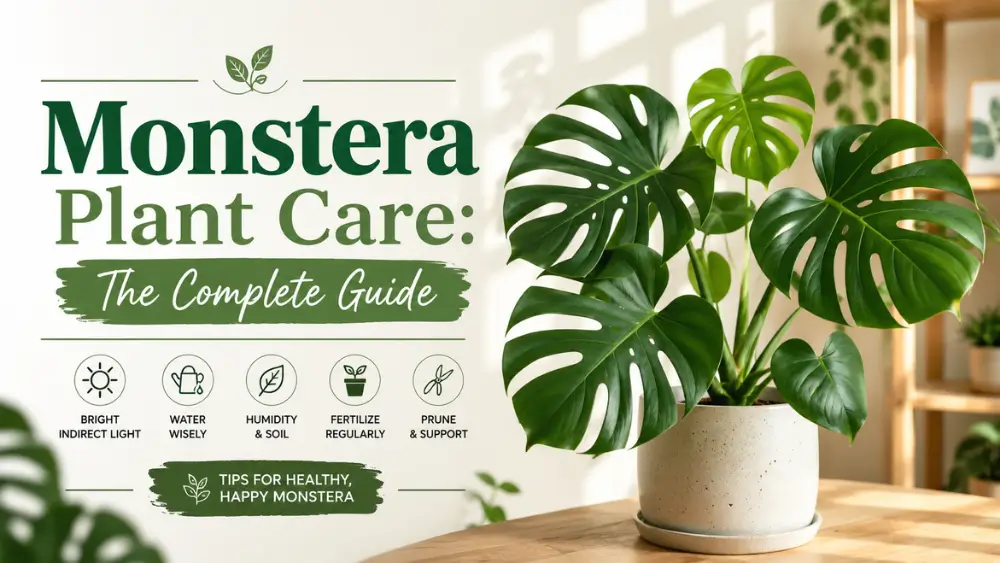
This guide also covers “Swiss Cheese Plant” and “Split-Leaf Philodendron” searches, since all three names refer to the same plant, Monstera deliciosa.
Monstera (Monstera deliciosa) grows best in bright, indirect light, soil that’s allowed to dry out somewhat between waterings, and warm temperatures with moderate to high humidity. It’s famous for its large, glossy, heart-shaped leaves that develop distinctive natural holes and splits, called fenestrations, as the plant matures and is given something to climb. A moss pole or totem genuinely changes how this plant grows, encouraging larger leaves and more dramatic fenestration than a plant left to sprawl unsupported.
Table of Contents
Quick Care Facts
| Care Factor | Requirement |
|---|---|
| Scientific name | Monstera deliciosa |
| Common names | Monstera, Swiss Cheese Plant, Split-Leaf Philodendron, Ceriman |
| Light | Bright, indirect light; tolerates medium light with less dramatic fenestration |
| Water | When top 1-2 inches of soil are dry |
| Soil | Chunky, well-draining aroid mix (potting soil, perlite, and orchid bark) |
| Temperature | 65-85°F (18-29°C); avoid cold drafts |
| Humidity | Moderate to high, ideally 60% or above |
| Fertilizer | Balanced liquid feed monthly, spring through summer |
| Toxicity | Toxic to cats, dogs, and humans if chewed or ingested |
| Growth habit | Climbing vine/epiphyte; grows much larger with a support to climb |
| Difficulty | Beginner-friendly; a moss pole meaningfully improves results |
About the Monstera Plant
Monstera, botanically Monstera deliciosa, is one of the most recognizable houseplants in the world, known for its large, glossy, heart-shaped leaves that develop distinctive natural splits and holes as the plant matures, a trait called fenestration. It’s also commonly called Swiss Cheese Plant, a direct reference to those characteristic holes, and is often mislabeled Split-Leaf Philodendron, even though it isn’t a true philodendron at all, despite belonging to the same aroid family and sharing a similar growth habit. All three names refer to the exact same plant.
Native to the tropical rainforests of southern Mexico and Central America, Monstera grows in the wild as a climbing epiphyte, using aerial roots to attach itself to tree trunks and climb toward the forest canopy in search of light. This climbing habit isn’t just a curiosity; it’s central to understanding how to grow a healthy, well-developed Monstera indoors, since a plant given something to climb typically develops larger leaves with more pronounced fenestration than one left to sprawl along the ground or a shelf, mirroring a similar juvenile-to-mature growth pattern seen in its aroid relative, arrowhead plant.
Why Monstera Leaves Develop Holes (Fenestration)
Young Monstera plants have solid, unsplit, heart-shaped leaves, and only begin developing the characteristic holes and splits once the plant matures and, notably, once it has something to climb.
Botanists have proposed several theories for why fenestration evolved in the wild, including that the holes allow dappled light to reach lower leaves in a dense rainforest canopy, that they let heavy tropical rain pass through without damaging or weighing down the leaf, and that they reduce wind resistance during storms. No single explanation has been definitively proven as the sole reason, and it’s likely a combination of these advantages working together.
For home growers, the practical takeaway matters more than the exact evolutionary reason: a young plant, a plant kept in low light, or a plant without a moss pole or similar support to climb will typically produce smaller leaves with fewer or no holes, while a mature, well-supported plant in bright light will develop the large, dramatically fenestrated leaves the species is known for. If your Monstera’s leaves aren’t splitting yet, patience combined with better light and a support to climb is usually the answer, rather than anything being wrong with the plant.
Light Requirements
Monstera does best in bright, indirect light, which supports both healthy growth and more pronounced fenestration on new leaves. A spot near an east- or west-facing window works well, or a few feet back from a bright south-facing window. It tolerates medium light reasonably well too, though growth slows and new leaves tend to be smaller with less dramatic splitting. Avoid intense, direct sun, which can scorch the leaves.
Watering
Water when the top 1-2 inches of soil are dry, and always let excess water drain away completely.
Monstera is fairly forgiving of occasional missed waterings but doesn’t tolerate consistently soggy soil well, which can lead to root rot. During the growing season, this typically means watering roughly once a week, adjusting based on your home’s light and humidity levels, with longer gaps between waterings in fall and winter.
Soil and Potting
A chunky, well-draining aroid mix, combining standard potting soil with perlite and orchid bark, suits Monstera’s roots better than a dense, standard potting mix alone, since it more closely mimics the loose, airy conditions this epiphytic plant is adapted to in the wild. Repot every 1-2 years, or once the plant becomes rootbound, ideally in spring. If you’re growing your Monstera on a moss pole, this is also a good time to add or extend one as the plant grows taller.
Temperature and Humidity
Monstera does well in typical indoor temperatures, ideally 65-85°F (18-29°C), and should be kept away from cold drafts, exterior doors, and air conditioning vents, since it isn’t cold tolerant.
It prefers moderate to high humidity, ideally 60% or above, though it adapts reasonably well to average household humidity. Higher humidity supports larger leaf growth and healthier aerial roots; in dry indoor air, a humidifier or pebble tray can help, particularly during winter.
Fertilizing
Feed with a balanced, water-soluble liquid houseplant fertilizer once a month during spring and summer while the plant is actively growing. Reduce or stop fertilizing in fall and winter, when growth naturally slows.
Understanding Aerial Roots and Moss Poles
Monstera naturally produces thick aerial roots along its stem, which in the wild help the plant grip and climb tree trunks while also absorbing extra moisture and nutrients from the air. Indoors, these aerial roots are a normal, healthy part of the plant rather than a problem, and you have a few options for handling them: guide them into the soil, direct them onto a moss pole for the plant to climb, or simply trim them off if you’d prefer a tidier look, which doesn’t harm the plant.
Providing a moss pole or similar totem for your Monstera to climb is one of the single most effective things you can do to encourage larger leaves and more pronounced fenestration. As the plant climbs, its aerial roots attach to the moist moss, providing extra support and access to moisture, which in turn supports the larger leaf growth associated with mature, well-fenestrated plants. Keeping the moss pole lightly misted or damp helps the aerial roots attach more readily.
Pruning
Monstera can be pruned to control its size or encourage bushier growth, ideally cutting just above a leaf node, which often prompts new branching growth from that point. Removing any yellowing, damaged, or overly leggy stems also helps keep the plant looking full and healthy.
How to Propagate Monstera
Monstera propagates readily from stem cuttings, provided each cutting includes at least one node:
- Cut a stem section that includes at least one node and, ideally, an aerial root, using clean, sharp shears.
- Place the cutting in a glass of water, or directly into moist, well-draining soil.
- Keep it in bright, indirect light while it roots, changing the water every few days if rooting in water.
- Roots typically develop within a few weeks to a couple of months; once established, transplant water-rooted cuttings into soil.
Is Monstera Fruit Actually Edible?
The species name “deliciosa” is a genuine reference to the plant’s fruit, which, once fully ripe, has a flavor often compared to a tropical fruit salad, combining notes of pineapple and banana. However, this is largely a botanical curiosity rather than something most home growers will ever experience, since Monstera fruit takes well over a year to ripen and rarely, if ever, forms on houseplants grown indoors. It’s also worth being cautious: unripe fruit, along with every other part of the plant, contains calcium oxalate crystals and is toxic and irritating if eaten, so only a fully ripe fruit, identified by its hexagonal scales lifting away on their own, would ever be safe to sample, and even then, only from a plant you’re certain hasn’t been treated with any pesticides.
Is Monstera Toxic to Pets or Humans?
Monstera is toxic to cats, dogs, and humans if chewed or ingested.
Like other members of the aroid family, including arrowhead plant and African mask plant, its leaves and stems contain calcium oxalate crystals, which cause immediate irritation, burning, and swelling in the mouth and throat if bitten into, along with drooling, vomiting, and difficulty swallowing in pets. Keep the plant out of reach of pets and small children, and contact a veterinarian or poison control center if ingestion occurs.
Common Problems and How to Fix Them
No holes or splits in the leaves Usually a sign the plant is still young, isn’t getting enough light, or doesn’t have a support to climb. Increasing light and adding a moss pole are the two most effective fixes.
Yellowing leaves Typically a sign of overwatering. Let the soil dry out more between waterings and check that the pot drains well.
Brown, crispy leaf edges Usually linked to low humidity or inconsistent watering. Increasing humidity and watering more consistently typically helps.
Small leaves and leggy growth Usually caused by insufficient light. Move the plant to a brighter spot with indirect light.
Pests Spider mites, mealybugs, scale, and thrips can occasionally appear. Wipe down leaves periodically and treat promptly with insecticidal soap if pests are spotted.
Seasonal Care Summary
| Season | Watering | Fertilizing | Notes |
|---|---|---|---|
| Spring | Weekly | Monthly | Good time to repot, prune, or add a moss pole |
| Summer | Weekly | Monthly | Watch humidity closely if using AC |
| Fall | Reduce gradually | Taper off | Growth naturally slows |
| Winter | Every 1-2 weeks | None | Watch for dry air with indoor heating running |
Frequently Asked Questions
How do you care for a Monstera plant?
Give it bright, indirect light, water when the top 1-2 inches of soil are dry, use a chunky, well-draining soil mix, and provide a moss pole to encourage larger, more fenestrated leaves.
Why doesn’t my Monstera have holes in its leaves?
This is usually because the plant is still young, isn’t getting enough bright light, or doesn’t have anything to climb. Adding a moss pole and increasing light typically leads to more fenestrated new growth over time.
Is Monstera the same as Swiss Cheese Plant?
Yes, “Swiss Cheese Plant” is simply a common nickname for Monstera deliciosa, referring to its characteristic leaf holes.
Is Monstera the same as Split-Leaf Philodendron?
No, though it’s often mislabeled that way. Monstera and Philodendron are related but distinct genera within the same aroid family.
Is Monstera toxic to cats and dogs?
Yes, it’s toxic if chewed or ingested, due to calcium oxalate crystals in the leaves and stems, and should be kept out of reach of pets.
Should I cut off Monstera’s aerial roots?
It’s optional. You can trim them for a tidier look without harming the plant, or guide them onto a moss pole or into the soil to support the plant’s growth and encourage larger leaves.
Can you eat Monstera fruit?
Only if it’s fully ripe, which takes over a year and rarely happens on indoor plants. Unripe fruit and all other parts of the plant are toxic due to calcium oxalate crystals.