
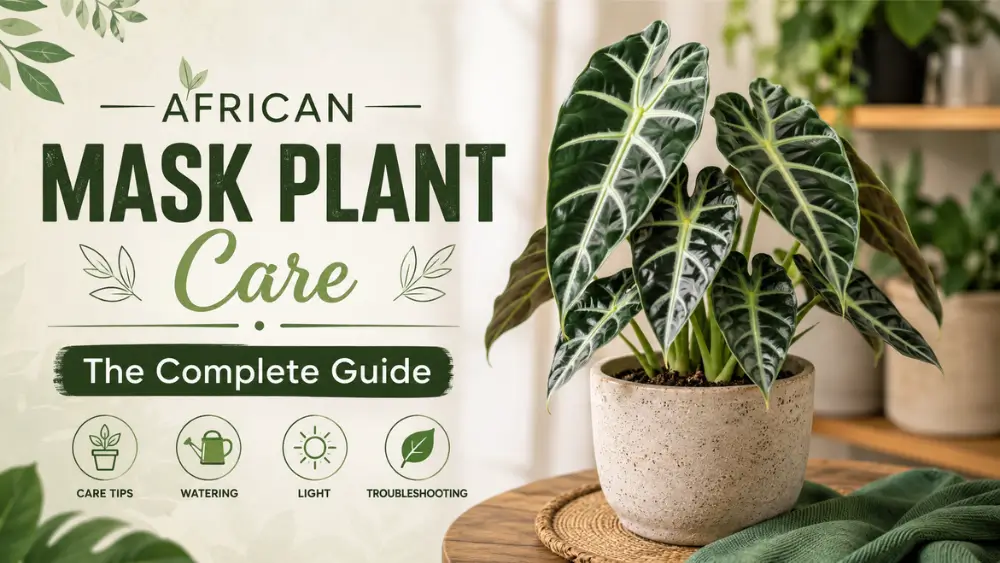
African Mask Plant (Alocasia x amazonica ‘Polly’) needs bright, indirect light, soil kept consistently moist but never soggy, and humidity of 60% or higher to truly thrive. It’s grown for its dramatic, glossy, dark green arrow-shaped leaves with bold silvery-white veining and wavy edges. It has a reputation as a more intermediate-level houseplant, mainly because of its high humidity needs and its sensitivity to overwatering, and it commonly goes dormant, losing some or all of its leaves, during fall and winter before regrowing from its rhizome in spring.
Table of Contents
Quick Care Facts
| Care Factor | Requirement |
|---|---|
| Scientific name | Alocasia x amazonica ‘Polly’ |
| Common names | African Mask Plant, Alocasia Polly, Amazon Elephant Ear |
| Light | Bright, indirect light; avoid harsh direct midday sun |
| Water | When top 1-2 inches of soil are dry; keep consistently moist, never soggy |
| Soil | Well-draining, aerated aroid mix (peat, perlite, and bark) |
| Temperature | 65-80°F (18-27°C); avoid cold drafts |
| Humidity | High, ideally 60% or above |
| Fertilizer | Balanced liquid feed monthly during the growing season |
| Toxicity | Toxic to cats, dogs, and humans if ingested |
| Growth habit | Rhizomatous perennial; compact, upright clumping growth |
| Difficulty | Intermediate; humidity and watering balance matter a great deal |
About the African Mask Plant
African Mask Plant is the common name for Alocasia x amazonica ‘Polly,’ a compact hybrid known for its glossy, dark green, arrow-shaped leaves marked with bold, silvery-white veining and gently wavy, scalloped edges that give each leaf a distinctive, almost sculptural quality. Despite the “amazonica” in its name and the way it’s sometimes marketed as an Amazon rainforest plant, it isn’t actually native to the Amazon at all; it’s a man-made hybrid, bred in the 1950s by a Florida grower who crossed two true Alocasia species and named the result after his nursery business. It’s worth knowing this, since the exotic-sounding name is really more of a branding choice than a botanical origin story.
You may also see this plant sold as “Amazon Elephant Ear,” a nickname it shares loosely with the larger, unrelated outdoor Elephant Ear plants (typically Colocasia or larger Alocasia species) grown as garden statement plants. African Mask Plant is a distinctly smaller, more compact houseplant than those classic garden Elephant Ears, and the two shouldn’t be confused when it comes to care, since the larger outdoor types have somewhat different needs, including greater tolerance for outdoor conditions and, in many cases, a preference for consistently wet or even boggy soil that would quickly rot an African Mask Plant’s roots.
The plant’s parent species, true Alocasia, hail from the tropical rainforests of Southeast Asia, where they grow beneath dense forest canopy in warm, humid, dappled light. That native habitat explains a great deal about how to care for African Mask Plant successfully indoors: it evolved to capture limited, filtered light rather than harsh direct sun, and it’s accustomed to consistently humid air rather than the drier conditions found in most homes.
Understanding African Mask Plant Dormancy
Like several other rhizomatous plants covered in our other guides, African Mask Plant commonly goes through a period of dormancy, most often in fall or winter, during which some or even all of its leaves die back. This can look alarming to new owners, especially if it happens quickly, but it’s a normal part of the plant’s natural cycle rather than a sign it’s dying. The plant grows from an underground rhizome, a thickened, root-like storage stem, and as long as that rhizome stays healthy, new leaves typically emerge again once conditions warm and daylight increases in spring.
During this dormant period, reduce watering to prevent the rhizome from rotting in wet soil while the plant isn’t actively using much water, and resist the urge to fertilize. Moving the plant to a slightly cooler spot away from direct heat sources during this rest period can also help, mirroring the kind of seasonal rest many rhizomatous and tuberous houseplants naturally go through. It’s also worth knowing that even outside of a full dormancy period, it’s fairly normal for an African Mask Plant to shed one older leaf as it pushes out a new one, since producing new growth takes considerable energy and the plant sometimes sacrifices a mature leaf in the process.
Light Requirements
African Mask Plant needs bright, indirect light, and should be shielded from harsh, direct midday sun, which can scorch its leaves.
An east- or north-facing window generally works well, or a spot a few feet back from a brighter south- or west-facing window. Some gentle morning or evening direct sun is usually fine and can even support fuller growth, but avoid prolonged direct exposure during the most intense part of the day.
Watering
Water when the top 1-2 inches of soil are dry, keeping the soil consistently moist without letting it become soggy.
This balance matters a great deal for African Mask Plant, since it’s genuinely prone to root rot if kept too wet, but also doesn’t want to dry out completely and stay that way for long stretches. Use room-temperature water, water thoroughly until it drains from the bottom of the pot, and always make sure the container has good drainage holes so water doesn’t pool around the roots. Reduce watering during the plant’s dormant period in fall and winter.
Soil and Potting
African Mask Plant does best in a loose, well-draining, well-aerated potting mix rather than a dense, heavy soil. A blend of standard potting soil with peat moss, perlite, and orchid or pine bark, similar to a mix formulated for aroids, provides the balance of moisture retention and airflow this plant’s roots need. Pre-mixed aroid or orchid potting blends sold at garden centers can work well too if you’d rather not mix your own. Repot every year or two, or when the plant becomes rootbound, ideally in spring as active growth resumes.
Temperature and Humidity
African Mask Plant does best in warm conditions, ideally 65-80°F (18-27°C), and should be kept away from cold drafts and sudden temperature swings, since it isn’t cold tolerant and can suffer leaf damage in chilly conditions.
Humidity is one of the most important factors in growing this plant successfully, ideally 60% or higher. This is meaningfully more humidity than most homes provide naturally, and it’s a big part of why African Mask Plant has a reputation as an intermediate rather than beginner houseplant. A humidifier is by far the most reliable way to meet this requirement consistently; misting provides only a brief, temporary boost and generally isn’t enough on its own for a plant with humidity needs this high. Grouping it with other humidity-loving plants, or growing it in a naturally humid room, can provide some additional benefit but usually won’t replace a humidifier entirely if you’re aiming for consistently healthy, unblemished foliage.
Fertilizing
Feed with a balanced, water-soluble liquid fertilizer once a month during the active growing season in spring and summer. Stop fertilizing once the plant enters its dormant period in fall and winter, since it isn’t actively using nutrients while resting and excess fertilizer can build up unused in the soil.
Is African Mask Plant Toxic to Pets or Humans?
African Mask Plant is toxic to cats, dogs, and humans if ingested.
Like other members of the aroid family, including arrowhead plant and philodendron, its leaves and sap contain calcium oxalate crystals, which cause immediate irritation, burning, and swelling in the mouth and throat if chewed, along with drooling, vomiting, and difficulty swallowing in pets. Keep the plant well out of reach of pets and small children, and contact a veterinarian or poison control center if ingestion occurs.
Common Problems and How to Fix Them
Root rot The most common serious problem with this plant, almost always caused by soil that stays too wet for too long. Let the soil dry more between waterings and make sure the pot drains well; in advanced cases, it may be necessary to remove the plant from its pot, trim away any soft, brown, or foul-smelling sections of rhizome with clean scissors, and repot the healthy remaining portion into fresh, dry soil.
Brown, crispy leaf edges Usually a sign of humidity that’s too low for this plant’s needs. A humidifier is generally the most effective fix, since misting alone rarely provides enough sustained humidity.
Yellowing leaves Can indicate overwatering, or simply normal aging on older leaves, particularly if only one or two lower leaves are affected while the rest of the plant looks healthy.
All leaves dying back Most likely seasonal dormancy rather than a dying plant, especially if it happens in fall or winter. Reduce watering and wait; new growth typically resumes from the rhizome once conditions warm up again.
Pests Spider mites are especially common in low humidity, along with occasional mealybugs and aphids. Increasing humidity helps prevent infestations in the first place; treat active pest problems with insecticidal soap and by wiping down the leaves.
Seasonal Care Summary
| Season | Watering | Fertilizing | Notes |
|---|---|---|---|
| Spring | When top 1-2 inches are dry | Monthly | New growth resumes after dormancy |
| Summer | When top 1-2 inches are dry | Monthly | Peak growing season; watch humidity closely |
| Fall | Reduce gradually | Taper off | Plant may begin entering dormancy |
| Winter | Sparingly | None | Some or all leaves may die back; this is normal |
Frequently Asked Questions
How do you care for an African Mask Plant?
Give it bright, indirect light, water when the top 1-2 inches of soil are dry, use a well-draining aroid soil mix, and provide humidity of 60% or higher, ideally with a humidifier.
Why is my African Mask Plant losing all its leaves?
This is most likely normal seasonal dormancy, especially in fall or winter. Reduce watering and be patient; new leaves typically emerge from the rhizome again once conditions warm up in spring.
Is African Mask Plant the same as Elephant Ear?
It’s sometimes nicknamed “Amazon Elephant Ear,” but it’s a distinctly smaller, more compact hybrid than the larger outdoor Elephant Ear plants typically grown as garden statement pieces, and shouldn’t be confused with them for care purposes.
Is African Mask Plant easy to care for?
It’s generally considered an intermediate-level houseplant rather than a true beginner plant, mainly because of its high humidity requirements and its sensitivity to overwatering.
Is African Mask Plant toxic to cats and dogs?
Yes, it’s toxic if chewed or ingested, due to calcium oxalate crystals in the leaves and sap, and should be kept out of reach of pets.
How much humidity does African Mask Plant need?
Ideally 60% or higher, considerably more than most homes provide naturally, which is why a humidifier is generally recommended for this plant rather than relying on misting alone.
Why did my African Mask Plant lose an older leaf right after a new one appeared?
This can be a normal part of the plant’s growth cycle, since producing a new leaf takes significant energy and the plant sometimes sheds an older leaf in the process, even outside of full dormancy.
Where should I put an African Mask Plant in my home?
A bright bathroom or kitchen with good natural light often works especially well, since the ambient humidity from showers, baths, and cooking helps meet this plant’s high humidity preference better than a typical dry living room.
How big does African Mask Plant get?
It’s a relatively compact Alocasia, generally reaching about 1-2 feet tall and wide indoors, considerably smaller than many other Alocasia species grown as houseplants.