
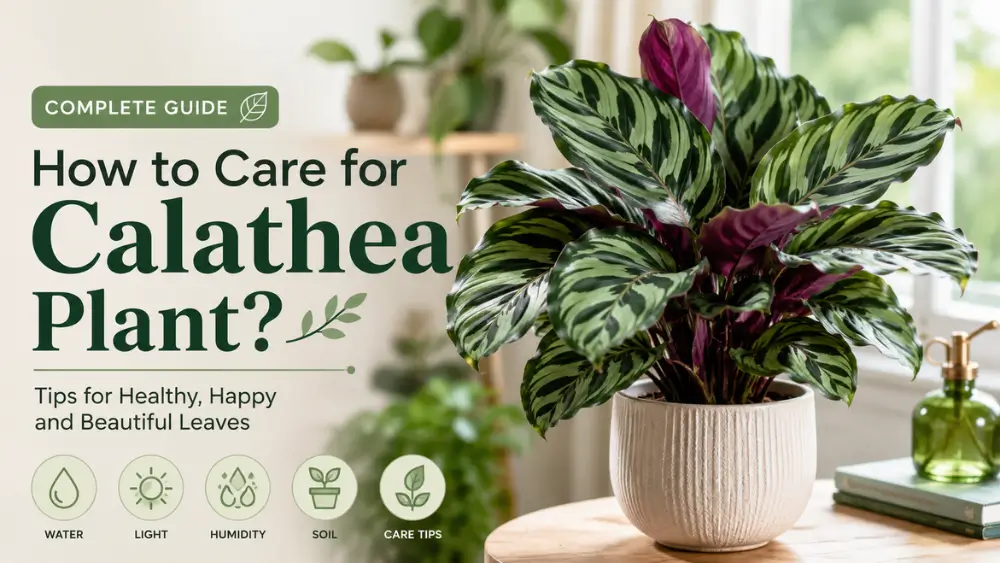
Calathea needs bright, indirect light (never direct sun), consistently moist but never soggy soil, and above-average humidity of at least 50%. It’s sensitive to minerals and chemicals in tap water, so filtered, distilled, or rainwater is strongly recommended to prevent the crispy brown leaf edges this plant is notorious for. Calathea is prized for its strikingly patterned foliage and its habit of raising its leaves at night and lowering them during the day, a movement often called “praying.”
Table of Contents
Quick Care Facts
| Care Factor | Requirement |
|---|---|
| Scientific name | Calathea spp. (many species now reclassified as Goeppertia) |
| Common names | Calathea, Zebra Plant, Peacock Plant (varies by species) |
| Light | Bright, indirect light; no direct sun |
| Water | Consistently moist, never soggy; use filtered or distilled water |
| Soil | Well-draining, moisture-retentive mix with perlite |
| Temperature | 65-80°F (18-27°C); avoid cold drafts |
| Humidity | High, ideally 50% or above |
| Fertilizer | Light, diluted balanced feed monthly during growing season |
| Toxicity | Non-toxic to cats and dogs |
| Growth habit | Clumping foliage plant; leaves rise and fall with day/night cycle |
| Difficulty | Moderate to challenging; humidity and water quality are key |
About the Calathea Plant
Calathea is the common trade name for a large group of tropical foliage plants prized for some of the most dramatically patterned leaves in the houseplant world, from bold stripes and feathery brushstrokes to deep purple undersides. Most species are native to the tropical rainforests of Brazil and other parts of South and Central America, where they grow in the warm, humid, filtered light of the forest floor.
Botanically, many plants long sold as Calathea were reclassified into the genus Goeppertia following a taxonomic revision in 2020, though the name “Calathea” remains by far the most common name used in the plant trade and is unlikely to disappear from nursery tags or search results anytime soon. This guide uses “Calathea” throughout, since that’s how the plant is almost universally bought, sold, and searched for.
Calathea belongs to the Marantaceae family, commonly known as the prayer plant family, alongside close relatives like Maranta (true prayer plant) and Stromanthe. All share a distinctive trait: their leaves rise upward at night and lower back down during the day in response to light, a movement known as nyctinasty, often described by growers as the plant “praying.”
Calathea has earned a reputation as one of the fussier common houseplants, largely because of its specific humidity and water-quality needs, covered in detail below. With the right setup, though, it’s a rewarding and genuinely striking plant rather than an especially difficult one, and many growers find that once humidity and water quality are dialed in, Calathea settles into a fairly predictable, low-drama routine.
Light Requirements
Calathea needs bright, indirect light and should never be placed in direct sun, which quickly fades and scorches its patterned leaves.
A few feet back from an east-facing window, or in filtered light near a north- or west-facing window, works well. Calathea tolerates medium light reasonably well, though its leaf patterns and coloring tend to be most vivid in brighter indirect conditions. If leaves look pale, faded, or bleached, the plant is likely getting too much direct light; if growth is sparse and patterns are dull, it probably needs more (indirect) light.
Watering
Keep the soil consistently, evenly moist, never letting it fully dry out or sit waterlogged.
Calathea prefers a steady moisture level rather than the dry-out-between-waterings approach used for succulents or many other houseplants. Check the top inch of soil regularly and water before it dries out completely, while still allowing any excess water to drain away so the roots aren’t sitting in standing water.
Water quality matters enormously for Calathea. This plant is notably sensitive to the chlorine, fluoride, and dissolved minerals found in most tap water, which is the single most common cause of the brown, crispy leaf edges Calathea is known for. Filtered water, distilled water, or rainwater is strongly recommended. If you must use tap water, letting it sit out uncovered for 24-48 hours can help some of the chlorine dissipate, though it won’t remove fluoride or dissolved minerals.
Soil and Potting
Calathea does best in a well-draining but moisture-retentive potting mix, typically a standard potting soil amended with perlite for drainage and a bit of peat moss or coco coir to help retain even moisture. The goal is soil that drains well but doesn’t dry out too quickly, striking a balance between the two extremes. Repot every year or two in spring, sizing up gradually rather than jumping to a much larger pot.
Temperature and Humidity
Calathea prefers warm, stable conditions, ideally 65-80°F (18-27°C), and dislikes cold drafts, sudden temperature swings, and being placed near air conditioning vents or drafty windows.
Humidity is the other defining factor in successful Calathea care, ideally 50% or higher. In average indoor humidity, especially in winter with heating running, Calathea often develops dry, curling, or crispy leaf edges. A humidifier placed nearby is the most reliable fix; grouping plants together, using a pebble tray, or growing it in a naturally humid room like a bathroom with good light can also help, though these methods are generally less effective than a humidifier for genuinely fussy specimens.
It’s worth noting that misting, while a popular quick fix, provides only a brief, temporary humidity boost and isn’t a substitute for genuinely raising the ambient humidity around the plant. If you’re serious about growing Calathea well, especially in a dry climate or a heated home in winter, investing in a small humidifier for that corner of the room will save considerably more frustration than a daily misting routine.
Fertilizing
Feed with a balanced, water-soluble liquid fertilizer diluted to half strength, roughly once a month during spring and summer. Calathea is sensitive to fertilizer salt buildup in the soil, which can contribute to leaf tip burn alongside water-quality issues, so it’s better to under-fertilize slightly than to over-do it. Stop fertilizing in fall and winter when growth slows.
Understanding Calathea’s Leaf Movement
One of Calathea’s most distinctive and endearing traits is the way its leaves visibly move over the course of a day: rising and folding somewhat upright at night, then lowering and opening flat again during daylight hours. This is a light-driven response called nyctinasty, shared with its Marantaceae relatives like prayer plant, and is completely normal, healthy behavior rather than a sign of stress.
If you notice your Calathea’s leaves have stopped moving or seem permanently flat or drooping regardless of time of day, it can be worth checking other care factors, since a plant under significant stress from very low humidity, drought, or cold may temporarily lose this responsiveness. A healthy, well-cared-for Calathea will typically resume its normal daily leaf movement once conditions improve.
Propagation
Unlike many houseplants that propagate readily from stem cuttings, Calathea grows from a clumping rhizome and doesn’t produce true stems to cut. Instead, it’s propagated by division:
- Remove the plant from its pot and gently loosen the soil around the root ball.
- Look for natural separations in the clump, where you can identify individual sections with their own roots and leaves attached.
- Gently pull or cut the clump apart into smaller sections, keeping healthy roots intact with each division.
- Plant each division into its own pot with fresh, well-draining, moisture-retentive soil.
- Keep divisions warm, humid, and out of direct light while they recover and establish; new growth is a good sign the division has taken.
Division is best done in spring or early summer, ideally at the same time as repotting, to minimize stress on the plant.
Is Calathea Toxic to Pets?
Calathea is considered non-toxic to cats and dogs, making it one of the more popular choices for pet owners who want dramatic, patterned foliage without the toxicity concerns of plants like pothos, philodendron, or dieffenbachia. It’s still a good idea to discourage pets from chewing on any houseplant regularly, but Calathea is a genuinely safe option if pet-friendliness is a priority in your plant selection.
Common Problems and How to Fix Them
Brown, crispy leaf edges The most common Calathea complaint, almost always tied to low humidity, tap water sensitivity, or a combination of both. Switch to filtered or distilled water and increase humidity, ideally with a humidifier.
Curling leaves Usually a sign of low humidity or the soil drying out too much between waterings. Increase humidity and water more consistently.
Yellowing leaves Typically points to overwatering or soil that stays waterlogged. Make sure the pot drains well and let the top layer of soil dry slightly before watering again.
Faded or washed-out leaf pattern Usually caused by too much direct light. Move the plant to a spot with bright but fully indirect light.
Leaves not moving or drooping consistently Can indicate significant stress from low humidity, underwatering, or cold. Address the underlying care issue, and normal leaf movement should return as the plant recovers.
Pests Spider mites are especially common on Calathea, often thriving in the same low-humidity conditions that stress the plant in the first place. Increasing humidity helps prevent infestations; treat active infestations with insecticidal soap and by wiping down leaves. Isolating an infested plant from your other houseplants while treating it can also help prevent spider mites from spreading, since they move easily between plants that are placed close together.
Seasonal Care Summary
| Season | Watering | Fertilizing | Notes |
|---|---|---|---|
| Spring | Keep evenly moist | Monthly, diluted | Good time to repot or divide |
| Summer | Keep evenly moist | Monthly, diluted | Watch humidity closely if using AC |
| Fall | Keep evenly moist | Taper off | Growth begins to slow |
| Winter | Keep evenly moist, slightly less | None | Humidity is critical with indoor heating running |
Frequently Asked Questions
How do you care for a calathea plant?
Provide bright, indirect light, keep the soil consistently moist using filtered or distilled water, and maintain humidity of 50% or higher, ideally with a humidifier, to prevent crispy leaf edges.
Why does my calathea have brown, crispy leaf edges?
This is usually caused by low humidity combined with sensitivity to chlorine, fluoride, or minerals in tap water. Switching to filtered or distilled water and increasing humidity typically resolves it.
How often should you water a calathea plant?
Water often enough to keep the soil consistently moist, typically every 5-7 days indoors, without letting it dry out completely or sit in soggy, waterlogged soil.
Is calathea an easy plant to care for?
It’s considered moderate to challenging, mainly because of its specific humidity and water-quality needs, rather than because it’s fragile in other respects. A humidifier makes a significant difference for most growers.
Is calathea safe for cats and dogs?
Yes, calathea is considered non-toxic to cats and dogs, making it a popular choice for pet owners.
Why does my calathea’s leaves move up and down?
This is normal, healthy behavior called nyctinasty, shared with its prayer plant relatives, where leaves rise at night and lower during the day in response to light.
Does calathea need direct sunlight?
No, calathea should never be placed in direct sun, which fades and scorches its patterned leaves. Bright, indirect light is ideal.
How do you propagate a calathea plant?
Calathea is propagated by dividing the root clump into smaller sections with roots attached, rather than from stem cuttings, ideally done in spring alongside repotting.