
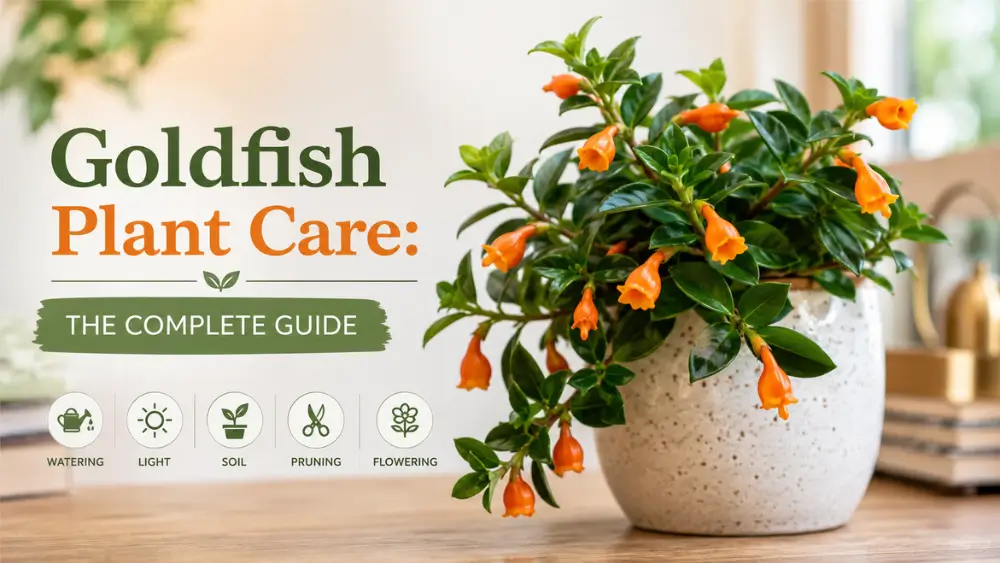
Goldfish plant (Nematanthus gregarius) needs bright, indirect light with a little direct morning sun to bloom well, consistently moist but not soggy soil, and warm temperatures of 65-80°F (18-27°C) with higher-than-average humidity. It produces small, glossy leaves and bright orange, red, or yellow tubular flowers shaped like tiny leaping goldfish, mainly in spring and summer. A short, cooler rest period in winter helps trigger a strong bloom flush the following season.
Table of Contents
Quick Care Facts
| Care Factor | Requirement |
|---|---|
| Scientific name | Nematanthus gregarius (formerly classified as Hypocyrta) |
| Common names | Goldfish Plant, Guppy Plant |
| Light | Bright, indirect light; some direct morning sun to encourage blooms |
| Water | Keep lightly, consistently moist; less in winter rest period |
| Soil | Well-draining, peat-based mix (African violet mix works well) |
| Temperature | 65-80°F (18-27°C); cooler rest period in winter (60-65°F) |
| Humidity | Above-average humidity preferred |
| Fertilizer | Balanced liquid feed regularly during spring/summer growth |
| Toxicity | Not listed as toxic to cats or dogs |
| Growth habit | Trailing/cascading; excellent for hanging baskets |
| Difficulty | Easy to moderate; blooming takes a bit more attention |
About the Goldfish Plant
Goldfish plant, botanically Nematanthus gregarius, gets its playful common name from its small, bright orange, red, or yellow tubular flowers, which have a puffy, pouch-like shape that genuinely resembles a tiny leaping goldfish. It’s a member of the Gesneriaceae family, the same plant family as African violets, and shares many of their same care preferences, including a love of humidity and a dislike of cold, soggy soil.
Native to the rainforests of Brazil, goldfish plant grows naturally as an epiphyte, meaning it often grows on trees or other surfaces rather than rooted in the ground, similar to many orchids. This heritage explains why it thrives in loose, well-draining soil, appreciates humidity, and does so well in hanging baskets, where its small, glossy, dark green leaves and trailing stems can cascade freely.
You may also see this plant sold under its older botanical name, Hypocyrta, at some nurseries, though Nematanthus is the currently accepted genus. Goldfish plant has been a popular houseplant since at least the mid-20th century, prized for offering something relatively rare among easy-care houseplants: genuinely showy, brightly colored flowers rather than foliage alone, without demanding the fussy attention that many other flowering houseplants require.
Where to Display Goldfish Plant
Because of its naturally trailing, cascading growth habit, goldfish plant is especially well suited to hanging baskets, tall pedestal stands, or high shelves where its stems can spill over the edge. It also works well in a bathroom with a bright window, since the extra ambient humidity from showers and baths closely mirrors its native rainforest conditions. Kitchens with a bright windowsill are another good fit for the same reason. Avoid placing it directly against cold window glass in winter, and keep it away from heating vents that can dry the air around it.
Light Requirements
Goldfish plant needs bright, indirect light to bloom well; without enough light, it tends to produce lots of leaves but few or no flowers.
A spot near an east-facing window, or a few feet back from a south- or west-facing window, works well. A little gentle direct morning sun is actually beneficial and often encourages more prolific blooming, but strong afternoon sun can scorch the fleshy leaves. If your plant has been leaf-heavy and flower-light for a while, moving it to a brighter spot is usually the first fix to try.
Watering
Keep the soil lightly, consistently moist during active growth, watering again once the top inch starts to feel dry.
Goldfish plant doesn’t like to fully dry out for extended periods, but it also won’t tolerate sitting in soggy, waterlogged soil, which can quickly cause root and stem rot. Aim for a balance: evenly moist, well-drained soil rather than alternating between bone dry and drenched. During its winter rest period, reduce watering somewhat and allow the top of the soil to dry out a bit more between waterings.
Soil and Potting
Because it’s related to African violets, goldfish plant does well in a similar light, well-draining, peat-based potting mix, which you can buy pre-made as “African violet mix” or create by combining standard potting soil with perlite and a bit of peat or coco coir. Good drainage is essential, since this plant’s fleshy leaves and stems are prone to rot in heavy, slow-draining soil. A plastic or glazed pot helps retain a bit more moisture between waterings, while an unglazed terracotta pot suits growers who tend to water generously. Repot every year or two in spring, moving up only one pot size at a time.
Temperature and Humidity
Goldfish plant prefers warm conditions, ideally 65-80°F (18-27°C) during active growth, and doesn’t tolerate cold well. Keep it away from cold drafts, air conditioning vents, and drafty windows in winter.
Humidity matters more for this plant than for many common houseplants. As a rainforest epiphyte, it prefers above-average humidity and can develop dry, curling leaf edges or dropped buds in very dry indoor air. A pebble tray, nearby humidifier, or grouping it with other humidity-loving plants can help, especially during winter when indoor heating dries the air.
Fertilizing
Feed with a balanced, water-soluble liquid fertilizer regularly (roughly every 2-4 weeks) during spring and summer while the plant is actively growing and blooming. A fertilizer slightly higher in phosphorus, often labeled as a “bloom booster,” can help support flower production. Taper off fertilizing in fall and stop entirely during the winter rest period.
Understanding the Winter Rest Period
Similar to many of its Gesneriad relatives, goldfish plant benefits from a deliberate rest period in winter to help set up strong blooming the following spring.
How to give your goldfish plant a proper rest:
- From roughly late fall through winter, move the plant to a slightly cooler spot if possible, around 60-65F (15-18C).
- Reduce watering frequency, letting the top inch or two of soil dry out between waterings, though never letting it fully desiccate.
- Stop fertilizing entirely during this period.
- Resume normal warmer temperatures, regular watering, and fertilizing once you see new growth appear in spring.
Skipping this rest period doesn’t harm the plant outright, but growers often notice fewer blooms the following season without it. If your goldfish plant has been leafy but reluctant to flower, working in a proper winter rest is one of the most effective fixes.
Pruning
Pinch back the growing tips after a bloom cycle finishes to encourage bushier, fuller growth and to set up more flowering stems for the next round. Because goldfish plant blooms on new growth, regular light pruning throughout the growing season also tends to result in more flowers overall, rather than fewer.
How to Propagate Goldfish Plant
Goldfish plant roots readily from stem tip cuttings, making it easy to create new plants or fill out a sparse hanging basket:
- Snip a 3-4 inch stem tip cutting just below a leaf node, ideally from a healthy, non-flowering stem.
- Remove the lowest leaves so a bare node is exposed.
- Root the cutting in water, or in a moist mix of potting soil and perlite.
- Keep it warm and in bright, indirect light; roots typically develop within a few weeks.
- Once rooted, pot several cuttings together in one container for a fuller-looking new plant right away.
Is Goldfish Plant Toxic to Pets?
Goldfish plant is not commonly listed as toxic to cats or dogs, which makes it a popular choice for pet owners who want flowering houseplants without the toxicity concerns that come with many other blooming species. As with any houseplant, though, it’s still sensible to discourage pets from chewing on it regularly, since even non-toxic plants can occasionally cause mild digestive upset if eaten in quantity.
Common Problems and How to Fix Them
No flowers, lots of leaves Almost always a light issue. Move the plant to a brighter spot with some gentle morning sun, and make sure it’s getting a proper cooler, drier rest period in winter.
Bud or flower drop Usually caused by low humidity, inconsistent watering, or a sudden change in temperature or location. Keep conditions as stable as possible once buds have formed, and boost humidity if your home is very dry.
Leggy, sparse growth Typically a light problem combined with a lack of pinching. Increase light and pinch back stems regularly to encourage bushier growth.
Yellowing leaves or stem rot A sign of overwatering or poor drainage. Let the soil dry slightly more between waterings and confirm the pot drains well.
Dry, curling leaf edges Often linked to low humidity. Increasing humidity around the plant, rather than watering more, is usually the right fix.
Pests Mealybugs, aphids, and spider mites can appear, particularly in dry indoor air. Wipe down leaves periodically and treat promptly with insecticidal soap if pests are spotted.
Seasonal Care Summary
| Season | Watering | Fertilizing | Notes |
|---|---|---|---|
| Spring | Keep evenly moist | Every 2-4 weeks | Resume normal care as new growth and buds appear |
| Summer | Keep evenly moist | Every 2-4 weeks | Peak blooming season for most plants |
| Fall | Taper off gradually | Reduce, then stop | Prepare for winter rest period |
| Winter | Allow more drying between waterings | None | Cooler temps (60-65F) help set up next bloom cycle |
Frequently Asked Questions
How do you care for a goldfish plant?
Give it bright, indirect light with some morning sun, keep the soil consistently moist but not soggy, provide above-average humidity, and allow a cooler, drier rest period each winter to encourage the best blooming.
How do you get a goldfish plant to bloom?
Bright light is the biggest factor, along with a proper cooler, slightly drier winter rest period and regular light fertilizing with a phosphorus-rich bloom booster during the growing season.
How often should you water a goldfish plant?
Water often enough to keep the soil consistently, lightly moist, typically every 5-7 days indoors, tapering off to less frequent watering during its winter rest.
Is goldfish plant safe for cats and dogs?
It isn’t commonly listed as toxic to pets, making it a popular choice for pet-friendly homes, though it’s still best to discourage pets from eating any houseplant regularly.
Why is my goldfish plant dropping its flower buds?
This is usually caused by low humidity, inconsistent watering, or a sudden change in light or temperature right as buds are forming. Keeping conditions stable once buds appear helps prevent drop.
Can goldfish plant grow in a regular pot instead of a hanging basket?
Yes, it grows just as well in a standard pot; a hanging basket simply shows off its natural trailing growth habit more dramatically.
Why does my goldfish plant have lots of leaves but no flowers?
This is typically a light issue combined with skipping the winter rest period. Increasing light and giving the plant a proper cooler, drier rest each winter usually restores blooming.
Does goldfish plant need a hanging basket?
No, a hanging basket simply shows off its trailing growth to best effect. It grows just as healthily in a standard pot on a shelf or stand where its stems can trail over the side.
How long do goldfish plant flowers last?
Individual blooms typically last one to two weeks, but a healthy plant in good light will continue producing new flowers in flushes throughout the spring and summer growing season.