
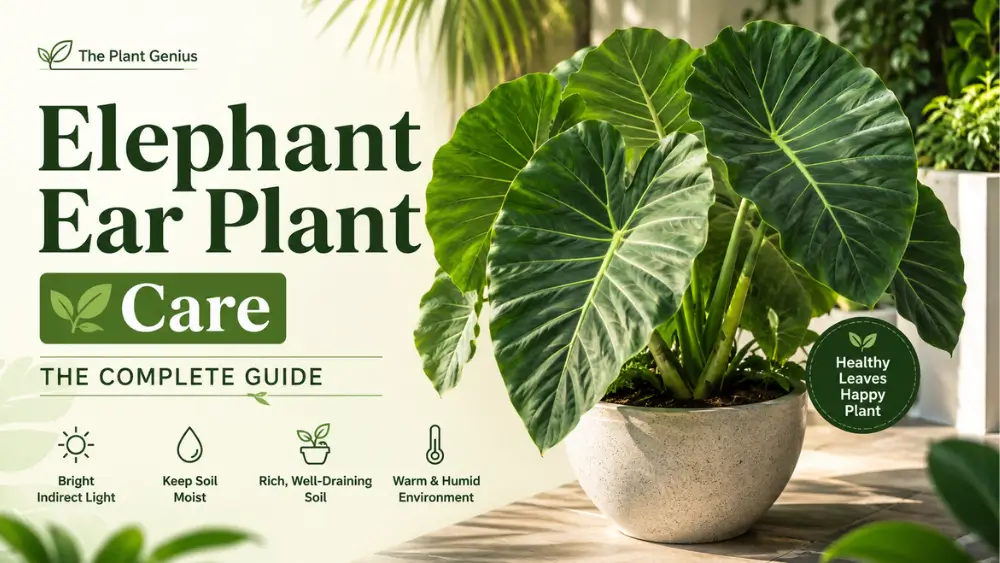
“Elephant Ear” is an umbrella name covering several different plant genera. This guide covers general care for the classic large elephant ear types (Colocasia and Alocasia). For the compact hybrid houseplant sometimes also nicknamed “Elephant Ear,” see our dedicated African Mask Plant care guide.
“Elephant Ear” refers to several large-leaved tropical plants, most commonly in the genera Colocasia and Alocasia, prized for their massive, dramatic, heart- or arrow-shaped foliage that can transform a garden or room into a lush, tropical-feeling space. The most important thing to know before caring for one is which type you have: Colocasia generally wants consistently wet, even boggy soil and thrives in more sun, while Alocasia wants well-draining soil and prefers a bit more shade. Both are frost-tender, tuberous plants, warm-loving, and need rich soil and regular feeding during the growing season to produce their signature oversized leaves.
Table of Contents
Quick Care Facts
| Care Factor | Requirement |
|---|---|
| Scientific name | Colocasia spp. and Alocasia spp. (also Caladium and Xanthosoma) |
| Common names | Elephant Ear, Taro (Colocasia), Giant Taro / Upright Elephant Ear (Alocasia) |
| Light | Full sun to partial shade; varies by genus (see below) |
| Water | Colocasia: consistently wet, tolerates standing water. Alocasia: moist but well-draining |
| Soil | Rich, organically amended soil |
| Temperature | Warm season only; frost-tender, not cold hardy |
| Humidity | High humidity preferred, especially for Alocasia grown indoors |
| Fertilizer | Balanced liquid feed every 2 weeks during spring and summer |
| Toxicity | Toxic to pets and humans if eaten raw; some species edible only after cooking |
| Growth habit | Large, dramatic clumping foliage from an underground tuber or corm |
| Difficulty | Easy outdoors in the right conditions; moderate as a houseplant |
About Elephant Ear Plants
“Elephant Ear” isn’t a single species but a common nickname applied to several different tropical plants known for their oversized, dramatic, heart- or arrow-shaped leaves, most often in the genera Colocasia and Alocasia, and sometimes extended to Caladium and Xanthosoma as well, since all share a similarly bold, sculptural leaf shape. All of these plants belong to the aroid family, Araceae, and grow from an underground tuber or corm, native to tropical regions of Asia and other warm parts of the world.
The most important distinction to understand is the difference between Colocasia and Alocasia, since their care needs actually run in somewhat opposite directions. Colocasia, also known as taro, has leaves that typically point downward and thrives in consistently wet, even boggy conditions, making it a popular choice for pond edges and water gardens. Alocasia, sometimes called Upright Elephant Ear or Giant Taro for its larger species, has leaves that point upward and actually prefers well-drained soil, since it’s considerably more prone to root rot in consistently soggy conditions than Colocasia is.
Smaller Alocasia varieties, including the compact hybrid Alocasia x amazonica ‘Polly’ covered in our separate African Mask Plant guide, are commonly grown as houseplants, while the larger classic Elephant Ear types described in this guide, especially Colocasia and larger Alocasia species, are more often grown outdoors in gardens, containers, or water features during the warm season.
Using Elephant Ear Plants in Your Garden or Home
Because of their sheer scale, Elephant Ear plants are most often used as dramatic focal points rather than background plants. In a garden bed, a single Colocasia or large Alocasia can anchor an entire tropical-themed planting, surrounded by smaller, finer-textured plants that show off its massive leaves by contrast. Colocasia varieties also work beautifully at the edge of a pond or in a large water-garden container, sitting directly in shallow water alongside other marginal aquatic plants. Indoors, smaller Alocasia varieties make striking statement houseplants for a bright room with high ceilings, where their bold foliage has enough visual space to stand out.
Light Requirements
Light needs vary meaningfully depending on which type of Elephant Ear you’re growing. Colocasia generally does best in full sun to partial shade and tends to produce its largest, most vigorous growth with plenty of direct sun, particularly in climates with reliably warm summers. Alocasia and Caladium generally prefer partial shade to bright indirect light, and can scorch in intense, prolonged direct sun, especially in hot climates. When in doubt about which type you have, err toward a spot with some afternoon shade, and adjust based on how the plant responds.
Watering
This is where Colocasia and Alocasia diverge the most: Colocasia wants consistently wet soil and tolerates standing water, while Alocasia wants evenly moist but genuinely well-draining soil.
Colocasia is naturally suited to growing at the edges of ponds and streams and can even be grown as a marginal water garden plant, sitting directly in shallow water. If grown in a regular container or garden bed rather than a water feature, keep its soil consistently moist and never let it dry out, especially during the heat of summer.
Alocasia, by contrast, needs good drainage and can develop root rot if kept in the same consistently soggy conditions Colocasia thrives in. Water Alocasia when the top inch or so of soil begins to dry, aiming for evenly moist rather than waterlogged soil.
Soil and Potting
Elephant Ear plants generally do best in rich, organically amended soil. For Colocasia grown in containers or beds rather than open water, a heavier, more moisture-retentive soil is appropriate, while Alocasia benefits from a lighter mix amended with perlite or bark to ensure good drainage. Repot container-grown plants every 2-3 years, or when they become crowded, using a pot only one size larger than the current one.
Temperature and Humidity
Elephant Ear plants are warm-season, frost-tender plants and should only be planted outdoors once the soil has warmed to at least 65°F (18°C), typically well after the last spring frost. They don’t tolerate cold at all and will be damaged or killed by frost.
High humidity benefits all Elephant Ear types, but it’s especially important for Alocasia grown indoors as a houseplant, where dry winter air can lead to crispy leaf edges and a higher risk of spider mites. A humidifier or regular misting can help offset dry indoor conditions during colder months.
Fertilizing
Feed with a balanced liquid fertilizer roughly every 2 weeks during the active growing season in spring and summer to support the vigorous growth needed for these plants’ signature oversized leaves. Fertilizing isn’t necessary during the dormant winter months.
Overwintering Elephant Ear Tubers
In climates with cold winters, Elephant Ear plants grown outdoors need to be treated as either annuals or dug up and stored over winter, since their tubers won’t survive freezing temperatures in the ground.
Once the first light frost blackens the foliage in fall, cut the leaves back and carefully dig up the tuber, taking care not to damage it. Let it air dry for a few days in a cool, shaded spot, then store it in a paper bag or box filled with slightly damp peat moss or vermiculite, in a cool, dark, frost-free location such as a basement or garage, generally around 50-60°F (10-15°C). Check on stored tubers periodically over winter, discarding any that show signs of rot, and replant outdoors the following spring once the soil has warmed and any risk of frost has passed.
Pruning and Maintenance
Trim off yellowing, browning, or damaged leaves at the base of the stem as needed to keep the plant looking tidy and to redirect its energy toward healthy new growth. Beyond removing spent foliage, Elephant Ear plants generally don’t require much routine pruning.
Is Elephant Ear Toxic to Pets or Humans?
All parts of Elephant Ear plants are toxic if eaten raw, to both pets and humans, due to calcium oxalate crystals.
Chewing or ingesting raw leaves, stems, or tubers causes immediate burning and irritation in the mouth and throat, along with drooling, vomiting, and swelling in pets. Interestingly, the tubers of Colocasia (taro) are a significant food source in parts of the tropical world, but only once thoroughly cooked, which breaks down the calcium oxalate crystals and makes them safe to eat; raw taro remains toxic. Keep growing plants well out of reach of pets and small children regardless of any culinary use, and never attempt to eat any part of an ornamental Elephant Ear variety, since not all cultivars are food-safe even when cooked.
Common Problems and How to Fix Them
Yellowing or drooping leaves The cause depends heavily on which type you’re growing. For Colocasia, this is more often a sign of insufficient water; for Alocasia, it’s more often a sign of overwatering and poor drainage. Adjust watering based on which genus you have.
Slow to emerge in spring Elephant Ear plants, especially stored tubers replanted in spring, can be slow to break dormancy. This is usually just a matter of patience rather than a sign of a failed tuber, as long as it was stored properly and hasn’t rotted.
Spider mites Particularly common on Alocasia grown indoors during winter, when warm, dry air favors these pests. Increasing humidity helps prevent infestations; treat active problems with insecticidal soap.
Root or tuber rot Usually caused by soil that’s too wet for the specific type being grown, more often an issue for Alocasia than for Colocasia. Improve drainage, adjust your watering routine accordingly, and consider repotting into fresher, faster-draining soil if the problem persists.
Seasonal Care Summary
| Season | Watering | Fertilizing | Notes |
|---|---|---|---|
| Spring | Resume regular watering after last frost | Every 2 weeks once growing | Plant tubers once soil reaches 65°F |
| Summer | Consistent (wet for Colocasia, moist for Alocasia) | Every 2 weeks | Peak growth period for large leaves |
| Fall | Reduce as foliage dies back | Stop | Dig and store tubers after first light frost |
| Winter | Minimal for stored tubers | None | Store tubers cool, dark, and frost-free |
Frequently Asked Questions
How do you care for an Elephant Ear plant?
Provide rich soil, warm temperatures, and regular fertilizing during the growing season, matching watering to your specific type: consistently wet for Colocasia, moist but well-draining for Alocasia.
What’s the difference between Colocasia and Alocasia elephant ears?
Colocasia has downward-pointing leaves and thrives in wet, even boggy soil, while Alocasia has upward-pointing leaves and needs well-draining soil, making the two nearly opposite in their watering needs despite both being called “Elephant Ear.”
Are Elephant Ear plants toxic?
Yes, all parts are toxic if eaten raw, to both pets and people, due to calcium oxalate crystals. Some varieties, like Colocasia (taro), become edible only after thorough cooking.
Can Elephant Ear plants survive winter outdoors?
In most climates, no. They’re frost-tender and need to be treated as annuals, or have their tubers dug up and stored indoors over winter, then replanted the following spring.
How much sun do Elephant Ear plants need?
It depends on the type: Colocasia generally prefers full sun to partial shade, while Alocasia and Caladium generally prefer partial shade to bright indirect light and can scorch in intense direct sun.
Can Elephant Ear plants grow indoors?
Smaller Alocasia varieties can be grown successfully as houseplants, while larger Colocasia and Alocasia species are typically better suited to outdoor growing given their eventual size.
Why is my Elephant Ear plant’s tuber slow to sprout in spring?
This is usually normal; Elephant Ear tubers can take their time breaking dormancy. As long as the tuber was stored properly over winter and shows no signs of rot, patience is generally all that’s needed.