
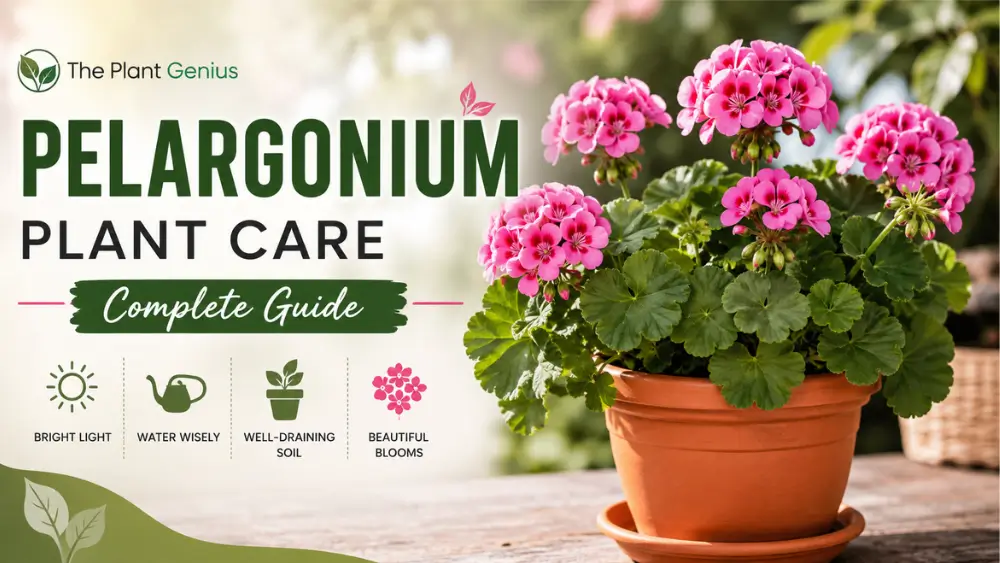
Pelargonium, almost universally called “geranium” in everyday use, needs full sun to bright light, soil allowed to dry out between waterings, and average to slightly cool temperatures for the best blooming performance. It’s one of the most popular flowering plants for patios, window boxes, and sunny indoor windowsills, producing clusters of red, pink, white, or purple flowers over rounded, often patterned leaves. Regularly removing spent blooms and giving it enough direct sun are the two biggest factors in keeping it flowering continuously through the growing season.
Table of Contents
Quick Care Facts
| Care Factor | Requirement |
|---|---|
| Scientific name | Pelargonium spp. |
| Common names | Geranium, Zonal Geranium, Ivy Geranium, Martha Washington Geranium |
| Light | Full sun to bright light; at least 6 hours daily for best blooming |
| Water | When top 1-2 inches of soil are dry; avoid soggy soil |
| Soil | Well-draining, slightly acidic to neutral potting mix |
| Temperature | 65-75°F (18-24°C) days; cooler nights encourage more blooms |
| Humidity | Average to low; high humidity can encourage fungal issues |
| Fertilizer | Regular balanced or bloom-boosting feed every 2-4 weeks during growth |
| Toxicity | Toxic to cats and dogs if ingested |
| Growth habit | Bushy, mounding, or trailing depending on type |
| Difficulty | Easy; mainly needs enough direct sun to bloom well |
About Pelargonium (Geranium)
The plant almost everyone calls “geranium,” whether growing in a window box, hanging basket, or sunny garden bed, is botanically Pelargonium, native primarily to South Africa. True Geranium, sometimes called cranesbill or hardy geranium, is a related but distinct genus, mostly grown as a perennial garden groundcover with smaller flowers, and cared for somewhat differently than the Pelargonium covered in this guide. The naming mix-up dates back centuries, to when both genera were originally classified together under the same name by early botanists, and “geranium” has simply stuck as the common name for Pelargonium ever since, even after the two were formally separated into distinct genera.
Pelargonium comes in several distinct types. Zonal geraniums (Pelargonium x hortorum) are the classic upright, bushy type, often with a darker “zone” or ring marking on the leaves. Ivy geraniums (Pelargonium peltatum) have a trailing habit and glossy, ivy-shaped leaves, popular for hanging baskets and window boxes. Martha Washington or regal geraniums (Pelargonium x domesticum) produce larger, more ruffled flowers but bloom for a shorter season than other types. Scented-leaf geraniums are grown as much for their fragrant foliage, released when the leaves are brushed or crushed, as for their flowers, with varieties scented like rose, lemon, mint, and even chocolate mint.
Scented-leaf varieties in particular have a long history beyond ornamental use; rose-scented geranium leaves, for example, have traditionally been used to infuse flavor into sugars, cakes, and jellies in some culinary traditions, taking advantage of their fragrant oils rather than their appearance. Most home growers, though, simply enjoy brushing past the foliage on a porch or patio for the burst of scent it releases.
Light Requirements
Pelargonium needs full sun to bright light, ideally at least 6 hours of direct sun daily, to bloom well.
Outdoors, a sunny patio, garden bed, or window box works well. Indoors, place it in your brightest available window, ideally a south-facing one that gets direct sun for a good portion of the day. In insufficient light, Pelargonium tends to grow leggy and produces noticeably fewer flowers, making light the single biggest factor in whether a plant blooms well or barely blooms at all.
Watering
Water when the top 1-2 inches of soil are dry, and avoid keeping the soil consistently wet.
Pelargonium is fairly drought tolerant and much more likely to develop problems from overwatering than from occasional dry spells. Consistently soggy soil is one of the most common causes of yellowing leaves and root rot in this plant. Water thoroughly when you do water, then allow the soil to dry out somewhat before watering again, rather than keeping it continuously and consistently moist.
Soil and Potting
A well-draining potting mix with a slightly acidic to neutral pH works well, ideally amended with perlite to further improve drainage. Good drainage matters more than soil richness for this plant, since Pelargonium is not a particularly heavy feeder when it comes to organic matter in the soil itself. Repot as needed when a plant becomes rootbound, typically choosing a pot only slightly larger than the current one.
Temperature and Humidity
Pelargonium does well in typical outdoor and indoor temperatures, ideally around 65-75°F (18-24°C) during the day. Interestingly, somewhat cooler nighttime temperatures tend to encourage more prolific blooming rather than hindering it, which is part of why geraniums often perform so well in spring and fall in mild climates.
Pelargonium prefers average to somewhat low humidity, unlike many popular flowering and foliage houseplants. High humidity combined with poor air circulation can encourage fungal issues like leaf spot and gray mold on the foliage and flowers. Good airflow around the plant, rather than added humidity, is generally more beneficial for this particular plant.
Fertilizing
Feed every 2-4 weeks during the growing season with a balanced liquid fertilizer, or one formulated for flowering plants with a slightly higher phosphorus content to support continuous blooming. Reduce or stop fertilizing in fall and winter, or whenever the plant is resting rather than actively growing and flowering.
Deadheading: The Key to Continuous Blooms
Regularly removing spent flowers, a process called deadheading, is one of the most effective ways to keep Pelargonium blooming continuously through the growing season.
Once individual flowers within a cluster fade, snip or pinch off the entire flower stalk down to where it meets the main stem, rather than just removing individual spent blooms. This redirects the plant’s energy away from seed production and toward generating new flower buds, often resulting in a noticeably longer and more prolific blooming season than a plant left to fade and set seed on its own.
How to Overwinter Pelargonium Indoors
In climates with cold winters, Pelargonium isn’t frost tolerant and will be damaged or killed by freezing temperatures, but many gardeners successfully keep the same plants going year after year by bringing them indoors before the first frost. Move the plant to your brightest available indoor window, reduce watering somewhat compared to its active growing season pace, and don’t worry if it blooms less or drops some leaves during the winter months, since reduced growth is normal for this resting period. Cutting the plant back by up to half its size before bringing it indoors can also help it manage the lower light conditions more easily and keeps it from becoming overly leggy while indoors. Resume regular watering and fertilizing once you move it back outdoors, or once you see strong new growth, in spring.
How to Propagate Pelargonium
Pelargonium is easy to propagate from stem cuttings, a technique gardeners have used to share plants for generations:
- Take a 4-6 inch cutting from a healthy, non-flowering stem, cutting just below a leaf node.
- Remove the lower leaves so a bare section of stem is exposed.
- Let the cut end dry and callus for a few hours to a day, which helps prevent rot.
- Plant the cutting in moist, well-draining potting soil, or root it in water first.
- Keep it in bright light while it roots, typically within a few weeks.
Is Pelargonium (Geranium) Toxic to Pets?
Pelargonium is toxic to cats and dogs if ingested.
It contains compounds including geraniol and linalool, which can cause vomiting, loss of appetite, depression, and skin irritation in pets that chew on or eat the leaves or flowers. Keep it out of reach of pets prone to chewing on plants, and contact your veterinarian if you suspect ingestion and notice these symptoms.
Common Problems and How to Fix Them
Leggy growth with few flowers Almost always a light issue. Move the plant to the sunniest available spot, ideally with at least 6 hours of direct sun daily.
Yellowing leaves Usually a sign of overwatering. Let the soil dry out more between waterings and check that the pot drains well.
Leaf spot or fuzzy gray mold on flowers Typically caused by high humidity combined with poor air circulation. Improve airflow around the plant and avoid getting the foliage wet when watering.
Chewed or damaged flower buds Often caused by geranium budworm, a caterpillar pest that specifically targets Pelargonium flower buds. Handpicking visible caterpillars in the evening, when they’re most active, or using an appropriate insecticide labeled for budworms, can help control an active infestation before it affects the whole plant.
General pests Aphids, whiteflies, and spider mites can also appear on Pelargonium. Wipe down leaves periodically and treat with insecticidal soap if pests are spotted.
Seasonal Care Summary
| Season | Watering | Fertilizing | Notes |
|---|---|---|---|
| Spring | Every 1-2 weeks | Every 2-4 weeks | Deadhead regularly to encourage continuous blooms |
| Summer | Every 1-2 weeks | Every 2-4 weeks | Peak flowering season with full sun |
| Fall | Reduce gradually | Taper off | Bring indoors before frost in cold climates |
| Winter | Sparingly | None | Reduced growth is normal during indoor overwintering |
Frequently Asked Questions
How do you care for a Pelargonium (geranium) plant?
Give it full sun to bright light, water when the top 1-2 inches of soil are dry, use well-draining soil, and deadhead spent flowers regularly to encourage continuous blooming.
Is Pelargonium the same as Geranium?
In everyday use, yes, “geranium” almost always refers to Pelargonium. True Geranium, or cranesbill, is a related but botanically distinct genus, mostly grown as a hardy perennial groundcover rather than the classic patio and window-box plant.
Why isn’t my geranium blooming?
Insufficient sunlight is the most common cause. Move the plant to a spot with at least 6 hours of direct sun daily, and make sure you’re deadheading spent flowers regularly.
Can you keep Pelargonium as a houseplant year-round?
Yes, particularly in a very bright, sunny window, though it may bloom less prolifically indoors than it would outdoors in full sun.
Is Pelargonium (geranium) toxic to cats and dogs?
Yes, it’s toxic to cats and dogs if ingested and should be kept out of reach of pets.
How do you overwinter a geranium indoors?
Bring it inside before the first frost, place it in your brightest window, cut it back if needed, and reduce watering; some leaf drop and reduced blooming during winter is normal.
Why do some geraniums smell fragrant when I touch the leaves?
Scented-leaf geranium varieties release fragrances like rose, lemon, or mint when their leaves are brushed or crushed, a trait bred into certain Pelargonium species specifically for their aromatic foliage.
What’s the difference between zonal, ivy, and regal geraniums?
Zonal geraniums are upright and bushy with marked leaves, ivy geraniums trail and suit hanging baskets, and regal (Martha Washington) geraniums have larger, more ruffled flowers but a shorter bloom season than the other two types.
Do geraniums need to be deadheaded to keep blooming?
While they’ll still produce some flowers without it, regularly deadheading spent blooms significantly extends and improves flowering by redirecting the plant’s energy away from seed production and toward new buds.
What causes chewed holes or damage on my geranium’s flower buds?
This is a common sign of geranium budworm, a caterpillar pest that specifically targets Pelargonium flower buds before they open. Handpicking visible caterpillars in the evening, when they’re most active, is often enough to control a light infestation.