
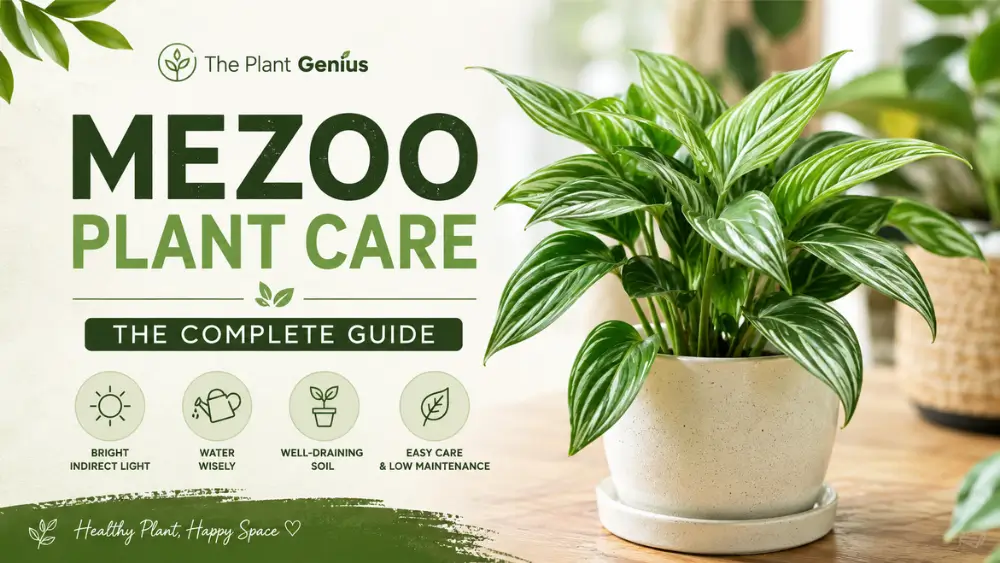
Mezoo (commonly sold as ‘Mezoo Trailing Red’) needs full to partial sun, well-draining soil kept in a middle ground of moisture, not bone dry and not soggy, and warm temperatures, since it’s a semi-succulent trailing plant related to ice plants and other members of the Aizoaceae family. It’s known for its glossy, variegated green-and-cream leaves and small, cheerful magenta-red flowers that, unusually for this plant family, stay open even in shade or cloudy weather. Despite a common misconception that it’s strictly an outdoor annual, Mezoo can be grown successfully as an indoor houseplant year-round if given enough bright light.
Table of Contents
Quick Care Facts
| Care Factor | Requirement |
|---|---|
| Scientific name | Dorotheanthus bellidiformis ‘Mezoo Trailing Red’ (also sold as Aptenia cordifolia or Mesembryanthemum cordifolium ‘Variegata’) |
| Common names | Mezoo, Mezoo Trailing Red, Baby Sunrose, Heartleaf Ice Plant |
| Light | Full to partial sun; bright light indoors |
| Water | Middle ground: not bone dry, not soggy; water deeply, then let dry to the touch |
| Soil | Well-draining; adapts well to standard potting soil |
| Temperature | Warm; not cold hardy, hardy outdoors only in zones 10-11 |
| Humidity | Prefers drier air; no extra humidity needed |
| Fertilizer | Light feeding with a slow-release fertilizer during the growing season |
| Toxicity | Considered pet safe / non-toxic |
| Growth habit | Trailing, spreading; excellent “spiller” for hanging baskets and containers |
| Difficulty | Easy, once its specific watering balance is understood |
About the Mezoo Plant
Mezoo is the widely used trade name for a semi-succulent trailing plant most often sold as ‘Mezoo Trailing Red,’ prized for its glossy, thick, heart-shaped leaves edged in creamy white and its small, vivid magenta-red daisy-like flowers. It’s a member of the ice plant family, Aizoaceae, and you’ll find it labeled under a few different botanical names depending on the grower or retailer, including Dorotheanthus bellidiformis, Aptenia cordifolia, and Mesembryanthemum cordifolium ‘Variegata.’ These naming differences reflect some genuine disagreement and reclassification within this plant family over the years, but all refer to the same plant sold under the Mezoo trade name, and care is identical regardless of which botanical name appears on the tag.
One detail that sets Mezoo apart from many of its ice plant relatives: its flowers stay open even on cloudy days and in partial shade, whereas many related ice plant species close their blooms whenever direct sun isn’t hitting them. This makes Mezoo a more consistently colorful choice for container gardens and hanging baskets that don’t get sun all day long.
Where to Use Mezoo in Your Home or Garden
Mezoo’s naturally trailing, spreading growth habit makes it especially popular as a “spiller,” the plant that cascades over the edge of a container in mixed plantings, paired with taller “thriller” plants in the center and shorter “filler” plants around them. It works equally well as a standalone hanging basket plant, a groundcover in a sunny garden bed, or a houseplant trailing from a shelf or plant stand indoors. Because it tolerates standard potting soil rather than requiring the lean, sandy mix many true succulents need, it’s also an easy plant to combine with a wider range of other container companions without worrying about mismatched soil needs.
Can Mezoo Survive as an Indoor Houseplant?
Yes, despite a common misconception that Mezoo is strictly an outdoor annual or seasonal container plant, it genuinely can thrive as a year-round houseplant when given enough bright light.
Mezoo is frequently sold and marketed as a “spiller” for outdoor hanging baskets and mixed containers, which has led to a widespread assumption that it can’t be grown successfully indoors. In practice, an east- or south-facing window with strong light is generally enough to keep it happy through the colder months, and many growers successfully overwinter Mezoo indoors in a sunny spot before returning it outdoors the following spring. The plant is more adaptable to indoor conditions than its outdoor-annual reputation suggests, as long as light levels stay high.
Light Requirements
Mezoo does best in full to partial sun, generally at least 4-6 hours of direct or very bright light daily. Outdoors, a spot that gets a good portion of direct sun through the day works well. Indoors, place it in your brightest available window, ideally one that gets direct sun for at least part of the day. In lower light, Mezoo tends to grow leggy and sparse, with weaker coloring and fewer flowers.
Watering
Mezoo needs a careful middle ground: not bone dry and not consistently wet, since it’s less drought-tolerant than true succulents but still vulnerable to root rot from overwatering.
Unlike true ice plants, sedums, or other extremely drought-tolerant succulents, Mezoo doesn’t handle prolonged dry spells particularly well. At the same time, standing water or consistently soggy soil is the most common way to run into serious trouble with this plant, often showing up as dark, mushy, or translucent leaves. The most reliable approach is to water thoroughly, wetting the entire root ball, then let the soil dry to the touch before watering again, rather than following a rigid schedule in either direction.
Soil and Potting
Mezoo is more flexible about soil than many of its succulent relatives. While it can be grown in a typical cactus or succulent mix, it also grows well in standard well-draining potting soil, unlike true ice plants that generally need very lean, sandy, fast-draining soil to thrive. As long as the container has good drainage and the soil doesn’t stay waterlogged, Mezoo isn’t especially fussy about the specific soil blend it’s grown in. Repot as needed if the plant becomes rootbound, generally choosing a wide, shallow container that suits its trailing, spreading growth habit rather than a deep, narrow one.
Temperature and Humidity
Mezoo prefers warm conditions and isn’t cold hardy, generally only surviving outdoors year-round in USDA zones 10-11. In cooler climates, it’s typically grown as a warm-season annual outdoors or brought indoors to a bright window before the first frost.
It prefers drier air and doesn’t need any special humidity accommodations; in fact, consistently damp, humid conditions around the foliage can contribute to the same rot issues associated with overwatering. No misting or humidity tray is necessary for this plant.
Fertilizing
Feed with a slow-release fertilizer, applied according to the product’s label instructions, during the active growing season in spring and summer. Mezoo is a relatively light feeder and doesn’t require frequent additional liquid fertilizing beyond a slow-release application, though an occasional light liquid feed can support more vigorous blooming if desired.
Pruning
Mezoo grows on slender trailing stems that can become leggy and sparse over time, particularly in lower light. Regularly pinching or trimming back the growing tips encourages fuller, bushier growth and better flowering. If a plant has become significantly overgrown, thin, or leggy, it tolerates a fairly hard cutback well, especially once moved into brighter light; new side shoots typically emerge readily from the cut points.
How to Propagate Mezoo
Mezoo is easy to propagate from stem cuttings, ideally taken during summer:
- Take a 4-5 inch cutting from a healthy stem.
- Let the cut end dry and callus for about a day before planting, which helps prevent rot.
- Place the cutting in moist potting mix.
- Cover the cutting loosely with a clear plastic bag, or mist it regularly, to maintain humidity while roots develop.
- Once new roots have formed, remove the plastic cover and care for the young plant as you would a mature one.
Is Mezoo Toxic to Pets?
Mezoo is generally considered pet safe and non-toxic, making it a popular choice for gardeners and plant owners with cats and dogs that like to chew on foliage. As with any plant, it’s still a good idea to discourage regular chewing, but Mezoo doesn’t carry the same toxicity concerns associated with many other popular trailing houseplants sold for hanging baskets.
Common Problems and How to Fix Them
Leggy, sparse growth The most common Mezoo complaint, almost always caused by insufficient light. Move the plant to a brighter, sunnier spot and prune back leggy stems to encourage denser regrowth.
Dark, mushy, or translucent leaves A clear sign of overwatering. Cut back on watering frequency and let the soil dry out more between waterings; make sure the container drains well.
New growth reverting to solid green Occasionally, new stems on an older Mezoo plant emerge without the characteristic white leaf margins. This is a natural variegation shift that can occur in ice plant relatives over time and isn’t generally a sign of a care problem, though pruning out solid-green stems can help maintain a more consistently variegated appearance if desired.
Few or no flowers Usually a light issue. Mezoo blooms most reliably with several hours of direct sun; increasing light exposure typically improves flowering.
Root rot Caused by consistently wet, poorly drained soil. Repot into fresh, well-draining soil and adjust your watering routine going forward, checking that the container has adequate drainage holes and isn’t sitting in a saucer full of standing water.
Seasonal Care Summary
| Season | Watering | Fertilizing | Notes |
|---|---|---|---|
| Spring | Deep water, then let dry to the touch | Slow-release feed | Good time to prune, propagate, or move outdoors |
| Summer | Deep water, then let dry to the touch | Slow-release feed | Peak growth and flowering in full sun |
| Fall | Reduce gradually | Stop | Bring indoors before frost if grown outdoors |
| Winter | Sparingly | None | Needs bright light indoors to avoid legginess |
Frequently Asked Questions
How do you care for a Mezoo plant?
Give it full to partial sun, water deeply and then let the soil dry to the touch before watering again, use well-draining soil, and feed lightly with a slow-release fertilizer during the growing season.
Can Mezoo be grown indoors year-round?
Yes, despite being commonly sold as an outdoor annual, Mezoo can thrive indoors year-round in a bright, sunny window, and many growers successfully overwinter it inside before returning it outdoors in spring.
Why is my Mezoo plant leggy?
Legginess is almost always caused by insufficient light. Moving the plant to a brighter, sunnier location and pruning back long stems typically restores fuller, bushier growth.
How often should you water a Mezoo plant?
Water deeply, then allow the soil to dry to the touch before watering again, avoiding both prolonged dryness and consistently soggy soil.
Is Mezoo the same as a true ice plant?
Mezoo is closely related to true ice plants and is sometimes sold under overlapping botanical names, but it’s more tolerant of standard potting soil and less drought-tolerant than many true ice plant species like Delosperma.
Is Mezoo safe for cats and dogs?
Yes, it’s generally considered pet safe and non-toxic, making it a popular choice for households with pets that chew on plants.
Why does my Mezoo have plain green leaves instead of variegated ones?
New growth occasionally reverts to solid green rather than the typical white-edged variegation. This is a natural variation rather than a sign of a care problem.
Does Mezoo need a special succulent soil mix?
No. Unlike many true succulents and ice plants, Mezoo adapts well to standard well-draining potting soil and doesn’t require the very lean, sandy mix typically recommended for succulent-specific soil blends.
How big does Mezoo grow?
It typically stays fairly low, around 6-8 inches tall, while spreading 18-20 inches or more as it trails, making it well suited to hanging baskets and groundcover use alike.