
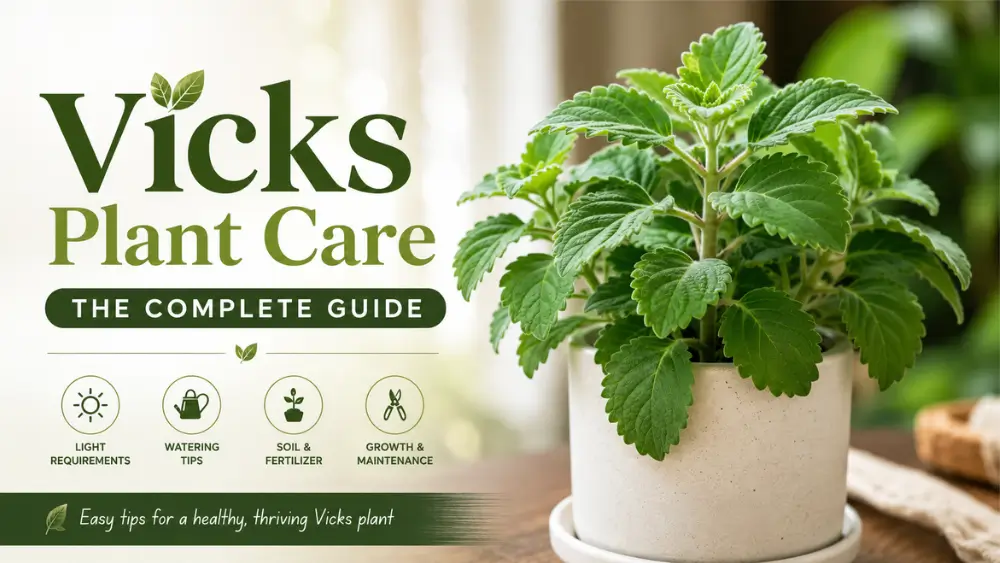
Vicks plant (Plectranthus tomentosa) needs bright light, well-draining soil that’s allowed to dry out between waterings, and warm temperatures, since it behaves more like a succulent than a typical tropical foliage plant. Its soft, velvety leaves release a distinctive menthol and camphor scent, much like Vicks VapoRub, when brushed or crushed, which is exactly where its common name comes from. One important care note sets it apart from most other houseplants: avoid misting it, since its fuzzy leaves trap moisture and are prone to fungal issues if kept damp.
Table of Contents
Quick Care Facts
| Care Factor | Requirement |
|---|---|
| Scientific name | Plectranthus tomentosa (also Plectranthus hadiensis var. tomentosa) |
| Common names | Vicks Plant, Vicks VapoRub Plant, Succulent Coleus |
| Light | Bright light; tolerates some direct sun outdoors |
| Water | When top inch of soil is dry; drought tolerant, succulent-like |
| Soil | Well-draining, succulent or cactus-style mix |
| Temperature | Warm, 65-85°F (18-29°C); not frost tolerant |
| Humidity | Average humidity; avoid misting the fuzzy leaves |
| Fertilizer | Light feeding, half-strength, during the growing season |
| Toxicity | Not specifically listed by the ASPCA; related Plectranthus species are generally non-toxic |
| Growth habit | Trailing, cascading; good for hanging baskets |
| Difficulty | Easy; more forgiving than fussy once light and watering match its succulent-like needs |
About the Vicks Plant
Vicks plant, botanically Plectranthus tomentosa, is a member of the mint family, Lamiaceae, and gets its common name from the unmistakable scent released when its soft, fuzzy leaves are touched or crushed, a menthol-and-camphor aroma very similar to Vicks VapoRub. Native to South Africa, it’s also sometimes sold as “Succulent Coleus,” a nod to its thick, fleshy leaves and its relation to ornamental coleus, another member of the same plant family.
The word “tomentosa” in its scientific name refers to the dense, velvety coating of fine hairs covering the whole plant, which gives the foliage its soft, almost felted texture. Leaves are broadly oval with gently scalloped edges, and mature plants often send up spikes of small lavender or purple flowers, which are popular with bees and butterflies.
It’s worth being careful about which plant you’re actually buying. Cuban oregano (Plectranthus amboinicus), also known as Mexican mint or Spanish thyme, has a similarly strong aromatic scent and is sometimes mislabeled or casually referred to as “Vicks plant” as well, even though it’s a distinct species with a different growth habit and a more savory, oregano-like fragrance rather than the sweeter, more distinctly menthol scent of true Plectranthus tomentosa. If your plant’s leaves are notably fuzzy and velvety with a scent closer to actual Vicks VapoRub than to oregano, you likely have the true Vicks plant covered in this guide.
Historically, in parts of its native range, crushed or steeped Vicks plant leaves have been used in traditional folk remedies for nasal congestion, similar in concept to how Vicks VapoRub itself is used, though this guide focuses on growing and enjoying the plant ornamentally rather than as a substitute for medical treatment. Today, most growers keep it simply for its striking texture, cascading growth habit, and the pleasant aromatic surprise it offers whenever the foliage is brushed against.
Where to Display Vicks Plant
Thanks to its naturally trailing, cascading growth, Vicks plant is especially well suited to hanging baskets, tall planters, or a spot along the edge of a shelf where its stems can spill over. Placing it somewhere it will be brushed against occasionally, such as along a well-traveled porch railing or near a frequently used doorway, lets you enjoy its signature scent as part of everyday life rather than only when you deliberately seek it out. It also does well paired with other sun-loving succulents in a mixed outdoor container, given their similar watering needs.
Light Requirements
Vicks plant does best in bright light, and unlike many typical tropical houseplants, it can tolerate a fair amount of direct sun, especially when grown outdoors, where full sun to partial shade suits it well. Indoors, a bright south- or west-facing window is ideal. In lower light, the plant tends to stretch and become leggy, with less compact, less vibrant growth overall.
Watering
Water when the top inch of soil is dry, treating this plant more like a succulent than a typical tropical foliage plant.
Vicks plant’s thick, fleshy leaves store water, making it fairly drought tolerant and much more forgiving of missed waterings than of overwatering. Soggy, consistently wet soil is the most common way to run into trouble with this plant, since it can quickly lead to root rot. Always use a pot with drainage holes, and let the soil dry out noticeably between waterings rather than keeping it continuously moist.
Soil and Potting
A well-draining, succulent- or cactus-style potting mix is ideal, since standard moisture-retentive potting soil can hold too much water around the roots for this plant’s preferences. If you only have regular potting mix on hand, amending it generously with perlite or coarse sand will help achieve the fast drainage this plant needs. Repot as needed when the plant becomes rootbound, generally every 1-2 years.
Temperature and Humidity
Vicks plant prefers warm conditions, ideally 65-85°F (18-29°C), and isn’t frost tolerant; outdoors, it’s generally only hardy as a perennial in USDA zones 9-11 and should be treated as an annual or brought indoors before cold weather elsewhere.
Unlike many houseplants that benefit from extra humidity, Vicks plant should not be misted. Its dense, fuzzy leaf covering traps moisture against the leaf surface, which can encourage fungal problems and rot rather than helping the plant. It tolerates average household humidity levels well and doesn’t need any special humidity intervention; if your home is very dry, a nearby humidifier is a better option than misting directly onto the leaves.
Fertilizing
Vicks plant is a light feeder. Use a balanced liquid fertilizer diluted to half strength, applied once a month during the active growing season in spring and summer. Avoid over-fertilizing, which isn’t necessary for this plant’s fairly modest growth needs and can lead to weak, overly soft growth.
Pruning
Regular pinching of the growing tips helps keep Vicks plant compact and encourages fuller, bushier growth rather than long, trailing stems with sparse foliage. Because it flowers on new growth, some growers also choose to pinch off flower buds as they form, redirecting the plant’s energy toward foliage production instead, though allowing it to bloom is perfectly fine if you’d like to see (and smell) the flowers. As the plant matures past its first year, the base of the stems often becomes noticeably woodier, which is a normal part of its growth and can slightly improve its tolerance of cooler conditions.
How to Propagate Vicks Plant
Vicks plant roots readily from stem cuttings, making it easy to share or multiply:
- Take a 3-4 inch cutting from a healthy stem, cutting just below a leaf node.
- Remove the lowest leaves so a bare section of stem is exposed.
- Place the cutting in a glass of water, or directly into a well-draining potting or succulent mix.
- Keep it warm and in bright light while it roots.
- Roots typically develop within a few weeks; once established, care for the new plant as you would a mature one.
Is Vicks Plant Toxic to Pets?
Vicks plant isn’t specifically listed in the ASPCA’s toxic or non-toxic plant databases, though several closely related Plectranthus species, including candle plant and Swedish ivy, are listed as non-toxic to cats, dogs, and horses. Given its strong essential oil content, it’s still a sensible precaution to discourage pets from chewing on the leaves regularly, since aromatic plant oils can sometimes cause mild stomach upset in pets even when a plant isn’t formally classified as toxic.
Common Problems and How to Fix Them
Leggy, sparse growth Usually caused by insufficient light. Move the plant to a brighter spot and pinch back growing tips to encourage bushier growth.
Root rot or mushy stems A sign of overwatering or soil that holds too much moisture. Let the soil dry out more between waterings and consider repotting into a faster-draining, succulent-style mix.
Fungal spots or mushy leaves Often linked to misting or otherwise getting the fuzzy leaves wet and keeping them damp. Water at the soil level rather than overhead, and avoid misting this particular plant.
Fading color or weak growth Can result from insufficient light or, less commonly, from over-fertilizing. Check light levels first, and scale back fertilizer if you’ve been feeding heavily.
Pests Mealybugs are a particularly common pest on Vicks plant, appearing as small, white, cottony clusters, along with occasional spider mites and aphids. A cotton swab dipped in rubbing alcohol can remove small mealybug infestations directly; insecticidal soap works well for more widespread pest problems, and regularly inspecting the undersides of leaves helps catch issues early.
Seasonal Care Summary
| Season | Watering | Fertilizing | Notes |
|---|---|---|---|
| Spring | When top inch is dry | Monthly, half strength | Good time to prune, propagate, or repot |
| Summer | When top inch is dry | Monthly, half strength | Provide bright light; tolerates some direct sun |
| Fall | Reduce gradually | Taper off | Bring outdoor plants inside before cold weather |
| Winter | Sparingly | None | Protect from cold; not frost tolerant |
Frequently Asked Questions
How do you care for a Vicks plant?
Give it bright light, water only when the top inch of soil is dry, use a well-draining succulent-style soil, and avoid misting the leaves, since this plant behaves more like a succulent than a typical tropical houseplant.
Why does my Vicks plant smell like Vicks VapoRub?
Its leaves contain aromatic compounds including camphor and menthol, released when the fuzzy leaves are touched or crushed, which is exactly where the plant’s common name comes from.
Should you mist a Vicks plant?
No. Its dense, fuzzy leaf covering traps moisture, and misting can encourage fungal problems rather than benefiting the plant. Water at the soil level instead.
Is Vicks plant the same as Cuban oregano?
No, though the two are sometimes confused or mislabeled. Vicks plant (Plectranthus tomentosa) has a distinctly menthol scent and velvety leaves, while Cuban oregano (Plectranthus amboinicus) is a related but different species with a more savory, oregano-like aroma.
How often should you water a Vicks plant?
Water when the top inch of soil is dry, treating it like a succulent rather than a typical tropical houseplant that prefers consistent moisture.
Is Vicks plant safe for cats and dogs?
It isn’t specifically listed by the ASPCA, though related Plectranthus species are generally considered non-toxic. As a general precaution, it’s still best to discourage pets from chewing on it regularly.
Can Vicks plant grow outdoors?
Yes, in warm climates (USDA zones 9-11) it can grow outdoors year-round in full sun to partial shade. In cooler climates, it’s best grown outdoors in summer and brought inside before frost.
Does Vicks plant flower?
Yes, mature plants produce spikes of small lavender or purple flowers that attract bees and butterflies. Some growers pinch off the buds to keep the plant’s energy focused on foliage instead, though letting it bloom is perfectly fine too.
Why shouldn’t I mist my Vicks plant like other houseplants?
Its densely fuzzy leaves are prone to holding onto surface moisture, which can encourage fungal issues and rot. Because it’s more succulent-like than tropical, it does better with occasional deep watering at the soil level than with the misting routines suited to humidity-loving foliage plants.