
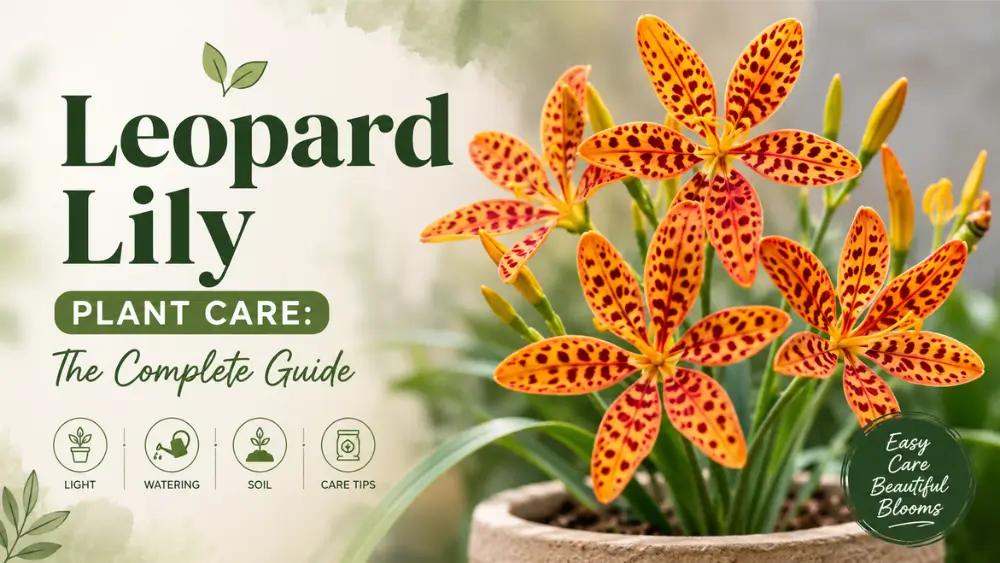
“Leopard Lily” is used for a few different plants, including true lily species and a small bulb called Ledebouria socialis. In the houseplant world, it most commonly refers to Dieffenbachia, also called Dumb Cane, which this guide covers.
Leopard Lily, more widely known as Dieffenbachia or Dumb Cane, needs bright, indirect light, soil kept lightly moist but never waterlogged, and warm temperatures with average to moderate humidity levels throughout the year. It’s grown for its large, glossy leaves splashed and speckled with cream, white, or yellow variegation on green, a pattern that inspired its “leopard” nickname. It’s also one of the more seriously toxic common houseplants: its sap can cause intense mouth and throat irritation if chewed, severe enough in some cases to temporarily affect speech, which is exactly where its other common name, Dumb Cane, comes from.
Table of Contents
Quick Care Facts
| Care Factor | Requirement |
|---|---|
| Scientific name | Dieffenbachia spp. (many cultivars, including ‘Camille’, ‘Tropic Snow’, ‘Amoena’) |
| Common names | Leopard Lily, Dumb Cane, Dieffenbachia |
| Light | Bright, indirect light; tolerates lower and fluorescent light |
| Water | Keep lightly moist; err toward underwatering rather than overwatering |
| Soil | Well-draining potting mix |
| Temperature | 65-75°F (18-24°C); avoid cold drafts |
| Humidity | Average to moderate; benefits from more in winter |
| Fertilizer | Balanced liquid feed every 4-6 weeks during the growing season |
| Toxicity | Seriously toxic to pets and humans if chewed or ingested |
| Growth habit | Upright, cane-forming; can reach up to 5 ft indoors |
| Difficulty | Beginner-friendly and tolerant of a range of indoor conditions |
About Leopard Lily (Dieffenbachia)
Leopard Lily is one of several common names for Dieffenbachia, a genus of large-leaved tropical foliage plants native to Mexico, South America, and the West Indies, where it grows in warm, humid, filtered light beneath the forest canopy. The “leopard” nickname comes from the bold, irregular splashes and speckles of cream, white, or yellow variegation scattered across the glossy green leaves of many cultivars, a pattern reminiscent of an animal print. Popular cultivars include ‘Camille’, ‘Tropic Snow’, ‘Exotica’, and ‘Amoena’, each with its own particular variegation pattern, though all share the same general care needs.
It’s worth knowing that “Leopard Lily” is genuinely used for several different plants, including true lily species native to North America and a small South African bulb called Ledebouria socialis, which also has spotted foliage patterns. In everyday houseplant shopping and searching, though, Dieffenbachia is overwhelmingly the plant people mean when they use this name, which is why it’s the focus of this guide.
Leopard Lily has been a fixture in home and office plantscaping for decades, valued for combining bold, eye-catching foliage with a genuinely easy-going nature. It tends to be more forgiving of inconsistent care, fluctuating light, and occasional neglect than many other large-leaved statement plants, which has made it a long-running favorite for spaces where a plant needs to look good without constant fussing.
Why It’s Called Dumb Cane (An Important Safety Note)
Dieffenbachia’s other common name, Dumb Cane, refers to a genuinely serious effect: chewing on the plant’s leaves or stem can cause intense burning and swelling in the mouth, tongue, and throat, severe enough in some cases to temporarily impair the ability to speak.
This happens because the plant’s sap contains calcium oxalate crystals, similar to those found in other aroids like Monstera and Philodendron, but Dieffenbachia’s reaction tends to be considerably more painful and pronounced than most of its aroid relatives. In serious cases, swelling can be significant enough to cause difficulty swallowing or breathing, which is a medical emergency requiring immediate attention. Because of this, it’s especially important to keep Dieffenbachia well out of reach of small children and pets, more so than with many other common houseplants, and to handle pruning or propagation with care, washing your hands thoroughly afterward and avoiding touching your eyes or mouth until you have.
Where to Display Leopard Lily
Given its bold, patterned foliage and eventual size, up to about 5 feet tall indoors, Leopard Lily works well as a floor plant in a living room, entryway, or office corner where it has room to fill out. Because of the serious toxicity concerns covered above, it’s worth being especially thoughtful about placement in homes with young children or pets prone to chewing on plants, choosing a spot that’s genuinely out of reach rather than simply visible but accessible, such as a high shelf or a room that stays closed off from curious pets.
Light Requirements
Leopard Lily does best in bright, indirect light, though it’s genuinely adaptable and tolerates lower light conditions, including fluorescent office lighting, better than many houseplants, which is part of why it’s such a popular choice for interior offices. Avoid direct, intense sun, which can scorch its broad leaves. In very low light, growth slows and variegation may become less vivid.
Watering
Keep the soil lightly moist, watering thoroughly and then allowing the top layer to dry before watering again, erring toward underwatering rather than overwatering the plant.
Dieffenbachia is fairly drought tolerant and handles occasional missed waterings better than consistently soggy soil, which quickly leads to root rot. Water at room temperature, saturating the soil until water drains from the bottom of the pot, then let excess water drain away completely.
Soil and Potting
A standard well-draining potting mix works well, ideally amended with perlite to improve drainage further. Repot every 1-2 years, or once the plant becomes rootbound, generally in spring as active growth resumes. Because larger, multi-caned specimens can become somewhat top-heavy, choose a sturdy pot as the plant matures to keep it from tipping over.
Temperature and Humidity
Leopard Lily prefers warm, stable conditions, ideally 65-75°F (18-24°C), and should be kept away from cold drafts, exterior doors, and air conditioning vents.
It tolerates average household humidity reasonably well, though it appreciates additional humidity, particularly during dry winter months when indoor heating is running throughout the home. A humidifier or occasional misting can help prevent dry, browning leaf edges during this time.
Fertilizing
Feed with a balanced, water-soluble liquid fertilizer every 4-6 weeks during the active growing season in spring and summer months. Reduce or stop fertilizing in fall and winter, when growth naturally slows.
Pruning
Leopard Lily responds well to pruning, and cutting back leggy or overly tall stems encourages bushier, fuller growth from lower on the plant. It’s also notably resilient when it comes to recovering from a hard prune; even a plant that’s become bare and leggy at the base can often be cut back significantly and will regenerate new growth readily from the remaining cane sections, making it a forgiving plant to rejuvenate if it’s gotten out of hand over time.
How to Propagate Leopard Lily
Leopard Lily can be propagated from stem or cane cuttings, similar to the technique used for many Dracaena relatives:
- Using clean, sharp shears, cut a section of stem a few inches long, ideally including a node.
- Plant the cutting in moist, well-draining potting soil, or root it in water first before transferring it to soil once roots appear.
- Keep it warm and in bright, indirect light while it roots, generally taking a few weeks to establish itself.
- Wear gloves during propagation and wash your hands thoroughly afterward, given the plant’s irritating sap.
Larger, multi-stemmed plants can also sometimes be divided into separate sections, each with its own roots, as an alternative to taking cuttings, giving you a straightforward way to create several new plants from one established specimen.
Is Leopard Lily Toxic to Pets and Humans?
Yes, and notably more seriously than many other common houseplants.
Chewing or ingesting any part of Leopard Lily causes immediate, intense burning and swelling in the mouth and throat, along with excessive drooling, vomiting, and difficulty swallowing in pets, and can impair speech temporarily in people, which is the origin of its “Dumb Cane” nickname. In severe cases involving significant swelling, seek emergency medical or veterinary attention immediately, since airway swelling can become dangerous. Keep this plant well out of reach of children and pets, more diligently than you might with a milder houseplant.
Common Problems and How to Fix Them
Yellowing leaves Usually caused by overwatering, though tap water sensitivity can also contribute in some cases; filtered or rainwater can help if watering adjustments alone don’t resolve it, since mineral buildup over time can stress the roots.
Drooping stems Often a sign of inconsistent watering, either too much or too little. Check the soil moisture carefully and adjust your watering routine to be more consistent going forward.
Slow growth or legginess Typically caused by insufficient light. Move the plant to a brighter spot and prune back leggy stems to encourage fuller, healthier regrowth over the following weeks.
Pests Spider mites, mealybugs, and scale can occasionally appear. Wipe down leaves periodically and treat promptly with insecticidal soap if pests are spotted, checking the undersides of the large leaves closely.
Seasonal Care Summary
| Season | Watering | Fertilizing | Notes |
|---|---|---|---|
| Spring | Lightly moist | Every 4-6 weeks | Good time to prune or take cuttings |
| Summer | Lightly moist | Every 4-6 weeks | Watch for dry-out in bright, warm rooms |
| Fall | Reduce gradually | Taper off | Growth naturally slows |
| Winter | Reduce further | None | Increase humidity with indoor heating running |
Frequently Asked Questions
How do you care for a Leopard Lily (Dieffenbachia)?
Give it bright, indirect light, keep the soil lightly moist without letting it become soggy, provide average to moderate humidity, and feed every 4-6 weeks during the growing season.
Why is Dieffenbachia called Dumb Cane?
Because chewing on its leaves or stem can cause severe burning and swelling in the mouth and throat, which in some cases has been reported to temporarily affect a person’s ability to speak.
Is Leopard Lily dangerous to have around pets or children?
It’s genuinely more seriously toxic than many common houseplants if chewed or ingested, so it should be kept well out of reach of small children and pets that might chew on it.
Is Leopard Lily the same as a true lily?
No, despite the name, the houseplant commonly called Leopard Lily is Dieffenbachia, an aroid unrelated to true lilies. A few different plants, including some true lily species, also share the “Leopard Lily” nickname.
Why are my Leopard Lily’s leaves turning yellow?
This is most often caused by overwatering, though tap water quality can also play a role. Adjust your watering routine and consider filtered water if the problem continues.
Can Leopard Lily survive in low light?
Yes, it’s notably tolerant of lower light and even fluorescent office lighting compared to many houseplants, though growth will be slower than in bright, indirect light.
How do you revive a leggy, overgrown Leopard Lily?
It responds well to hard pruning and typically regenerates readily, even from a bare, leggy base, making it a forgiving plant to cut back and rejuvenate.
Is Dieffenbachia the same plant as Mother-in-Law’s Tongue?
No, these are different plants. Mother-in-Law’s Tongue is a common name for Snake Plant (Dracaena trifasciata), while Leopard Lily refers to Dieffenbachia. The two are unrelated and shouldn’t be confused despite both having colorful common nicknames.
What should I do if someone chews on a Leopard Lily plant?
Rinse the mouth with water, discourage swallowing, and contact poison control or a doctor promptly, especially if swelling or difficulty breathing develops, since this can become a medical emergency in serious cases. For a pet, contact a veterinarian right away.