
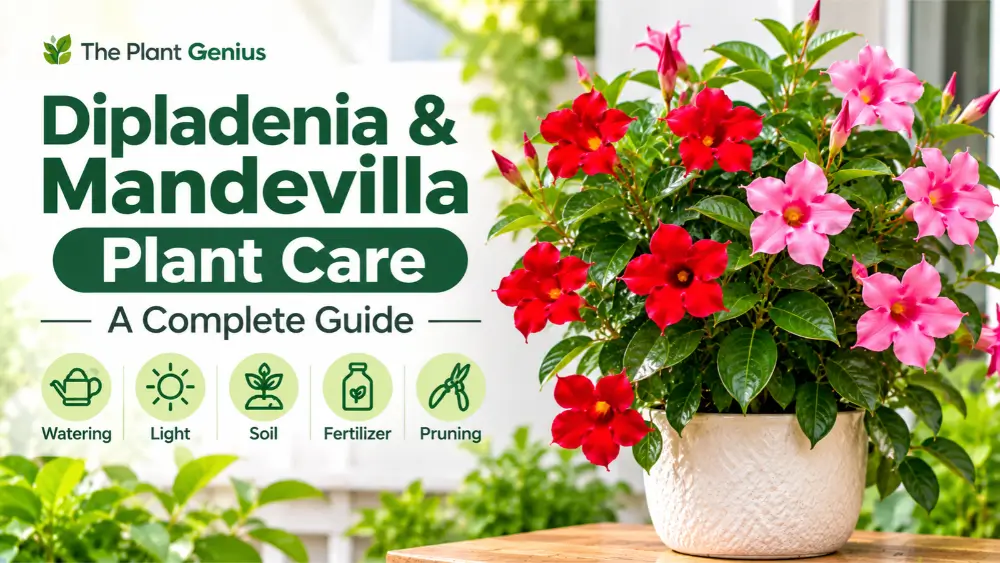
Dipladenia and Mandevilla are searched for as if they were two different plants, but they belong to the same genus and need nearly identical care. This guide covers both, including the Rio and other compact “dipladenia” types, and explains how to tell them apart.
Quick Answer
Dipladenia and Mandevilla need at least 6 hours of bright light each day, soil that’s kept lightly moist but never soggy, regular feeding while they’re growing, and protection from frost. Both are tropical plants that flower for months in warm weather, then need to come indoors before temperatures drop below about 50°F (10°C). The main practical difference is shape: Mandevilla is a vigorous climber that needs a trellis, while Dipladenia is a compact, bushy plant that suits pots and hanging baskets. For winter, cut watering right back, stop feeding, and keep the plant in a cool, bright spot until spring.
Table of Contents
Quick Care Facts
| Care Factor | Requirement |
|---|---|
| Scientific name | Mandevilla spp. (compact “dipladenia” types are often sold as Mandevilla sanderi and related hybrids) |
| Common names | Dipladenia, Mandevilla, Rocktrumpet, Rio Dipladenia |
| Light | Bright light, 6+ hours daily; afternoon shade helps in very hot climates |
| Water | When the top inch of soil is dry; reduce sharply in winter |
| Soil | Well-draining potting mix with added perlite |
| Temperature | Warm; ideal summer around 68-70°F (20-21°C); bring indoors before it drops below 50°F (10°C) |
| Humidity | Average household humidity is acceptable |
| Fertilizer | Liquid feed every 3-4 weeks during the growing season; none in winter |
| Toxicity | Toxic if eaten; sap can irritate skin |
| Growth habit | Mandevilla climbs; Dipladenia is bushy and compact |
| Difficulty | Moderate; winter care is the main challenge |
About Dipladenia and Mandevilla
Mandevilla is a genus of tropical flowering vines in the Apocynaceae family, grown for large, glossy, trumpet-shaped flowers in shades of red, pink, white, and yellow. “Dipladenia” is the name given to a group of compact, bushier forms, and although the two names are used as though they were different plants, dipladenia is now recognised as a group within Mandevilla. Care for the two is almost identical.
That’s why garden centers can be confusing. Plants labeled Dipladenia, Rio Dipladenia, Sundaville, or Mandevilla are all close relatives, and the label usually tells you more about the plant’s habit and breeding than about any real difference in what it needs.
Both are perennials in frost-free climates, where they can grow outdoors all year. In cooler regions, they’re enjoyed as container plants through summer and either brought inside for winter or treated as annuals. Most people growing them in pots fall into the first group, which is why this guide spends considerable time on winter care.
Dipladenia vs. Mandevilla: How to Tell Them Apart
The easiest way to tell them apart is by how they grow: Mandevilla reaches upward and climbs, while Dipladenia branches outward into a bushy shrub and tends to arch or trail downward.
| Feature | Mandevilla | Dipladenia |
|---|---|---|
| Growth habit | Vigorous twining vine | Compact, bushy, shrub-like |
| Support | Needs a trellis, stakes, or obelisk | Rarely needs more than a stake |
| Leaves | Larger and broader | Finer, more pointed, glossy deep green |
| Flowers | Often larger | Often smaller, in a wide range of colors |
| Best for | Trellises, walls, statement climbing displays | Pots, hanging baskets, patio containers |
| Branching | Needs pinching to branch | Branches naturally |
Because their care overlaps so heavily, the choice usually comes down to space and how you want to display the plant. If you want something that scrambles up a wall or arbor, choose a Mandevilla. If you want a neat, flowering mound for a pot or basket, choose a Dipladenia.
Light Requirements
Both plants flower best in plenty of light. Mandevilla in particular thrives in full sun and needs roughly 6-8 hours of direct light a day for the most abundant blooms. Dipladenia is similar, but it appreciates a little afternoon shade in extremely hot climates, where intense sun can stress or scorch the leaves.
Indoors, give your plant the brightest spot you have, such as a south- or west-facing window. If you’re moving a plant outside for summer, introduce it gradually to full sun over a week or two. One common mistake is moving either plant abruptly from indoor light into strong sun after winter, which can scorch the foliage.
With too little light, you’ll typically see lots of leafy growth and few flowers.
Watering
Water when the top inch of soil is dry, and always let excess water drain away.
Both plants like consistent moisture while they’re actively growing and flowering, but they dislike “wet feet.” Waterlogged soil can lead to root rot, sometimes within weeks, so drainage matters as much as watering frequency. In hot summer weather, a container-grown plant may need water every few days. In cooler or indoor winter conditions, it may need water only every 10-14 days, or when the soil is nearly dry.
Overwatering in winter is the most common way to lose these plants. A semi-dormant plant uses very little water, so soggy winter soil is a recipe for rot.
Soil and Potting
A good-quality potting mix with generous perlite added suits both plants well, giving them the drainage they need while still holding some moisture. Always use a pot with drainage holes.
Choose a pot that suits the plant’s size, and repot in late winter or spring, before the new growing season begins. This is also the ideal time to trim away weak or dead growth. Dipladenia does well in a hanging basket or patio planter, while Mandevilla needs a sturdy pot that can hold a trellis or a set of stakes.
Temperature and Humidity
These are tropical plants, and warmth is what keeps them blooming. An ideal summer temperature is around 68-70°F (20-21°C) or warmer, and both are sensitive to cold. Frost protection is essential, and the plants should come indoors before temperatures drop below about 50°F (10°C).
Average household humidity is acceptable. They’re not fussy about humidity the way many tropical foliage plants are, which makes them easier indoors than something like a Calathea.
Fertilizing
Feed with a balanced liquid plant food roughly every 3-4 weeks throughout the growing season. If you want more flowers, a fertilizer with a higher middle number (phosphorus) can help, but a standard balanced feed is perfectly acceptable. Stop fertilizing completely during winter, when the plant is resting.
Pruning and Training
Pinch young growth to encourage branching. Pinching off the tips of gangly stems while the plant is young forces thicker, stronger branches and a fuller shape. This is especially useful for Mandevilla, which tends to grow long and needs pinching to branch out.
For Mandevilla, provide a trellis, obelisk, or wire mesh early, and guide the stems upward as they grow. Dipladenia only needs a small stake to stay upright as it matures.
Deadheading: removing spent flowers keeps the plant tidy and encourages more blooms.
Hard pruning: cut the plant back by about one-third in late winter, before new spring growth begins. Prune at this time rather than in fall, and remove weak or dead stems.
Winter Care for Dipladenia and Mandevilla
Neither plant survives outdoor freezing, so in most climates, winter care is what decides whether you’ll still have a plant next summer.
The goal is a cool, bright, low-water rest rather than active growth. Here’s a simple routine that works for both:
- Bring the plant indoors before the first frost, or before temperatures drop below 50°F (10°C). Starting about two weeks before your expected first frost gives you time to check for pests and adjust gradually.
- Check for pests before bringing it in. Inspect the leaves and stems for aphids, spider mites, or mealybugs and treat if needed, so you don’t bring an infestation inside.
- Choose a cool, bright location. A room around 50-60°F (10-15°C) with bright, indirect light is ideal. A warm, bright room also works if you prefer to keep the plant growing, though it may still drop some leaves.
- Water much less. Let the soil dry out more between waterings, roughly every 10-14 days or when it’s nearly dry, since the plant is semi-dormant and uses very little water.
- Stop fertilizing until growth resumes in spring.
- Expect some leaf drop. Yellowing and dropping of some leaves after the move indoors is normal as the plant adjusts and slows down.
- In late winter, wake the plant up. Repot if needed, cut back weak or dead stems by about one-third, move it to a sunnier, warmer window, and resume watering and feeding as new growth appears.
- Move outdoors gradually once nighttime temperatures stay reliably warm, hardening the plant off over a week or two so it doesn’t scorch.
In frost-free climates, none of this is needed, and the plant can stay outdoors all year, though you may still want to protect it during any unusually cold snap.
How to Propagate Dipladenia and Mandevilla
Both can be propagated from stem cuttings, though they’re slower and less reliable than many houseplants:
- Take a stem cutting a few inches long from healthy new growth, ideally in spring or early summer.
- Wear gloves, since the sap can irritate skin.
- Remove the lower leaves and plant the cutting in a moist, well-draining mix.
- Keep it warm and bright, covering it loosely with a clear bag to hold in humidity.
- Be patient: rooting can take several weeks.
Are Dipladenia and Mandevilla Toxic?
Both plants are toxic if eaten, and their sap can irritate the skin on contact.
Keep them out of reach of pets and small children, wear gloves when pruning or taking cuttings, and wash your hands afterward. As with other plants that have a milky sap, avoid touching your eyes while handling them.
Common Problems and How to Fix Them
Lots of leaves, few flowers Usually too little light or too much nitrogen fertilizer. Move to a brighter spot and consider a feed higher in phosphorus.
Yellow leaves Can be caused by overwatering, poor drainage, or underwatering. Check the soil moisture first. Some yellowing and leaf drop after moving indoors in fall is normal.
Leaves dropping in winter Normal during the move indoors and as the plant goes semi-dormant. Reduce watering and keep conditions steady.
Scorched, bleached leaves Caused by moving the plant into strong sun too quickly, or by intense afternoon heat. Acclimate gradually and provide afternoon shade in very hot climates.
Leggy, tangled growth (Mandevilla) Add support early, and pinch and prune regularly to encourage branching.
Pests Spider mites, aphids, and mealybugs are the most common. Inspect regularly, particularly before bringing plants indoors, and treat with insecticidal soap or neem oil.
Seasonal Care Summary
| Season | Watering | Fertilizing | Notes |
|---|---|---|---|
| Spring | Increase as growth resumes | Resume every 3-4 weeks | Repot, prune, and acclimate gradually to sun |
| Summer | When top inch is dry; frequent in heat | Every 3-4 weeks | Peak flowering; deadhead regularly |
| Fall | Reduce | Stop | Check for pests; bring indoors before it drops below 50°F |
| Winter | Every 10-14 days or when nearly dry | None | Cool, bright rest; expect some leaf drop |
Frequently Asked Questions
Is Dipladenia the same as Mandevilla?
They’re very closely related. Dipladenia is now recognised as a group within the Mandevilla genus, usually the more compact, bushy forms, and care for the two is almost identical.
What’s the main difference between Dipladenia and Mandevilla?
Growth habit. Mandevilla is a vigorous climbing vine that needs a trellis, while Dipladenia is compact and bushy and suits pots and hanging baskets.
How do you care for a Dipladenia plant?
Give it 6+ hours of bright light, water when the top inch of soil is dry, feed every 3-4 weeks while growing, pinch it for bushiness, and bring it indoors before temperatures drop below 50°F.
How do you care for a Mandevilla in winter?
Bring it indoors before the first frost, keep it cool and bright, water much less, skip fertilizer, and prune it back by about one-third in late winter.
Can Dipladenia or Mandevilla survive winter outdoors?
Only in frost-free climates. In cooler regions, they must come indoors or be treated as annuals.
Why isn’t my Dipladenia flowering?
Most often too little light, or too much nitrogen fertilizer. Move it somewhere brighter and use a feed with more phosphorus.
Are Dipladenia and Mandevilla toxic to pets?
Yes, they’re toxic if eaten, and the sap can irritate skin, so keep them away from pets and children and wear gloves when pruning.