
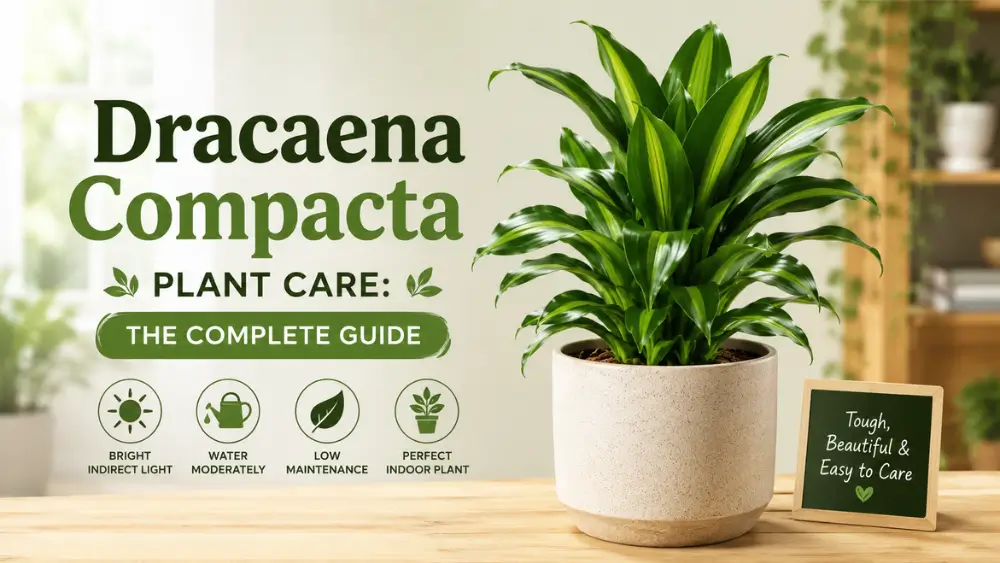
Dracaena Compacta shares the same species and core care as Corn Plant. For general Dracaena background and water-quality notes, see our Corn Plant care guide; this guide focuses on what’s specific to the Compacta cultivar.
Dracaena Compacta (Dracaena fragrans ‘Compacta’) needs medium to bright indirect light, soil allowed to dry out between waterings, and warm temperatures, following essentially the same core care as its relative, Corn Plant. What sets it apart is its growth habit: rather than tall, arching leaves on a visible cane, Compacta forms a dense, tidy rosette of short, glossy, dark green leaves, growing slowly enough that it can go years without needing significant pruning or repotting, making it one of the most low-effort statement plants available for a home or office.
Table of Contents
Quick Care Facts
| Care Factor | Requirement |
|---|---|
| Scientific name | Dracaena fragrans ‘Compacta’ |
| Common names | Dracaena Compacta, Compact Dracaena |
| Light | Medium to bright indirect light; tolerates lower light |
| Water | When top 1-2 inches of soil are dry |
| Soil | Well-draining potting mix |
| Temperature | 65-80°F (18-27°C); avoid cold drafts |
| Humidity | Average household humidity is fine |
| Fertilizer | Balanced liquid feed monthly, spring through summer |
| Toxicity | Toxic to cats and dogs if ingested |
| Growth habit | Dense, compact rosette; very slow-growing |
| Difficulty | Beginner-friendly, extremely low-maintenance |
About Dracaena Compacta
Dracaena Compacta is a cultivar of the same species as Corn Plant, Dracaena fragrans, bred and selected for its unusually dense, tight, rounded growth habit rather than the tall, arching leaves and visible cane typically associated with the species. Its solid dark green leaves are shorter and more tightly clustered than standard Corn Plant, giving it an almost ball-like or rosette shape, particularly while young. Because it shares the same species as Corn Plant, its core needs, light, water, temperature, and sensitivity to tap water, are effectively identical; the real difference is purely in appearance and growth speed.
Nurseries sometimes sell Dracaena Compacta grown as a single dense rosette in a small pot, and other times as multiple canes of staggered heights planted together in one larger container, similar to how Corn Plant is often displayed. Either presentation showcases the same underlying compact growth habit, and the two forms are cared for identically.
What Makes Compacta Different
Dracaena Compacta grows especially slowly and stays notably tidy and rounded compared to other Corn Plant cultivars, making it one of the lowest-maintenance large-growing houseplants available.
While standard Corn Plant, especially the striped ‘Massangeana’ cultivar, tends to develop a visible cane and taller, more arching form relatively quickly, Compacta can remain a dense, compact rosette for years, only gradually developing a visible cane as it slowly matures. This makes it a popular choice for smaller spaces or tidy, structured plantings, such as offices, where a plant that holds a neat, predictable shape without frequent pruning is especially valued. Its solid green color, without the cream or yellow striping seen in ‘Massangeana,’ also gives it a simpler, more understated look that fits a wider range of design styles.
Why Compacta Is a Popular Office and Commercial Plant
Because of its slow, predictable growth and tidy rosette shape, Dracaena Compacta has long been a favorite choice for interior landscapers furnishing offices, lobbies, and other commercial spaces where plants need to look consistently presentable with minimal ongoing maintenance. A plant that doesn’t quickly outgrow its allotted space, doesn’t need frequent pruning to stay looking neat, and tolerates the sometimes inconsistent lighting and watering schedules of a shared office environment is genuinely valuable in that context. For home growers, these same traits translate into a plant that’s very forgiving of a busy schedule or a less-than-ideal spot, without demanding much active attention once it’s settled in.
Light Requirements
Like other Dracaena, Compacta tolerates a range of light from medium to bright indirect light. It’s fairly shade-tolerant, making it well suited to offices and interior rooms without abundant natural light, though it will grow a bit more actively, and hold a slightly fuller, more vibrant appearance, in brighter indirect conditions. Avoid direct, intense sun, which can scorch its glossy leaves.
Watering
Water when the top 1-2 inches of soil are dry, letting excess water drain away completely. Dracaena Compacta is drought tolerant and much more likely to run into trouble from overwatering than underwatering, since consistently soggy soil can lead to root rot. As with other Dracaena, it can be sensitive to fluoride and chlorine in tap water, which commonly shows up as brown, dry leaf tips; filtered or distilled water can help prevent this over time, the same water-quality principle covered in more depth in our Corn Plant guide.
Soil and Potting
A standard well-draining potting mix works well, ideally amended with perlite to further improve drainage. Because Compacta grows so slowly, it needs repotting far less often than many houseplants, often going 3 or more years between repottings before it becomes noticeably rootbound, which makes it an especially convenient choice for growers who’d rather not deal with frequent repotting chores.
Temperature and Humidity
Dracaena Compacta does well in typical indoor temperatures, ideally 65-80°F (18-27°C), and should be kept away from cold drafts and air conditioning vents, since sudden temperature changes can cause stress. It tolerates average household humidity without any special adjustments, though like other Dracaena, it appreciates a bit of extra humidity during dry winter months when indoor heating is running.
Fertilizing
Feed with a balanced, water-soluble liquid fertilizer once a month during spring and summer. Because Compacta grows so slowly, it doesn’t need heavy feeding, and it’s generally better to under-fertilize slightly than to over-do it, since excess unused fertilizer can build up as salts in the soil over time. Reduce or stop fertilizing in fall and winter.
Pruning
Thanks to its naturally compact, tidy growth habit, Dracaena Compacta needs very little pruning compared to its faster-growing relatives. Simply trim away any yellowing or damaged lower leaves as needed with clean, sharp shears. If the plant does eventually grow taller and develop a visible cane after several years, it can be cut back to control height in the same way as Corn Plant, with new growth typically emerging from the cut point within a few weeks to months.
How to Propagate Dracaena Compacta
Dracaena Compacta can be propagated from stem or cane cuttings, following the same basic method as other Dracaena relatives:
- Cut a section of stem at least 4 inches long, ideally including a node.
- Let the cut ends callus over for a day in a dry spot to help reduce the risk of rot setting in before roots form.
- Plant the cutting in moist, well-draining potting soil, or root it in water first before transferring to soil.
- Keep it in bright, indirect light while it roots, generally taking several weeks to a couple of months to establish.
Because mature plants stay so compact, propagation is less commonly needed or attempted with this cultivar compared to its taller relatives, and most growers simply enjoy a single specimen for many years rather than actively multiplying it.
Is Dracaena Compacta Toxic to Pets?
Dracaena Compacta is toxic to cats and dogs if ingested.
Like other Dracaena species, it contains saponins that can cause vomiting, sometimes with blood present, along with loss of appetite, excessive drooling, and dilated pupils in cats in particular if the leaves are chewed or eaten. Keep it out of reach of pets that chew on houseplants.
Common Problems and How to Fix Them
Brown, dry leaf tips Usually caused by fluoride or chlorine sensitivity from tap water, or low humidity in the surrounding air. Switching to filtered or distilled water typically helps resolve this over the following weeks.
Yellowing leaves A sign of overwatering. Let the soil dry out more between waterings and check that the pot drains well.
Very slow or seemingly stalled growth This is largely normal for this particular cultivar, which grows noticeably slower than many other Dracaena. As long as the plant looks otherwise healthy, minimal visible growth over several months isn’t cause for concern, and is in fact one of the traits that makes this cultivar so popular in the first place.
Pests Spider mites, mealybugs, and scale can occasionally appear. Wipe down leaves periodically and treat promptly with insecticidal soap if pests are spotted, checking closely between the tightly clustered leaves where pests can sometimes hide unnoticed.
Seasonal Care Summary
| Season | Watering | Fertilizing | Notes |
|---|---|---|---|
| Spring | Every 1-2 weeks | Monthly | Repotting rarely needed given slow growth |
| Summer | Every 1-2 weeks | Monthly | Watch for dry-out in bright, warm rooms |
| Fall | Reduce gradually | Taper off | Growth naturally slows further |
| Winter | Every 2-3 weeks | None | Keep away from cold drafts and heater vents |
Frequently Asked Questions
How do you care for a Dracaena Compacta?
Give it medium to bright indirect light, water when the top 1-2 inches of soil are dry, use well-draining soil, and expect very slow, low-maintenance growth overall.
Is Dracaena Compacta the same as Corn Plant?
They’re the same species, Dracaena fragrans, but different cultivars. Compacta forms a dense, compact rosette with solid green leaves, while standard Corn Plant, especially ‘Massangeana,’ grows taller with a visible cane and often striped leaves.
Why is my Dracaena Compacta growing so slowly?
Slow growth is completely normal for this cultivar, which is bred specifically for its compact, tidy form. As long as the plant looks healthy overall, minimal growth isn’t a concern.
Is Dracaena Compacta toxic to cats and dogs?
Yes, it’s toxic if ingested, similar to other Dracaena species, and should be kept out of reach of pets.
How often should you water a Dracaena Compacta?
Water when the top 1-2 inches of soil are dry, typically every 1-2 weeks during the growing season and less often in fall and winter.
Does Dracaena Compacta need frequent repotting?
No, thanks to its slow growth, it often goes 3 or more years between repottings before becoming noticeably rootbound.
Why doesn’t my Dracaena Compacta look like the striped Corn Plant I’ve seen before?
Compacta has solid dark green leaves rather than the cream or yellow striping seen on the popular ‘Massangeana’ cultivar of Corn Plant. Both are the same species but different cultivars selected for different appearances.
Is Dracaena Compacta a good choice for an office?
Yes, it’s a especially popular choice for offices and commercial spaces thanks to its slow, predictable growth, tidy shape, and tolerance for inconsistent watering and lighting conditions.
Can Dracaena Compacta eventually grow a visible cane like Corn Plant?
Yes, given enough time, often several years, Compacta can gradually develop a visible cane beneath its rosette of leaves, though this happens much more slowly than with other Corn Plant cultivars.
Is Dracaena Compacta a good low-light houseplant?
It’s fairly shade-tolerant compared to many houseplants, though it will grow more actively and hold a fuller appearance in medium to bright indirect light rather than very dim conditions.
How tall does Dracaena Compacta eventually get?
It stays much shorter than standard Corn Plant for a long time thanks to its slow growth, though over many years it can still eventually reach a few feet tall as it matures.
Does Dracaena Compacta flower?
It can occasionally produce small, fragrant white flowers on a mature plant, though this is uncommon indoors and the plant is grown almost entirely for its foliage rather than any expectation of blooms.