
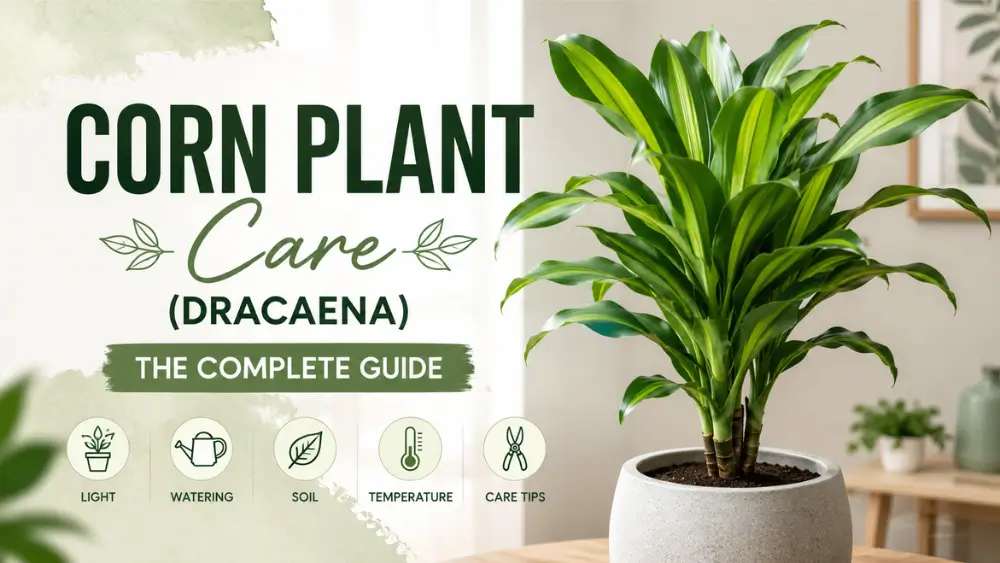
Corn plant (Dracaena fragrans) grows best in bright to medium indirect light, in well-draining soil that’s allowed to dry out between waterings. It tolerates average indoor temperatures of 65-80°F (18-27°C) and average humidity, making it one of the more forgiving large houseplants. Its most common issue, brown leaf tips, usually comes from fluoride or chlorine sensitivity in tap water rather than poor care, and switching to filtered or distilled water often solves it.
Table of Contents
Quick Care Facts
| Care Factor | Requirement |
|---|---|
| Scientific name | Dracaena fragrans |
| Common names | Corn Plant, Cornstalk Dracaena, Massangeana Cane |
| Light | Bright to medium indirect light; tolerates lower light |
| Water | When top 1-2 inches of soil are dry; drought tolerant |
| Soil | Well-draining potting mix |
| Temperature | 65-80°F (18-27°C); avoid cold drafts |
| Humidity | Average household humidity is fine |
| Fertilizer | Balanced liquid feed monthly, spring through summer |
| Toxicity | Toxic to cats and dogs if ingested |
| Growth habit | Upright cane with arching strap-like leaves; can reach 6-10 ft indoors |
| Difficulty | Beginner-friendly, low-maintenance |
About the Corn Plant
Corn plant, botanically Dracaena fragrans, gets its common name from its long, arching, strappy leaves, which closely resemble the foliage of actual corn (maize) plants. Despite the name, it has no relation to edible corn and isn’t grown for food; it’s an entirely ornamental foliage houseplant native to tropical regions of West and Central Africa.
In its natural habitat, corn plant can grow into a substantial tree, but as a houseplant it’s typically sold as one or more woody “canes” topped with rosettes of glossy, dark green leaves, often with a yellow or cream stripe running down the center. It’s a long-time favorite for offices, lobbies, and living rooms because it tolerates lower light and irregular watering better than many other large statement plants.
Corn plant also has a reputation as one of the more air-purifying houseplants, thanks in part to its inclusion in NASA’s 1989 Clean Air Study, which tested a range of common houseplants for their ability to filter certain airborne pollutants in controlled lab conditions. While a single houseplant won’t meaningfully change the air quality of a full-sized room in a typical home, this history is part of why corn plant became such a popular choice for offices and larger indoor spaces starting in the late 20th century, and it remains a reliable, attractive option for filling a bare corner with substantial, low-maintenance greenery.
Corn Plant Varieties
The straight species has solid dark green leaves, but by far the most commonly sold variety is ‘Massangeana’, recognizable by the broad yellow stripe running down the middle of each leaf. You may also see it labeled simply as “Massangeana Cane” at garden centers.
Several other popular houseplants are close relatives in the Dracaena genus and are sometimes casually lumped in with “corn plant,” even though they look quite different and deserve their own care notes: Dragon Tree (Dracaena marginata), Song of India (Dracaena reflexa), and Dracaena Lemon Lime (also a D. reflexa cultivar). If your plant has thin, spiky leaves rather than broad strappy ones, it’s likely one of these relatives rather than a true corn plant.
Light Requirements
Corn plant tolerates a wide range of light, from medium to bright indirect light, though variegated types hold their color best in brighter conditions.
It’s one of the more shade-tolerant large houseplants, which is part of why it’s so common in offices with limited natural light. That said, plants kept in very low light for extended periods can become leggy and lose some of the yellow striping in their leaves over time. Avoid direct, intense sun, which can scorch the leaves; a few feet back from a bright window, or a spot with filtered light, is ideal.
Watering
Water when the top 1-2 inches of soil are dry, and always allow excess water to drain away completely.
Corn plant is fairly drought tolerant and would rather be slightly underwatered than sit in soggy soil, which can quickly lead to root rot. During the growing season, this typically means watering every 1-2 weeks, tapering off further in fall and winter when growth slows.
A key watering note: corn plant, like many Dracaena species, is sensitive to fluoride and chlorine, common in municipal tap water. This sensitivity is the leading cause of the brown, dry leaf tips and edges so often seen on this plant. Using filtered water, distilled water, or rainwater, or simply letting tap water sit out uncovered for 24 hours before use, can significantly reduce or eliminate this issue over time.
Soil and Potting
A standard well-draining potting mix works well. Adding a bit of perlite improves drainage and helps prevent the root rot this plant is prone to when overwatered. Corn plant doesn’t need frequent repotting; every 2-3 years, or once roots are visibly circling the pot, is generally enough. Because mature plants can get top-heavy, choose a sturdy, wide-based pot when repotting a larger specimen.
Temperature and Humidity
Corn plant does well in typical indoor temperatures, ideally 65-80°F (18-27°C). It’s sensitive to cold drafts and sudden temperature swings, which can cause leaf drop or yellowing, so keep it away from air conditioning vents, drafty windows, and exterior doors in winter.
Average household humidity is generally sufficient, though the plant will look its best with slightly higher humidity. In very dry indoor air, occasional misting or a humidity tray can help prevent leaf tip browning alongside using filtered water.
Fertilizing
Feed with a balanced, water-soluble liquid houseplant fertilizer once a month during spring and summer. Reduce or stop fertilizing in fall and winter, when the plant’s growth naturally slows and it needs fewer nutrients.
Pruning and Controlling Height
Corn plant can be pruned to control its height, and new growth will sprout from the cut point on the cane.
One of the most useful things to know about this plant is that if it grows too tall for your space, you can cut the woody cane down to whatever height you’d like using clean, sharp shears. Within a few weeks to a couple of months, new leaf growth typically sprouts from just below the cut, often producing two or more new growth points, which is why many nursery-grown plants are sold with multiple canes cut to staggered heights for a fuller, layered look.
This makes corn plant unusually forgiving if it gets too tall, leggy, or damaged at the top; a hard prune is rarely fatal and often results in a fuller plant afterward.
How to Propagate Corn Plant
Corn plant is commonly propagated from cane cuttings, the same woody stem sections used to control height:
- Using clean, sharp shears, cut a section of cane at least 4-6 inches long, ideally including a node (the slightly raised ring where leaves once attached).
- Let the cut ends callus over for a day in a dry spot, which helps prevent rot.
- Plant the cane cutting a couple of inches deep in moist, well-draining potting soil, or lay it horizontally with the node facing up.
- Keep it in bright, indirect light and lightly moist soil; new shoots typically emerge from the nodes within several weeks to a couple of months.
Because roots can take a while to establish, patience is key. It’s normal to see new leaf growth appear before you notice significant new root development.
Is Corn Plant Toxic to Pets?
Corn plant is toxic to cats and dogs if ingested.
Chewing or eating the leaves can cause vomiting (sometimes with blood present), loss of appetite, excessive drooling, depression, and dilated pupils in cats in particular. It’s best kept out of reach of pets that like to chew on houseplants, and if you suspect your pet has ingested part of the plant and is showing symptoms, contact your veterinarian.
Common Problems and How to Fix Them
Brown, dry leaf tips and edges The most common issue with this plant, usually caused by fluoride or chlorine sensitivity from tap water, though low humidity and inconsistent watering can contribute too. Switch to filtered, distilled, or rested tap water and keep watering consistent.
Yellowing lower leaves A small amount of yellowing and leaf drop on older, lower leaves is a normal part of aging as the plant grows taller. Widespread yellowing across the plant, however, usually points to overwatering.
Leggy growth or loss of variegation Typically caused by insufficient light. Move the plant to a brighter spot with indirect light; a hard prune can also help it regrow fuller once light conditions improve.
Leaf drop Often triggered by cold drafts, sudden temperature changes, or a recent move to a new location. The plant usually stabilizes and stops dropping leaves once conditions are consistent again.
Root rot / mushy cane base A sign of overwatering or poor drainage. Let the soil dry out significantly between waterings, check that the pot drains well, and consider taking healthy cane cuttings if the rot is advanced.
Pests Spider mites, mealybugs, and scale can occasionally appear, particularly on stressed or dusty plants. Wipe leaves down periodically and treat with insecticidal soap if pests are spotted.
Seasonal Care Summary
| Season | Watering | Fertilizing | Notes |
|---|---|---|---|
| Spring | Every 1-2 weeks | Monthly | Good time to prune, repot, or take cuttings |
| Summer | Every 1-2 weeks | Monthly | Watch for dry-out in bright, warm rooms |
| Fall | Reduce gradually | Taper off | Growth naturally slows |
| Winter | Every 2-3 weeks | None | Keep away from cold drafts and heater vents |
Frequently Asked Questions
How do you care for a corn plant?
Give it bright to medium indirect light, water when the top 1-2 inches of soil are dry, use well-draining soil, and use filtered or distilled water to avoid the brown leaf tips this plant is prone to with tap water.
Why does my corn plant have brown tips on the leaves?
This is most often caused by sensitivity to fluoride and chlorine in tap water, rather than a watering mistake. Switching to filtered, distilled, or rested tap water usually improves it over time.
How do you take care of a corn plant indoors?
Indoor care is straightforward: place it in medium to bright indirect light away from cold drafts, water when the top couple of inches of soil are dry, and feed monthly during spring and summer.
Can you cut back a corn plant that’s grown too tall?
Yes. Corn plant tolerates hard pruning well; cutting the cane down to your desired height typically triggers new growth to sprout from below the cut within a few weeks to months.
How often should you water a corn plant?
Water when the top 1-2 inches of soil are dry, typically every 1-2 weeks during the growing season and less often in fall and winter.
Is corn plant safe for cats and dogs?
No, it’s considered toxic to cats and dogs if ingested and should be kept out of reach of pets that chew on plants.
Why are the lower leaves on my corn plant turning yellow and falling off?
A small amount of lower leaf yellowing and drop is normal aging as the plant grows taller. Extensive yellowing across the whole plant usually signals overwatering instead.
How big does a corn plant get indoors?
Indoors, corn plant can grow anywhere from a few feet tall in a small pot to 6-10 feet or more over many years in ideal conditions, though regular pruning can keep it at a more manageable size.