
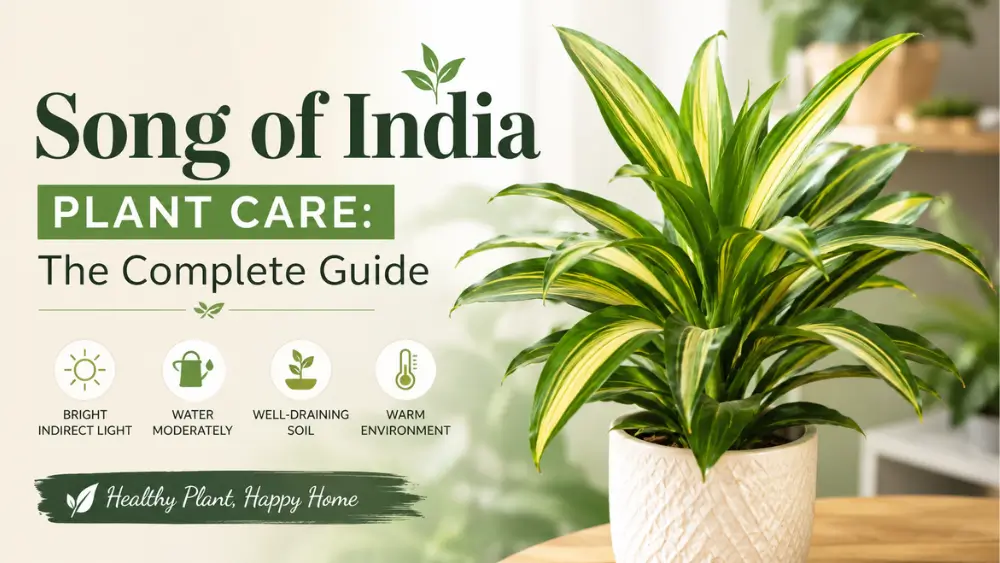
Song of India (Dracaena reflexa ‘Song of India’) grows best in bright, indirect light, which helps it hold its yellow-and-green variegated leaves, in well-draining soil that’s allowed to dry out somewhat between waterings. It tolerates typical indoor temperatures of 65-80°F (18-27°C) and average humidity, making it a relatively low-maintenance choice among variegated houseplants. Like its Dracaena relatives, it’s sensitive to fluoride and chlorine in tap water, which can cause brown leaf tips if not addressed.
Table of Contents
Quick Care Facts
| Care Factor | Requirement |
|---|---|
| Scientific name | Dracaena reflexa ‘Song of India’ |
| Common names | Song of India, Pleomele |
| Light | Bright, indirect light; tolerates medium light with less vibrant variegation |
| Water | When top 1-2 inches of soil are dry |
| Soil | Well-draining potting mix |
| Temperature | 65-80°F (18-27°C); protect from cold drafts |
| Humidity | Average household humidity is fine; benefits from more |
| Fertilizer | Balanced liquid feed monthly, spring through summer |
| Toxicity | Toxic to cats and dogs if ingested |
| Growth habit | Upright, bushy, slow-growing shrub; can become tree-like with age |
| Difficulty | Beginner-friendly, low-maintenance |
About the Song of India Plant
Song of India is the common name for Dracaena reflexa ‘Song of India’, a slow-growing, upright shrub prized for its narrow, glossy leaves edged in creamy yellow with a green center stripe. It’s native to Madagascar and nearby islands in the Indian Ocean, including Mauritius, rather than to India itself; the exact origin of the common name isn’t well documented, but it likely reflects the exotic, ornamental appeal the plant held when it was first introduced to Western growers rather than any direct connection to its actual native range.
Unlike its fast-growing cousin the corn plant (Dracaena fragrans), Song of India grows more slowly and tends to stay bushier and more compact, at least for the first several years, before eventually developing a woodier, more tree-like form with age. Its dense growth habit and colorful variegation make it a popular choice for adding vertical interest and long-lasting color to a room without demanding much maintenance.
You may also come across ‘Song of Jamaica’, a closely related cultivar with similar growth habits but solid green leaves rather than yellow variegation. Care for both is essentially identical.
Song of India has been a popular choice in interior plantscaping for decades, partly because its dense, colorful foliage provides year-round visual interest without the seasonal dormancy or fussy blooming cycles that many flowering houseplants go through. It works equally well as a single accent plant on a plant stand or grouped with other foliage plants to build a layered, jungle-like look in a room.
Song of India vs. Similar Dracaena Plants
Because several popular houseplants share the Dracaena genus and a somewhat similar look, it’s easy to mix them up at a nursery:
Song of India (Dracaena reflexa) has fairly short, broad, glossy leaves densely packed along multiple branching stems, giving it a full, bushy appearance, typically with yellow-and-green variegation.
Dragon Tree (Dracaena marginata) has much thinner, spikier, reddish-edged leaves that radiate outward in bursts at the top of slender, often curving canes, giving it a more architectural, sculptural look.
Corn Plant (Dracaena fragrans) has long, broad, arching leaves and grows as a single thick cane or a cluster of canes, with a more tropical, palm-like appearance overall.
If you’re not sure which one you have, leaf shape and growth habit are the easiest way to tell: Song of India’s short, dense, bushy leaves set it apart fairly clearly from the other two.
Light Requirements
Song of India needs bright, indirect light to keep its yellow variegation vivid; in lower light, new growth tends to come in more solidly green.
A spot near an east- or west-facing window works well, and it can also tolerate a few feet back from a south-facing window with sheer curtains to filter the light. It adapts reasonably well to medium indirect light too, making it more flexible than some variegated houseplants, though the coloring will be less striking over time in dimmer conditions. Avoid intense, direct afternoon sun, which can scorch the leaves.
Watering
Water when the top 1-2 inches of soil are dry, and always let excess water drain away fully.
Song of India is moderately drought tolerant once established and would rather be slightly underwatered than sit in soggy soil, which quickly leads to root rot. During the growing season, this typically means watering roughly every 1-2 weeks, with longer gaps between waterings in fall and winter as growth slows.
As with other Dracaena relatives, this plant can be sensitive to the fluoride and chlorine commonly found in tap water, which is a frequent cause of brown, crispy leaf tips. Using filtered water, distilled water, or tap water that’s been left to sit out for a day can help reduce this issue.
Soil and Potting
A standard well-draining potting mix works well, ideally with some added perlite to improve drainage and reduce the risk of root rot. Song of India is a slow grower and doesn’t need frequent repotting; every 2-3 years, or once the roots are visibly crowded, is generally sufficient. Because mature plants can develop a fair amount of top growth on a relatively narrow base, a sturdy, wider pot can help keep larger specimens from tipping over.
Temperature and Humidity
Song of India does well in typical indoor temperatures, ideally 65-80°F (18-27°C). Keep it away from cold drafts, exterior doors, and air conditioning vents, since sudden cold exposure can cause leaf drop or damage.
It tolerates average household humidity without issue, though like most tropical foliage plants, it looks its lushest with a bit of extra humidity. In very dry indoor conditions, especially during winter heating season, occasional misting or a nearby humidifier can help keep the foliage looking its best.
Fertilizing
Feed with a balanced, water-soluble liquid houseplant fertilizer once a month during spring and summer while the plant is actively growing. Reduce or stop fertilizing in fall and winter, when growth naturally slows and excess nutrients are more likely to build up in the soil unused.
Pruning and Shaping
Song of India responds well to light pruning, which can be used to control its height, encourage bushier growth, or maintain a more compact, tidy shape. Because it grows relatively slowly compared to many houseplants, it generally needs less frequent pruning than fast growers like pothos or corn plant.
Nurseries sometimes train Song of India into decorative shapes, including braided multi-cane forms or standard “tree” shapes with a bare lower stem and foliage concentrated at the top, similar to techniques used with other Dracaena species. At home, simply pinching back leggy growth tips is usually enough to keep a bushier, fuller plant over time.
How to Propagate Song of India
Song of India can be propagated from stem tip cuttings, similar to many of its Dracaena relatives:
- Cut a 4-6 inch stem tip, ideally including a few leaves and at least one node.
- Remove the lowest leaves so a bare section of stem is exposed.
- Root the cutting in water, changing it every few days, or plant it directly into moist, well-draining potting soil.
- Keep the cutting in bright, indirect light and consistently moist conditions while it roots.
- Roots typically develop within several weeks; once established, treat the new plant as you would a mature Song of India.
Older, larger canes can also sometimes be propagated using air layering, though stem cuttings are the simpler and more common method for home growers.
Is Song of India Toxic to Pets?
Song of India is toxic to cats and dogs if ingested.
Like other Dracaena species, it can cause vomiting (sometimes with blood present), loss of appetite, excessive drooling, and dilated pupils in cats in particular if chewed or eaten. Keep it out of reach of pets prone to chewing on houseplants, and contact your veterinarian if you suspect ingestion and notice any of these symptoms.
Common Problems and How to Fix Them
Brown, crispy leaf tips Usually caused by fluoride or chlorine sensitivity from tap water, or by low humidity. Switch to filtered or distilled water and consider increasing humidity if the problem persists.
Fading variegation A sign the plant isn’t getting enough light. Move it to a brighter spot with indirect light to encourage more vivid yellow coloring in new growth.
Yellowing leaves Widespread yellowing typically points to overwatering. Let the soil dry out more between waterings and confirm the pot drains well.
Leaf drop Often triggered by cold drafts or a sudden change in temperature or location. The plant usually recovers and stabilizes once conditions are consistent again.
Leggy or sparse growth Usually caused by insufficient light over time. Increase light exposure and pinch back leggy stems to encourage fuller, bushier growth.
Pests Spider mites, mealybugs, and scale can occasionally appear, particularly on stressed or dusty plants. Wipe down leaves periodically and treat promptly with insecticidal soap if pests are spotted.
Seasonal Care Summary
| Season | Watering | Fertilizing | Notes |
|---|---|---|---|
| Spring | Every 1-2 weeks | Monthly | Good time to prune, repot, or take cuttings |
| Summer | Every 1-2 weeks | Monthly | Watch for dry-out in bright, warm rooms |
| Fall | Reduce gradually | Taper off | Growth naturally slows |
| Winter | Every 2-3 weeks | None | Keep away from cold drafts and heater vents |
Frequently Asked Questions
How do you care for a Song of India plant?
Give it bright, indirect light, water when the top 1-2 inches of soil are dry, use well-draining soil, and use filtered or distilled water to help prevent brown leaf tips.
Is Song of India the same as Dragon Tree?
No, though they’re closely related Dracaena species. Song of India has short, broad, bushy leaves with yellow variegation, while Dragon Tree has thin, spiky, reddish-edged leaves on slender canes.
Why is my Song of India losing its yellow variegation?
Insufficient light is the most common cause. Move the plant to a brighter spot with indirect light to help new growth come in with more vivid coloring.
How often should you water a Song of India plant?
Water when the top 1-2 inches of soil are dry, typically every 1-2 weeks during the growing season and less often in fall and winter.
Is Song of India safe for cats and dogs?
No, it’s toxic to cats and dogs if ingested, similar to other Dracaena species, and should be kept out of reach of pets.
How big does Song of India get indoors?
Indoors, it typically grows slowly to a few feet tall over several years, though older specimens can eventually become taller and more tree-like with a woody stem.
Does Song of India need a lot of maintenance?
No, it’s considered a relatively low-maintenance houseplant, needing infrequent watering, occasional light pruning, and minimal repotting thanks to its slow growth rate.
Can Song of India be grown outdoors?
In warm, frost-free climates (roughly USDA zones 10-11) it can grow outdoors year-round. In cooler climates, it’s best kept as an indoor plant or moved outside only during warm months and brought back in well before any risk of frost.
Why does my Song of India have all-green leaves instead of variegated ones?
New growth on plants kept in lower light often comes in more solidly green, since variegation is closely tied to light exposure. Moving the plant to a brighter, indirect-light location typically restores more pronounced variegation in future growth.