
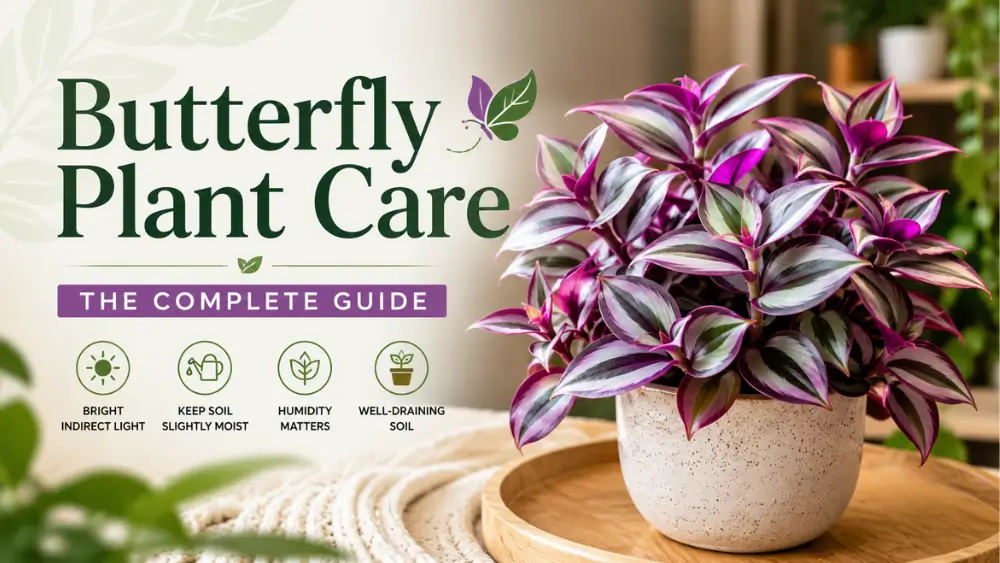
Butterfly plant (Christia obcordata) needs bright, indirect light for several hours a day, consistently moist soil that’s never allowed to fully dry out, and above-average humidity. It’s a compact, slow-growing foliage plant, rarely taller than 12-24 inches indoors, grown almost entirely for its striking triangular leaves striped in deep maroon, which fold shut each night and reopen every morning. Success comes down to getting three things right at the same time: humidity, drainage, and light.
Table of Contents
Quick Care Facts
| Care Factor | Requirement |
|---|---|
| Scientific name | Christia obcordata |
| Common names | Butterfly Plant, Swallowtail Plant, Butterfly Wing Plant |
| Light | Bright, indirect light, roughly 4-6 hours daily |
| Water | Keep consistently moist; never let it fully dry out |
| Soil | Well-draining, fertile, slightly acidic to neutral soil |
| Temperature | 65-80°F (18-27°C); avoid cold drafts |
| Humidity | Above-average; benefits from misting or a humidity tray |
| Fertilizer | Balanced liquid feed monthly during the growing season |
| Toxicity | Considered non-toxic to cats, dogs, and humans |
| Growth habit | Compact, low-growing herb, typically 12-24 inches tall |
| Difficulty | Moderate; humidity, drainage, and light all need to be right together |
About the Butterfly Plant
Butterfly plant is the common name for Christia obcordata, a small, uncommon tropical perennial grown almost entirely for its unusual foliage rather than its flowers. It’s native to parts of Southeast Asia, including India, Sri Lanka, and southern China, and belongs to the legume family, Fabaceae, the same botanical family as beans and peas, despite looking nothing like a typical garden legume.
The name comes from its distinctive triangular, wing-shaped leaves, which are banded with deep maroon or burgundy stripes over a pale green base. A cluster of these leaves genuinely resembles a small group of butterflies at rest, which is where both of its common names, Butterfly Plant and Swallowtail Plant, come from. Its actual flowers are small and pale, and most growers consider the foliage the real attraction rather than the blooms.
It’s worth noting that “butterfly plant” is used loosely for a few different plants in casual conversation, including outdoor butterfly-attracting garden plants like butterfly weed (Asclepias) or the butterfly tree (Bauhinia). This guide is specifically about Christia obcordata, the compact, patterned-leaf houseplant sold under the “Butterfly Plant” name at plant shops and online retailers.
Because it’s still relatively uncommon in general cultivation, Butterfly Plant has a reputation among growers for being somewhat finicky. In practice, it’s less about the plant being fragile overall and more about needing humidity, drainage, and light dialed in together; when all three line up, it tends to grow reliably. Its relative rarity is also part of its appeal for collectors, since it stands out noticeably from the more common houseplants found in most collections.
Where to Display Butterfly Plant
Given its compact size, Butterfly Plant works well as a tabletop or shelf specimen rather than a large statement plant, and its low, spreading growth habit makes it a good fit for a terrarium-style display or a bright bathroom where ambient humidity runs naturally higher. Placing it somewhere you’ll walk past regularly, such as a desk or a well-lit kitchen counter, also makes it easier to enjoy watching its daily leaf movement, since the folding and reopening happens gradually over the course of the morning and evening rather than all at once.
Understanding Butterfly Plant’s Leaf Movement
One of the most distinctive things about Butterfly Plant is that its leaves visibly fold downward along their central rib each night and reopen again each morning, a movement driven by shifting water pressure inside the leaf cells in response to light, the same general mechanism seen in sensitive plants like Mimosa and in relatives like the prayer plant.
You don’t need to do anything to trigger this; it happens automatically as your home’s light cycle changes over the course of the day. New owners sometimes worry that closed leaves in the evening are a sign of stress, but this daily folding and reopening is simply part of the plant’s normal rhythm and is actually one of the more engaging things about growing it, since you can watch the change happen in real time.
Light Requirements
Butterfly Plant needs bright, indirect light for roughly 4-6 hours a day to maintain healthy, vividly patterned growth.
A spot near an east-facing window, or a bright, filtered location near a south- or west-facing window, generally works well. It can tolerate some gentle direct sun, particularly in the morning, but too much intense direct light, especially in the afternoon, can scorch the delicate leaves. In light that’s too low, growth tends to slow and the leaf pattern may become less vivid over time.
Watering
Keep the soil consistently moist, and avoid letting it dry out completely between waterings.
Butterfly Plant doesn’t have the drought tolerance of many common houseplants and tends to respond quickly, with drooping or yellowing leaves, if it’s allowed to dry out for too long. At the same time, it doesn’t want to sit in soggy, waterlogged soil either, since that encourages root rot. The goal is an even, consistent level of moisture, checking the top of the soil regularly rather than watering on a rigid schedule.
Soil and Potting
Butterfly Plant does best in a light, fertile, well-draining potting mix with a slightly acidic to neutral pH, similar to a general-purpose houseplant soil enriched with some organic matter such as compost or worm castings. Good drainage is essential to balance out its need for consistent moisture without tipping into waterlogged conditions. Repot as needed when the plant becomes rootbound, generally every year or two, using a pot only slightly larger than the current one.
Temperature and Humidity
Butterfly Plant prefers warm, stable conditions, ideally 65-80°F (18-27°C), and should be kept away from cold drafts, air conditioning vents, and drafty windows, all of which can stress the plant and lead to leaf drop.
Humidity is one of the most important factors for this plant’s long-term success. As a tropical understory plant, it prefers above-average humidity, and dry indoor air is one of the more common reasons growers struggle to keep it thriving past the first season. Regular misting, a humidity tray, a nearby humidifier, or grouping it with other humidity-loving plants can all help maintain the moist air this plant prefers, especially during winter when indoor heating dries things out.
Fertilizing
Feed with a balanced, water-soluble liquid houseplant fertilizer once a month during the active growing season, generally spring through fall. Regular light feeding helps maintain vivid leaf coloring and supports steady new growth. Reduce or stop fertilizing in winter when growth naturally slows.
Pruning and Grooming
Regularly remove any yellowing or dead leaves to keep the plant looking tidy and to redirect energy toward healthy new growth. Light pruning of leggy or overly long stems helps encourage a fuller, bushier shape. Because the plant is grown primarily for its foliage rather than its small, unshowy flowers, some growers choose to pinch off flower buds so the plant’s energy goes toward leaf production instead, though this is optional rather than necessary.
How to Propagate Butterfly Plant
Butterfly Plant can be propagated from stem cuttings:
- Take a healthy stem cutting a few inches long, cutting just below a leaf node.
- Remove the lowest leaves so a bare section of stem is exposed.
- Place the cutting in a suitable rooting medium, such as moist potting mix or a mix of perlite and peat.
- Keep the cutting warm, humid, and in bright, indirect light while it roots, ideally covered loosely to help maintain humidity.
- Roots typically develop over several weeks; once established, care for the new plant as you would a mature one.
Is Butterfly Plant Toxic to Pets or Humans?
Butterfly Plant is generally considered non-toxic to cats, dogs, and humans, making it a good option for pet owners who want an unusual, patterned foliage plant without significant toxicity concerns. As with any houseplant, eating large quantities can still cause mild stomach upset in pets, so it’s still sensible to discourage regular chewing on the leaves.
Common Problems and How to Fix Them
Drooping or wilting leaves Usually caused by the soil drying out too much between waterings. Water more consistently and check that the plant isn’t sitting somewhere with very dry air.
Yellowing leaves Can indicate either overwatering and poor drainage, or in some cases inconsistent watering. Check that the pot drains well and that the soil isn’t staying waterlogged.
Leaves dropping Often linked to low humidity, cold drafts, or a sudden change in growing conditions. Increasing humidity and keeping the plant away from drafts typically helps.
Faded or less vivid leaf pattern Usually a sign of insufficient light. Move the plant to a brighter spot with more indirect light throughout the day.
Pests Spider mites and mealybugs can occasionally appear, particularly in dry air. Increasing humidity helps prevent infestations in the first place, and insecticidal soap combined with wiping down the leaves can treat active pest problems if they do show up.
Seasonal Care Summary
| Season | Watering | Fertilizing | Notes |
|---|---|---|---|
| Spring | Keep evenly moist | Monthly | Good time to propagate or repot |
| Summer | Keep evenly moist | Monthly | Watch humidity closely if using AC |
| Fall | Keep evenly moist | Monthly, then taper | Growth begins to slow toward winter |
| Winter | Keep evenly moist, slightly less | None | Increase humidity with indoor heating running |
Frequently Asked Questions
What is a butterfly plant?
Butterfly Plant refers to Christia obcordata, a small tropical foliage houseplant known for its triangular, maroon-striped leaves that resemble resting butterflies, and for the way its leaves fold shut at night and reopen each morning.
How do you care for a butterfly plant?
Give it bright, indirect light for several hours a day, keep the soil consistently moist without letting it dry out, provide above-average humidity, and feed it monthly during the growing season.
Why do butterfly plant leaves close at night?
This is a normal, light-driven movement called nyctinasty, caused by changing water pressure inside the leaf cells. It happens automatically each day and isn’t a sign of stress.
Is butterfly plant safe for cats and dogs?
Yes, it’s generally considered non-toxic to cats, dogs, and humans, though it’s still best to discourage pets from eating any houseplant in large quantities.
Is butterfly plant hard to grow?
It has a reputation for being somewhat finicky, mainly because it needs consistent humidity, good drainage, and adequate light all at the same time. Once those three factors are dialed in, it tends to grow reliably.
How often should you water a butterfly plant?
Water often enough to keep the soil consistently moist, typically every few days indoors, without letting it dry out completely or sit in soggy conditions.
Does butterfly plant flower?
Yes, but its flowers are small and relatively unshowy. Most growers value the plant primarily for its distinctive patterned foliage rather than its blooms.
Why is my butterfly plant losing its leaf pattern?
This usually points to insufficient light. Moving the plant to a brighter spot with more indirect light throughout the day typically restores more vivid coloring in new growth.
Is butterfly plant the same as butterfly weed or the butterfly tree?
No. “Butterfly plant” as covered in this guide refers to Christia obcordata, a compact indoor foliage plant. Butterfly weed (Asclepias) and the butterfly tree (Bauhinia) are unrelated outdoor garden plants that happen to share a similar common name.