
Table of Contents
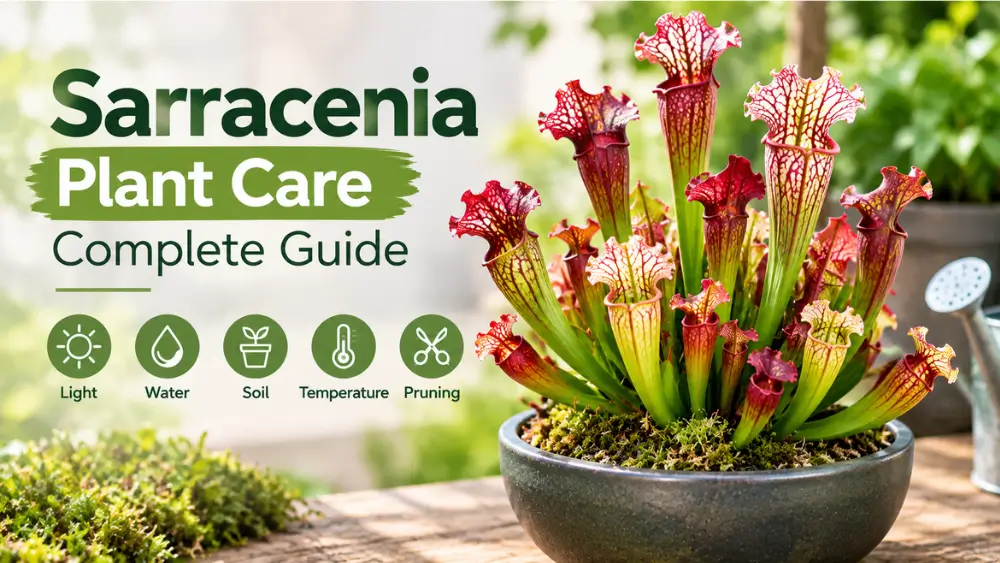
Sarracenia are the showiest, sun-hungriest, and arguably easiest-to-grow-outdoors pitcher plants in the carnivorous plant world. Tall, trumpet-shaped, and often streaked with dramatic red and white veining, they’re also one of the most forgiving genera once one specific requirement is met: a real winter dormancy.
The short answer: Sarracenia care means full, direct sun, soil that stays wet almost all the time, pure mineral-free water, and a mandatory cold dormancy period each winter. Skip the sun or skip dormancy, and even a perfectly watered plant will decline over time. Get both right, and Sarracenia are genuinely low-effort, long-lived plants.
This guide covers everything specific to Sarracenia, including species selection, potting, and overwintering. For general carnivorous plant fundamentals, see the complete beginner’s guide. If you’re comparing pitcher plant types, the pitcher plant care guide covers how Sarracenia differs from tropical Nepenthes.
What Is Sarracenia?
Sarracenia is a genus of roughly 8-11 pitcher plant species native to bogs, wet savannas, and seepage slopes in the eastern and southeastern United States, with the greatest diversity concentrated along the Gulf Coast. Countless hybrids also exist, many bred for larger size, bolder color, or hardiness.
Each pitcher is a modified leaf that lures insects with nectar along its rim, then traps them with downward-pointing hairs and a slick inner surface that prevents escape. Prey falls into digestive fluid at the base and is slowly broken down for nutrients. Unlike the hanging pitchers of tropical Nepenthes, Sarracenia pitchers grow upright, directly from an underground rhizome.
Common species include:
- Sarracenia purpurea — the purple pitcher plant, with short, squat pitchers and the widest natural range of any species, extending into Canada. The hardiest and most forgiving Sarracenia, and a common starting point for beginners.
- Sarracenia flava — the yellow trumpet pitcher, tall and upright with striking yellow-green coloring.
- Sarracenia leucophylla — the white-topped pitcher plant, prized for its dramatic white-and-red patterned pitcher tops.
- Sarracenia psittacina — the parrot pitcher, a low-growing species with a distinctive curled, hooded pitcher that lies close to the ground.
- Sarracenia rubra and Sarracenia alata — smaller-to-medium species that hybridize readily and appear often in beginner-friendly hybrid mixes.
Most Sarracenia sold at garden centers and online nurseries are hybrids rather than pure species, and hybrids are often the more vigorous, forgiving choice for a first plant.
Sarracenia Care Requirements
1. Water
Use only pure water — distilled, reverse osmosis, or clean rainwater. Tap water minerals accumulate in the soil and damage Sarracenia roots over time, just as with every other carnivorous plant.
Sarracenia are true bog plants and tolerate — even prefer — sitting in standing water during the growing season. The standard approach is the tray method: set the pot in a saucer or tray holding 1-2 inches of water, refilling as needed so the soil never dries out from spring through fall. This is more forgiving of standing water than tropical Nepenthes, which want more airflow at the roots.
Watering can be reduced somewhat during dormancy, keeping soil damp rather than standing in water, since the plant’s water needs drop significantly while it’s not actively growing.
2. Light
Sarracenia are the most sun-hungry plants in the carnivorous plant world. In the wild, they grow in open, unshaded bogs and savannas with essentially no canopy cover.
- Outdoors, aim for a spot with 6 or more hours of direct sun daily — more is generally better.
- Indoors, a sunny windowsill alone often isn’t enough; a strong full-spectrum grow light run close to the foliage for 12-14 hours a day is usually necessary to match outdoor intensity.
- Signs of insufficient light: floppy, weak pitchers that stay mostly green instead of developing the vivid red, orange, or white venation seen in well-lit specimens; reduced pitcher size over successive growing seasons.
If you can only offer partial sun, Sarracenia purpurea tolerates lower light better than most other species, though even it performs best in full sun.
3. Soil
Sarracenia want the same poor, nutrient-free soil used across most carnivorous plants, but slightly denser and wetter than what suits Nepenthes:
- A 1:1 mix of peat moss (or long-fiber sphagnum) and perlite or coarse sand is the standard, reliable choice.
- Some growers use straight milled sphagnum moss with good results, particularly for smaller pots.
- Avoid regular potting soil, compost, or any mix containing fertilizer — Sarracenia roots have no tolerance for added nutrients in the soil.
4. Humidity
Sarracenia are notably unfussy about humidity compared to tropical Nepenthes. They tolerate the full range of normal outdoor humidity, from humid Gulf Coast summers to drier inland conditions, as long as the soil itself stays wet. Indoors, average household humidity is generally fine; there’s no need for a terrarium or humidity dome the way there is for many tropical carnivorous plants.
5. Dormancy (The Non-Negotiable Requirement)
This is the single most important — and most often skipped — part of Sarracenia care. Every Sarracenia species requires a genuine winter dormancy to survive long-term, without exception.
- What triggers it: shortening daylight hours and falling temperatures in autumn.
- What it looks like: pitcher production slows and stops; existing pitchers gradually yellow, brown, and die back; the plant may look largely dead above the rhizome by midwinter. This is completely normal.
- Duration: roughly 3-5 months, typically November through February or March in most of the continental US.
- Temperature range: most Sarracenia tolerate temperatures from freezing up to about 50°F (10°C) during dormancy. Sarracenia purpurea is especially cold-hardy and can survive hard freezes and even light snow cover with adequate mulch protection.
- How to provide it:
- In climates with a real winter (roughly USDA zones 6-9 for most species, colder for hardy purpurea), leave potted plants outside, mulching the pot with straw or leaves for insulation, or sink the pot into garden soil for extra protection.
- In milder climates without a sufficiently cold winter, an unheated garage, cold frame, or refrigerator (for smaller potted specimens, checked periodically for mold) can substitute.
- Reduce watering during dormancy to keep soil damp rather than standing in water.
Skipping dormancy repeatedly doesn’t kill a Sarracenia immediately — it weakens the plant progressively over one to three growing seasons, producing smaller, fewer pitchers each year before it eventually dies. This delayed effect is exactly why so many beginners don’t connect a declining plant back to a warm, dormancy-free winter from a year or two earlier.
Do You Need to Feed Sarracenia?
No, not usually. Sarracenia grown outdoors or on a porch typically catch plenty of insects on their own — that’s the entire function of the pitcher. Feeding is optional supplemental care.
If you want to feed an indoor plant that isn’t catching prey naturally:
- Drop in a small live insect, such as a cricket or fly, sized appropriately for the pitcher’s opening.
- Feed no more than one or two pitchers per plant per month during active growth.
- Never add fertilizer, meat, or table scraps directly into a pitcher — this disrupts digestion and can cause the pitcher to rot rather than break down prey properly.
- Skip feeding entirely during dormancy, when the plant isn’t actively growing.
Best Sarracenia for Beginners
- Sarracenia purpurea — the hardiest and most forgiving species, tolerant of a wide range of light and cold conditions, and an excellent first Sarracenia.
- Sarracenia hybrids sold generically at garden centers — usually vigorous, fast-growing, and more forgiving of minor care lapses than named pure species.
- Sarracenia flava — slightly more demanding of full sun but strikingly tall and easy once established.
Sarracenia Species Comparison
| Species | Pitcher Style | Sun Needs | Cold Hardiness |
|---|---|---|---|
| S. purpurea | Short, squat, often maroon-veined | Full sun to partial sun | Very high — tolerates hard freezes with protection |
| S. flava | Tall, upright, yellow-green trumpet | Full sun | Moderate to high |
| S. leucophylla | Tall, white-and-red patterned top | Full sun | Moderate |
| S. psittacina | Low, curled, ground-hugging | Full sun to partial sun | Moderate |
| S. rubra | Slender, medium height | Full sun | Moderate to high |
Common Sarracenia Care Mistakes
- Not enough sun — Sarracenia are the most light-demanding carnivorous plants commonly sold; partial shade produces weak, poorly colored pitchers over time.
- Skipping winter dormancy — plan for a genuine cold rest from the start; a Sarracenia kept warm year-round will decline gradually rather than fail outright, making the cause easy to miss.
- Using tap water — mineral buildup damages roots just as with any carnivorous plant.
- Letting soil dry out during the growing season — Sarracenia want consistently wet soil via the tray method from spring through fall.
- Cutting pitchers while still green — only trim pitchers once they’ve fully browned and died back; green pitchers, even partially damaged ones, are still photosynthesizing and feeding the plant.
- Moving a dormant or indoor-grown plant into full outdoor sun too quickly — acclimate gradually over 7-10 days to avoid leaf scorch.
- Potting in regular soil or adding fertilizer — Sarracenia roots have no tolerance for standard nutrient-rich soil.
Repotting and Propagation
When to repot: every 1-2 years, ideally in early spring just as new growth begins emerging from the rhizome after dormancy. Peat-based mixes compact and break down over time, and repotting refreshes drainage and reduces mineral buildup.
How to repot:
- Remove the plant and gently rinse old soil from the rhizome and roots using pure water.
- Trim away any soft, black, or clearly rotten sections of rhizome or root.
- Repot into a fresh peat/sand or peat/perlite mix, keeping the rhizome at the same depth it was growing before, with growth points facing up.
- Water thoroughly and resume the tray method.
Propagation by division: Sarracenia rhizomes naturally branch and produce offshoots over time, making division the primary propagation method.
- At repotting time, look for natural branch points or separate growth points along the rhizome.
- Cut cleanly between growth points using a sterile blade, ensuring each division has both roots and at least one healthy growth point.
- Pot each division separately in fresh, appropriate mix and keep consistently moist while it establishes.
Division is best done in early spring, right as the plant is coming out of dormancy and beginning active growth.
Troubleshooting Sarracenia Problems
| Symptom | Likely Cause | Fix |
|---|---|---|
| Pitchers staying green and floppy, poor color | Insufficient light | Move to full sun or supplement with a strong grow light |
| Pitchers browning and dying in fall/winter | Normal seasonal dieback heading into dormancy | No action needed; trim once fully brown and dry |
| No new pitchers forming in spring | Insufficient dormancy the prior winter, or still early in the season | Ensure a full cold dormancy each year; be patient in early spring |
| Black, mushy rhizome | Rot from overwatering combined with poor drainage, or fertilizer exposure | Trim affected tissue at repotting; improve drainage in soil mix |
| Progressively smaller pitchers over multiple years | Repeated lack of winter dormancy | Provide a genuine cold rest period going forward; recovery can take a season or two |
| Leaf scorch after moving outdoors | Sudden change from low light to intense direct sun | Acclimate gradually over 7-10 days when transitioning environments |
| Mold on soil surface during dormancy | Excess moisture combined with cold, stagnant air | Reduce watering slightly during dormancy; improve air circulation |
Frequently Asked Questions
What is the best soil for Sarracenia?
A 1:1 mix of peat moss (or long-fiber sphagnum) and perlite or coarse sand works well for most growers. Avoid regular potting soil, compost, or any mix containing fertilizer.
Do Sarracenia need full sun?
Yes, ideally 6 or more hours of direct sun daily. They’re among the most light-demanding carnivorous plants, and insufficient light leads to weak, poorly colored pitchers over time.
Can Sarracenia survive winter outside?
Many can, particularly Sarracenia purpurea, which tolerates hard freezes with adequate mulch protection. Hardiness varies by species and growing zone, so less cold-tolerant species may need extra winter protection like an unheated garage or heavy mulching.
How do you overwinter a Sarracenia?
Provide a genuine cold dormancy of roughly 3-5 months with temperatures generally between freezing and 50°F (10°C). This can happen outdoors with mulch protection in appropriate climates, or in an unheated garage or cold frame elsewhere. Reduce watering during this period.
Do Sarracenia need dormancy?
Yes, without exception. Skipping dormancy doesn’t kill the plant immediately but weakens it progressively over one to three growing seasons, leading to smaller pitchers and eventual decline.
Can you grow Sarracenia indoors?
Yes, but it requires very strong light — typically a dedicated grow light rather than a windowsill — and the plant still needs an annual cold dormancy, which usually means moving it somewhere cooler for winter rather than keeping it at consistent room temperature year-round.