
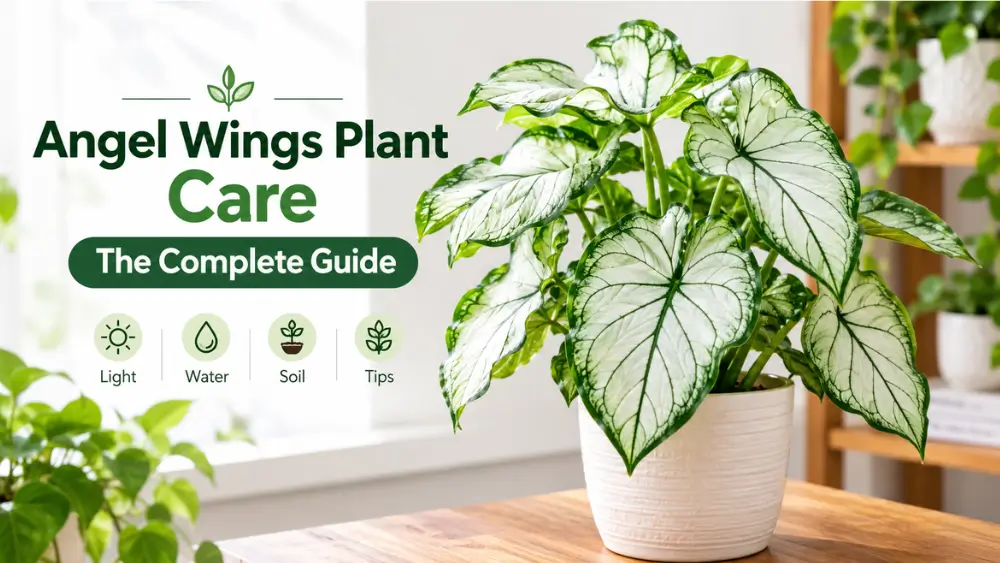
Angel Wings (Senecio candicans ‘Senaw’) needs full sun to bright light, sharply well-draining soil, and to be allowed to dry out between waterings. It’s grown almost entirely for its large, broad, silvery-white leaves covered in a dense coating of fine hairs that give them a soft, velvety texture. The single most common way to kill this plant is overwatering: it’s genuinely drought tolerant once established and can be short-lived if kept too moist, so erring dry is always the safer approach with Angel Wings.
Table of Contents
Quick Care Facts
| Care Factor | Requirement |
|---|---|
| Scientific name | Senecio candicans ‘Senaw’ |
| Common names | Angel Wings, Sea Cabbage, Candicans Senecio |
| Light | Full sun to bright light; some afternoon shade in very hot climates |
| Water | Allow soil to dry between waterings; drought tolerant once established |
| Soil | Gritty, sharply well-draining succulent or cactus mix |
| Temperature | 70-80°F (21-27°C) days, 55-65°F (13-18°C) nights; hardy to about 23°F (-5°C) |
| Humidity | Prefers dry air; do not mist |
| Fertilizer | Light monthly feeding during the growing season, or slow-release once |
| Toxicity | Toxic if ingested; keep away from pets and children |
| Growth habit | Clump-forming, mounding evergreen perennial, 10-16 inches tall |
| Difficulty | Moderate; drainage and restraint with watering are everything |
About the Angel Wings Plant
Angel Wings, botanically Senecio candicans and widely sold under the trademarked cultivar name ‘Senaw’, is an evergreen perennial grown for its striking silvery-white foliage. Its leaves are broad, slightly floppy, and heart-shaped, each reaching roughly 5-7 inches across on a mature plant, with small blunt serrations along the edges and a dense covering of short, fine hairs that gives the whole plant its soft, almost felted, irresistibly touchable texture.
The plant is native to the coastal Patagonian region of southern South America, spanning parts of Argentina and Chile, an origin that explains both its tolerance of salt winds, making it an excellent coastal garden plant, and its dislike of consistently wet soil. It belongs to the Asteraceae family, making it a relative of the daisy, as well as the familiar silvery bedding plant dusty miller (Senecio cineraria).
Angel Wings is grown almost entirely as a foliage plant. It can produce small yellow flowers in summer, but blooms are infrequent and generally considered incidental rather than a reason to grow it; many gardeners never see them at all.
Where to Use Angel Wings in Your Garden or Home
Angel Wings works particularly well as a “thriller” centerpiece in mixed container plantings, where its large silvery leaves provide bold contrast against darker green or purple-leaved companions. Its coastal Patagonian origins also make it genuinely well suited to seaside gardens, since it tolerates salt winds that would damage many other ornamental plants.
In garden beds, it’s best reserved for raised beds, rockeries, gravel gardens, or borders with naturally sharp drainage rather than heavier soil. Indoors or on a patio, a container placed somewhere the foliage can be seen and touched plays to the plant’s real appeal: its soft, velvety texture makes it a popular choice for sensory gardens and for households with children who enjoy touchable plants, provided it’s positioned where it won’t be eaten.
Why Overwatering Is the Number One Risk
Angel Wings has a reputation for being short-lived, and in most cases that comes down to a single cause: too much moisture around the roots.
Like many silvery, hairy-leaved plants, Angel Wings evolved in conditions with sharp drainage and limited water, and it simply doesn’t tolerate sitting in moisture-retentive soil. This is genuinely the make-or-break factor with this plant, more so than light, feeding, or temperature. Growers who plant it in heavy garden soil, or in a container without excellent drainage, often find it declines within a season or two regardless of how much attention they give it otherwise.
The practical takeaway: prioritize drainage above almost everything else. Use a gritty, fast-draining mix, always choose a container with generous drainage holes, and when in doubt about whether to water, wait another day or two. An Angel Wings plant that’s slightly too dry will recover easily; one that’s been kept consistently wet often won’t.
Light Requirements
Angel Wings thrives in full sun and generally develops its best silvery color and most compact, mounded shape in bright conditions. That said, its tolerance for genuinely extreme heat has limits: in very hot climates with prolonged temperatures around 100F (38C), the leaves can scorch even in a plant that’s otherwise well established. In those conditions, some afternoon shade is worth providing, while in cooler and more temperate climates, full sun is ideal.
Watering
Water newly planted Angel Wings regularly during its first few months while it establishes a root system. Once established, it becomes genuinely drought tolerant and should be watered only when the soil has dried out, then watered thoroughly rather than lightly and often.
In containers, aim to keep the growing medium evenly moist rather than soggy during the active growing season, always making sure excess water can drain away freely; standing the pot on gravel, or raising it slightly off a paved surface, helps ensure that happens. Reduce watering significantly during winter, when growth slows and the plant’s water needs drop considerably, since winter overwatering is a particularly common cause of loss.
Soil and Potting
Angel Wings needs sharply drained, gritty soil, and this is the aspect of its care worth being most deliberate about. For container growing, use a quality loam-based potting compost mixed with roughly a third by volume of perlite or coarse grit, or start with a commercial cactus and succulent mix. Heavy, moisture-retentive garden soil is not suitable for in-ground planting unless amended significantly for drainage.
Temperature and Hardiness
Angel Wings prefers warm days around 70-80°F (21-27°C) with cooler nights of 55-65°F (13-18°C). It’s moderately hardy, tolerating temperatures down to roughly 23°F (-5°C), and is generally considered hardy outdoors year-round only in USDA zones 9-11, or in mild regions with excellent drainage and low winter rainfall.
In colder or wetter climates, the most practical approach is growing it in a container that can be moved under cover from autumn through spring, protecting it from both freezing temperatures and, just as importantly, winter rain sitting around its roots.
Angel Wings prefers dry air and should not be misted. Its densely hairy leaves hold water against the leaf surface, which creates conditions favorable to fungal problems rather than benefiting the plant, making this another houseplant that’s a genuine exception to the common misting routine.
Fertilizing
Angel Wings is a light feeder. A general-purpose fertilizer diluted to about a quarter of the normal strength, applied roughly once a month during the growing season, is sufficient, or a single application of slow-release fertilizer can carry a container plant through the whole season. Over-fertilizing is more likely to harm this plant than help it.
Pruning
Prune in early spring, cutting the plant back to firm, healthy stem tissue to encourage fresh, compact new growth for the season ahead. Removing any damaged or tired leaves as they appear also helps maintain the plant’s tidy, mounded appearance.
How to Propagate Angel Wings
Angel Wings can be propagated by stem cuttings or by division. Note that the widely sold ‘Senaw’ cultivar is patented, with propagation prohibited for commercial purposes, so propagation should be limited to personal use where permitted:
- Take a healthy stem cutting, or divide an established clump into sections with roots attached.
- Allow cut surfaces to callus briefly before planting, as with other succulents.
- Plant into a gritty, fast-draining mix.
- Water sparingly while the cutting or division establishes, keeping it in bright light and warm conditions.
Is Angel Wings Toxic to Pets?
Angel Wings is toxic if ingested and should be kept away from pets and children.
Plants in the Senecio genus are known to contain pyrrolizidine alkaloids, compounds that can be harmful if eaten, and this applies to Angel Wings as well. The soft, touchable foliage that makes this plant so appealing also makes it tempting for curious pets and children, so placement out of reach is worth considering when deciding where to grow it.
Common Problems and How to Fix Them
Root rot, sudden collapse, or a short-lived plant Nearly always caused by too much moisture, poor drainage, or both. Improve drainage, reduce watering frequency, and consider moving a struggling plant into a grittier mix.
Scorched or crisped leaves Can occur in extreme heat, particularly at sustained temperatures near 100F (38C), even in full-sun-tolerant plants. Provide afternoon shade in very hot climates.
Fungal spotting on leaves Often linked to water sitting on the hairy leaf surface. Water at soil level and avoid misting.
Leggy or open growth A sign the plant would benefit from a spring prune back to firm stem tissue, and possibly more light.
Pests Spider mites and aphids are the most common pests on this plant. Inspect regularly and treat with insecticidal soap if spotted.
Seasonal Care Summary
| Season | Watering | Fertilizing | Notes |
|---|---|---|---|
| Spring | Resume as growth begins | Begin light feeding | Prune back to firm stems; good time to plant |
| Summer | When soil dries out | Monthly, diluted | Water more in prolonged heat; watch for scorch above 100F |
| Fall | Reduce gradually | Stop | Move containers under cover in cold or wet climates |
| Winter | Sparingly | None | Winter wet is a greater risk than winter cold |
Frequently Asked Questions
How do you care for an Angel Wings plant?
Give it full sun to bright light, plant it in gritty, sharply well-draining soil, allow the soil to dry out between waterings, and reduce watering significantly in winter.
Why did my Angel Wings plant die?
Overwatering and poor drainage are by far the most common causes. This plant is known to be short-lived when given too much moisture, so improving drainage and watering less frequently is usually the fix.
Is Angel Wings a succulent?
Yes, Senecio candicans is classified as a succulent, despite its large, soft, leafy appearance being quite different from the typical image of one.
Is Angel Wings plant toxic to pets?
Yes, plants in the Senecio genus contain compounds that are harmful if ingested, so it should be kept away from pets and children.
Can Angel Wings survive winter outdoors?
It’s hardy to roughly 23°F (-5°C) and can stay outdoors year-round in mild climates with excellent drainage and low rainfall, but in colder or wetter regions it’s best grown in a container that can be moved under cover.
Should you mist an Angel Wings plant?
No. Its densely hairy leaves hold moisture against the surface, which encourages fungal problems rather than helping the plant.
Does Angel Wings flower?
It can produce small yellow flowers in summer, but flowering is infrequent and the plant is grown almost entirely for its silvery foliage.
Is Angel Wings good for coastal gardens?
Yes, its native coastal Patagonian origins make it notably tolerant of salt winds, which makes it a strong choice for seaside planting where many other ornamentals struggle.
What’s the difference between Angel Wings and dusty miller?
Both are silvery-leaved Senecio relatives, but dusty miller (Senecio cineraria) has finely cut, lacy foliage, while Angel Wings has much larger, broad, heart-shaped leaves with a softer, more velvety texture.