
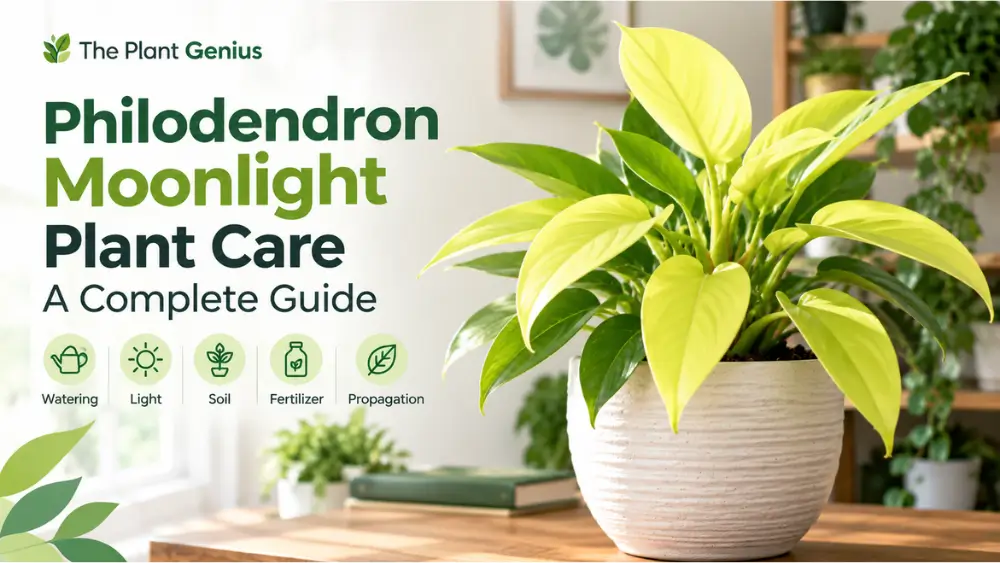
Philodendron Moonlight needs bright, indirect light, soil kept lightly moist and watered when the top inch is dry, and humidity of 50-70% for the best growth. It’s a self-heading hybrid, meaning it grows upright from a central crown rather than climbing, prized for new leaves that emerge in a glowing neon chartreuse before gradually settling into a softer lime green as they mature. It stays genuinely compact, typically 1-2 feet tall and wide, making it one of the tidier self-heading Philodendrons available.
Table of Contents
Quick Care Facts
| Care Factor | Requirement |
|---|---|
| Scientific name | Philodendron ‘Moonlight’ (horticultural hybrid) |
| Common names | Philodendron Moonlight, Moonlight Philodendron, Lime Philodendron |
| Light | Bright, indirect light; tolerates lower light with less vivid color |
| Water | When top inch of soil is dry; prone to root rot if kept soggy |
| Soil | Loose, well-draining aroid mix (peat, perlite, orchid bark) |
| Temperature | 65-85°F (18-29°C); protect below 55°F (13°C) |
| Humidity | 50-70% ideal; tolerates average household humidity reasonably well |
| Fertilizer | Balanced liquid feed every 4-6 weeks during spring growth |
| Toxicity | Toxic to cats, dogs, and humans if chewed or ingested |
| Growth habit | Self-heading (non-climbing); compact rosette, 1-2 ft tall and wide |
| Difficulty | Easy; fast-growing and forgiving for a Philodendron hybrid |
About Philodendron Moonlight
Philodendron Moonlight is a horticultural hybrid, bred specifically for ornamental foliage rather than occurring naturally in the wild, much like its self-heading relatives Prince of Orange and Selloum. Its broad, lance-shaped leaves emerge in a striking, almost glowing chartreuse-yellow, a color intense enough that it genuinely seems to catch and hold light, which is exactly where the “Moonlight” name comes from. As each leaf matures, the color gradually softens into a deeper lime and eventually medium green, creating a natural color gradient across the plant at any given time, since new and older leaves are always at different stages simultaneously.
Unlike many Philodendron species, which climb using aerial roots, Moonlight is self-heading, growing as a compact, bushy rosette from a central crown rather than as a vine. This puts it in the same growth category as Philodendron Selloum, though Moonlight stays dramatically smaller, typically 1-2 feet tall and wide compared to Selloum’s eventual several-foot spread, making Moonlight a better fit for tabletops and shelves rather than floor space.
The genus name Philodendron comes from the Greek words for “love” and “tree,” originally describing the climbing habit of most species in the genus as they wind their way up tree trunks in the rainforest. It’s a small irony that a plant bred specifically from this climbing genus has become one of its most popular non-climbing representatives, but that compact, upright habit is a big part of what makes Moonlight so easy to place in a typical home.
Where to Display Philodendron Moonlight
Thanks to its compact size and bright, eye-catching color, Philodendron Moonlight works well almost anywhere with reasonably bright light: a desk, a kitchen counter, a bathroom shelf with a window, or grouped with other foliage plants where its chartreuse color provides a lively contrast against darker greens. Because it doesn’t climb or trail, it doesn’t need the vertical space or support structure that many other Philodendrons require, making it a flexible choice for smaller apartments or shared spaces.
Moonlight vs. Prince of Orange: Two Color-Changing Self-Headers
Both Philodendron Moonlight and Philodendron Prince of Orange are self-heading hybrids known for colorful new growth that shifts as it matures, which makes them easy to confuse when discussing “color-changing Philodendrons.” The difference is in the specific color journey: Prince of Orange moves through a more dramatic sequence, from vivid orange through copper and yellow before settling into green, while Moonlight’s new leaves emerge chartreuse-yellow and simply soften into lime and medium green, a gentler, single-direction fade rather than a multi-stage transformation. Both are grown the same way, so if you have one or are deciding between them, the care in this guide and our Prince of Orange guide apply almost identically.
Light Requirements
Philodendron Moonlight does best in bright, indirect light, which brings out the most vivid, glowing chartreuse color in new growth. It tolerates lower light reasonably well compared to some houseplants, continuing to grow, just with somewhat less intense coloring and slower overall growth. Avoid direct, intense sun, which can scorch the leaves despite the plant’s general tolerance for a range of conditions.
Watering
Water when the top inch of soil is dry, which in summer often means roughly once a week, adjusting based on your home’s light and temperature. Moonlight likes consistent, even moisture but is genuinely prone to root rot if left sitting in soggy soil, so always make sure the pot drains well and avoid letting water collect in a saucer underneath for extended periods.
Soil and Potting
A loose, well-draining potting mix formulated for aroids, combining potting soil with perlite and orchid bark, suits Philodendron Moonlight well and more closely mirrors the airy, nutrient-rich forest floor conditions it’s bred from. It grows at a moderate to fast pace in warm conditions and tends to prefer being slightly snug in its pot rather than oversized, so repot roughly every 12-18 months, or sooner if roots are visibly crowding the container.
Temperature and Humidity
Philodendron Moonlight does well in typical warm indoor temperatures, ideally 65-85°F (18-29°C), and should be protected from temperatures below 55°F (13°C) as well as cold drafts.
It prefers humidity in the 50-70% range, though it’s a genuinely tough plant in practice and tolerates average household humidity better than many of its more sensitive aroid relatives, such as Calathea or African Mask Plant. A pebble tray or humidifier can help it look its lushest, particularly during dry winter months, but isn’t strictly essential for survival the way it is for more humidity-demanding houseplants on the fussier end of the spectrum.
Fertilizing
Feed with a balanced, water-soluble liquid fertilizer roughly every 4-6 weeks during the active growing season in spring and summer, applying to moist rather than dry soil to avoid stressing the root system. Reduce or stop fertilizing in fall and winter, when growth naturally slows and the plant requires fewer additional nutrients.
Pruning
Because it’s self-heading rather than vining, pruning mainly involves removing any yellowed or damaged leaves at the base as part of routine maintenance, which keeps the plant looking tidy without requiring the regular stem-cutting involved in managing a vining Philodendron. Wiping dust from the broad leaves periodically also helps the plant photosynthesize efficiently and keeps its color looking its most vivid and glossy.
How to Propagate Philodendron Moonlight
The easiest way to propagate Philodendron Moonlight is by separating the small offsets, or “pups,” that form at the base of an established plant, since its compact, self-heading crown makes traditional stem division difficult.
- Remove the plant from its pot and gently look for offsets growing from the base, each ideally with some of its own roots and leaves already developed.
- Carefully separate a well-developed offset from the parent plant.
- Pot the offset in fresh, well-draining aroid mix.
- Keep it warm, in bright indirect light, and consistently moist while it establishes.
Alternatively, a stem cutting taken just below a node can sometimes be rooted in moist mix or water, typically forming roots within a couple of weeks, though offset division tends to be the more reliable method given the plant’s compact growth habit and the difficulty of finding a usable length of stem to cut on such a tightly clustered rosette.
Is Philodendron Moonlight Toxic to Pets or Humans?
Philodendron Moonlight is toxic to cats, dogs, and humans if chewed or ingested.
Like other Philodendron hybrids, it contains calcium oxalate crystals in its leaves and sap, which cause immediate irritation, burning, and swelling in the mouth and throat if bitten into, along with drooling, vomiting, and difficulty swallowing in pets. Keep the plant out of reach of pets and small children, and contact a veterinarian or poison control center if ingestion occurs and symptoms are observed.
Common Problems and How to Fix Them
Yellowing lower leaves and mushy stems A sign of overwatering and root rot. Let the soil dry out more between waterings and confirm the pot drains well.
Dull or less vivid leaf color Usually caused by insufficient light. Move the plant to a brighter spot with indirect light to help new growth emerge with a more vivid chartreuse color.
Slow growth Can result from low light, cold temperatures, or a pot that’s too large relative to the root system, since this plant tends to grow best when slightly snug in its container. Check all three factors if growth seems unexpectedly stalled over several weeks or more.
Pests Spider mites and mealybugs can occasionally appear, particularly in dry indoor air. Wipe down leaves periodically, paying attention to the undersides of leaves where pests often first establish, and treat promptly with insecticidal soap if pests are spotted.
Seasonal Care Summary
| Season | Watering | Fertilizing | Notes |
|---|---|---|---|
| Spring | Weekly | Every 4-6 weeks | Good time to repot or separate offsets |
| Summer | Weekly | Every 4-6 weeks | Peak growth; watch humidity if using AC |
| Fall | Reduce gradually | Taper off | Growth naturally slows |
| Winter | Every 1-2 weeks | None | Keep above 55F and away from cold drafts |
Frequently Asked Questions
How do you care for a Philodendron Moonlight?
Give it bright, indirect light, water when the top inch of soil is dry, use a well-draining aroid mix, and maintain humidity of 50-70% for the best color and growth.
Why do Philodendron Moonlight’s leaves change color?
New leaves emerge in a vivid chartreuse-yellow and gradually soften to lime and medium green as they mature, a normal developmental change rather than a sign of a problem.
Is Philodendron Moonlight the same as Prince of Orange?
No, though both are self-heading hybrids with color-changing new growth. Moonlight’s leaves shift from chartreuse to green, while Prince of Orange moves through a more dramatic orange-to-green sequence.
Does Philodendron Moonlight climb like other Philodendrons?
No, it’s self-heading, growing as a compact, upright rosette from a central crown rather than climbing or trailing, so it doesn’t need a moss pole or any support structure.
Is Philodendron Moonlight toxic to cats and dogs?
Yes, it’s toxic if chewed or ingested, due to calcium oxalate crystals in the leaves and sap, and should be kept out of reach of pets.
How big does Philodendron Moonlight get?
It stays fairly compact, typically reaching about 1-2 feet tall and wide indoors, considerably smaller than larger self-heading relatives like Philodendron Selloum.
How do you propagate a Philodendron Moonlight?
The most reliable method is separating offsets, or pups, that form at the base of an established plant, since its compact crown makes traditional stem division difficult.
Does Philodendron Moonlight flower?
It can rarely produce flowers indoors, but this is uncommon, and the plant is grown almost entirely for its glowing chartreuse foliage rather than for any expectation of blooms.
How often should you repot a Philodendron Moonlight?
Roughly every 12-18 months, or sooner if roots become visibly crowded, since this plant tends to grow best when kept slightly snug in its pot rather than given excess room.
Is Philodendron Moonlight a good plant for beginners?
Yes, it’s considered easy and forgiving for a Philodendron hybrid, tolerating a range of light conditions and growing at a fast, rewarding pace in warm conditions with reasonably consistent care.