
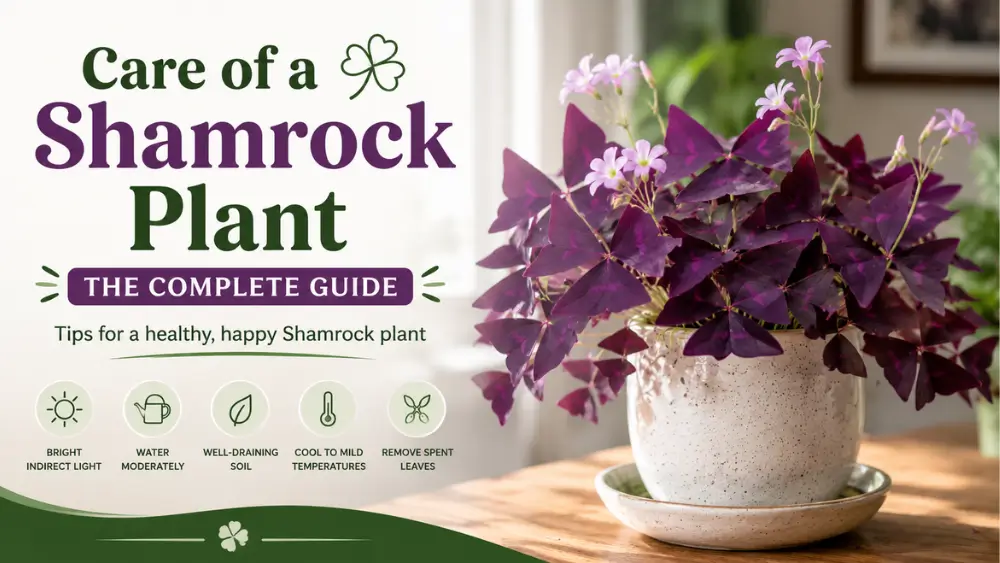
Note: this guide also covers “shamrock house plant care” and “shamrock plant care indoors” searches, since they all refer to the same plant.
Shamrock plant (Oxalis triangularis) grows best in bright, indirect light with a little gentle morning sun, in well-draining soil kept lightly moist during active growth. It prefers cooler indoor temperatures of 60-75°F (15-24°C), goes through natural dormant periods where it looks like it’s dying back, and regrows on its own afterward. Its clover-shaped leaves fold closed at night and reopen in daylight, which is completely normal behavior, not a sign of distress.
Table of Contents
Quick Care Facts
| Care Factor | Requirement |
|---|---|
| Scientific name | Oxalis triangularis (also O. regnellii, O. tetraphylla) |
| Common names | Shamrock Plant, False Shamrock, Purple Shamrock, Lucky Clover |
| Light | Bright, indirect light; some gentle morning sun |
| Water | When top inch of soil is dry; less during dormancy |
| Soil | Well-draining potting mix |
| Temperature | 60-75°F (15-24°C); prefers cooler conditions than many houseplants |
| Humidity | Average household humidity is fine |
| Fertilizer | Balanced liquid feed monthly during active growth only |
| Toxicity | Toxic to cats, dogs, and horses if ingested; mildly toxic to humans in large amounts |
| Growth habit | Clumping, low-growing, clover-like foliage; cyclical dormancy |
| Difficulty | Beginner-friendly, but dormancy confuses new growers |
About the Shamrock Plant
The plant widely sold as “Shamrock Plant” or “Shamrock House Plant” is actually a member of the Oxalis genus, most commonly Oxalis triangularis, and isn’t a true shamrock at all. True shamrocks are typically classified as Trifolium species (clover), while Oxalis simply has similar three-lobed, clover-shaped leaves, which is why it became a popular potted plant around St. Patrick’s Day.
Oxalis triangularis is prized for its deep purple, almost black-maroon triangular leaflets and delicate pale pink to white flowers that rise above the foliage on thin stems. It’s native to Brazil and other parts of South America, where it grows from small underground corms, similar in some ways to a bulb.
One of its most distinctive traits is nyctinasty: the leaves fold up and close at night or in low light, then reopen when exposed to bright light again. New owners often mistake this for the plant wilting or dying, when it’s actually just responding normally to light levels and time of day.
Because of its clover-like appearance and the way its leaves fold shut at night only to reopen each morning, shamrock plant has long been a popular gift around St. Patrick’s Day and Easter, often sold in small pots alongside seasonal decor. Unlike many holiday plants that are treated as disposable after the season ends, shamrock plant is a genuinely long-lived houseplant when given the right care, and many growers keep the same corms going for years, dividing and repotting them as the clumps expand.
Shamrock Plant Varieties
While Oxalis triangularis (deep purple leaves) is by far the most common variety sold as “shamrock plant,” you may also come across a few close relatives:
Oxalis regnellii looks similar to O. triangularis but with green rather than purple foliage, sometimes with a darker central marking.
Oxalis tetraphylla ‘Iron Cross’, often sold as “Lucky Clover,” has bright green leaves with a distinctive dark red-purple cross pattern in the center of each leaflet.
Care for all of these varieties is essentially identical to the guidance below; the main difference is simply leaf color and pattern.
Light Requirements
Shamrock plant needs bright, indirect light to keep its color vivid and to encourage regular flowering.
A spot near an east- or west-facing window works well. A little direct morning sun is beneficial and often improves both leaf color and bloom frequency, but avoid harsh, prolonged afternoon sun, which can scorch the delicate leaves. In low light, the plant tends to grow leggy, with long thin stems and fewer flowers, and its leaves may stay closed for longer stretches during the day.
Watering
Water when the top inch of soil feels dry, keeping the soil lightly moist during active growth and noticeably drier during dormancy.
Shamrock plant doesn’t like to sit in soggy soil, so always use a pot with drainage holes and let excess water drain away completely. During its active growing months, water on a fairly consistent schedule; once the plant enters dormancy (see below), cut watering back significantly, since overwatering a dormant plant is one of the most common ways to rot the corms.
Soil and Potting
A standard well-draining potting mix works well, ideally one with a bit of perlite or sand mixed in to prevent water from pooling around the corms. Shamrock plants actually prefer being slightly pot-bound and don’t need frequent repotting; every 2-3 years, or when you want to divide and multiply the plant, is usually enough.
Temperature and Humidity
Shamrock plant prefers slightly cooler conditions than many popular houseplants, ideally 60-75°F (15-24°C). It tolerates average household humidity without any special adjustments. Interestingly, heat stress, more than cold, is a common trigger for the plant going dormant during hot summer months, especially if it’s in a warm room with intense light.
Fertilizing
Feed with a balanced, water-soluble liquid houseplant fertilizer once a month during active growth periods only. Stop fertilizing completely once the plant enters dormancy, since it isn’t actively using nutrients while it rests.
Understanding Shamrock Plant Dormancy
This is the single most confusing part of shamrock plant care for new growers, and the reason so many people think they’ve killed their plant when they haven’t.
Shamrock plant grows from small corms and follows a natural cycle of active growth followed by a rest period, similar to a bulb plant like a tulip or daffodil. During dormancy, the leaves yellow, wither, and die back, sometimes leaving what looks like an empty pot of soil. This can happen after a bloom cycle, in response to heat stress, or simply as part of its natural rhythm, and can occur once or even twice a year.
What to do during dormancy:
- Once the foliage has fully died back, reduce watering significantly, watering only enough to keep the corms from completely drying out (roughly once every 2-3 weeks).
- Move the pot to a cooler spot out of direct light if possible.
- Resist the urge to fertilize or repot during this period.
- After several weeks to a couple of months, new growth will typically emerge on its own. Resume normal watering and light once you see fresh shoots.
Rather than discarding a plant that appears to have died, it’s worth giving it this rest period. Most shamrock plants that seem to be dying back are simply following their natural cycle and will regrow.
Propagation and Dividing
Shamrock plant is easiest to propagate by dividing its corms, ideally done when repotting or right after a dormancy period ends:
- Carefully remove the plant from its pot and gently shake or rinse excess soil from the root ball.
- Locate the small, scaly corms clustered at the base of the plant.
- Gently separate a handful of corms from the main clump, keeping a few together in small groups for a fuller-looking new plant.
- Plant the divided corms about an inch deep in fresh, well-draining potting mix.
- Water lightly and keep in bright, indirect light; new shoots typically appear within a few weeks.
This is also a convenient way to rejuvenate an older, overcrowded plant that has stopped flowering as much as it used to.
Is Shamrock Plant Toxic to Pets or Humans?
Shamrock plant contains oxalic acid and is considered toxic to cats, dogs, and horses if ingested, and can be mildly toxic to humans in large quantities.
Ingesting the leaves can cause drooling, vomiting, loss of appetite, or lethargy in pets, and in large amounts can affect the kidneys, particularly in animals with existing kidney issues. For people, eating small amounts is unlikely to cause serious harm, but the plant is not intended to be eaten, and anyone prone to kidney stones or kidney disease should be especially cautious, since oxalic acid can contribute to stone formation. Keep the plant out of reach of pets and small children who might be tempted to chew on the leaves.
Common Problems and How to Fix Them
Plant looks like it’s dying back completely This is very likely natural dormancy rather than a problem. Reduce watering, move it somewhere cool, and wait for new growth to emerge, usually within a few weeks to a couple of months.
Yellowing leaves while still actively growing Usually a sign of overwatering. Let the soil dry out more between waterings and check that the pot drains properly.
Leggy growth with few flowers Typically caused by insufficient light. Move the plant to a brighter spot with some gentle morning sun.
Leaves staying folded shut during the day This can be a normal low-light response, since the leaves close in dim conditions just as they do at night. If it persists all day even in a bright room, check that the plant isn’t stressed from temperature extremes or recent transplant shock.
Root or corm rot Almost always caused by overwatering, especially during dormancy. Cut back on watering, ensure good drainage, and consider dividing and repotting healthy corms into fresh soil if rot has set in.
Pests Aphids and spider mites occasionally appear, particularly on stressed plants. Treat with insecticidal soap and improve overall growing conditions to prevent recurrence.
Seasonal Care Summary
| Season | Watering | Fertilizing | Notes |
|---|---|---|---|
| Spring | Every 5-7 days | Monthly | Active growth and flowering typically resume |
| Summer | Every 5-7 days | Monthly | Watch for heat-triggered dormancy in hot rooms |
| Fall | Reduce gradually | Stop as growth slows | May enter dormancy after summer heat stress |
| Winter | Every 2-3 weeks if dormant | None | Resume normal care once new shoots appear |
Frequently Asked Questions
How do you care for a shamrock plant?
Give it bright, indirect light, water when the top inch of soil is dry, use well-draining soil, and allow it to go through natural dormant periods without alarm, resuming normal watering once new growth appears.
Why does my shamrock plant look like it’s dying?
It’s most likely entering natural dormancy, a normal rest period where the leaves die back before regrowing. Reduce watering and wait; new shoots typically appear within a few weeks to a couple of months.
Why do shamrock plant leaves close up?
The leaves fold shut at night and in low light as a natural behavior called nyctinasty, then reopen in bright daylight. This is normal and not a sign of a problem.
Is shamrock plant the same as a real shamrock or clover?
No. True shamrocks are typically Trifolium (clover) species, while the “shamrock plant” commonly sold as a houseplant is actually an Oxalis species with similarly shaped leaves.
How often should you water a shamrock plant?
Water when the top inch of soil is dry, generally every 5-7 days during active growth, tapering off to every 2-3 weeks or less during dormancy.
Can you grow shamrock plant indoors year-round?
Yes, shamrock plant is well suited to being grown indoors year-round, including through its natural dormancy cycles, as long as it gets bright indirect light and appropriate seasonal watering.
Is shamrock plant safe for cats and dogs?
No, it’s considered toxic to cats, dogs, and horses if ingested due to its oxalic acid content, and should be kept out of reach of pets.
How do you make a shamrock plant bloom?
Bright, indirect light with a little direct morning sun is the biggest factor in encouraging blooms, along with regular but not excessive watering during the active growing season.