
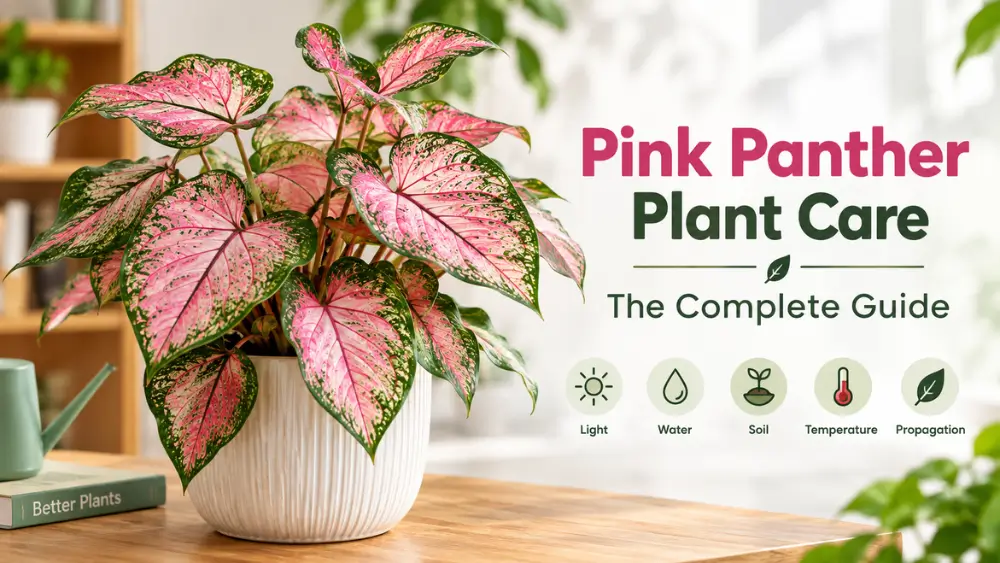
Pink Panther (Callisia repens ‘Pink Panther’) needs bright, indirect light for at least 4-6 hours daily, well-draining soil allowed to dry between waterings, and warm temperatures of roughly 60-80°F (15-27°C). It’s a fast-growing, semi-succulent trailing plant named for its vivid pink, purple, and green striped leaves, which resemble the cartoon character’s coloring. Light is the single biggest factor in keeping that pink coloring vivid: in dim conditions, the plant loses its variegation and reverts toward plain green.
Table of Contents
Quick Care Facts
| Care Factor | Requirement |
|---|---|
| Scientific name | Callisia repens ‘Pink Panther’ (formerly classified as Tradescantia) |
| Common names | Pink Panther, Pink Lady, Turtle Vine, Creeping Inch Plant, Callisia Tricolor |
| Light | Bright, indirect light, 4-6 hours daily; avoid harsh midday sun |
| Water | When top inch or two of soil is dry; semi-succulent, drought tolerant |
| Soil | Light, well-draining mix with perlite or vermiculite |
| Temperature | 60-80°F (15-27°C); avoid hot and cold drafts |
| Humidity | Appreciates higher humidity; avoid wetting the leaves directly |
| Fertilizer | Light monthly feeding during the growing season |
| Toxicity | Considered toxic to pets and humans; keep out of reach |
| Growth habit | Fast-growing, low, spreading, trailing vine |
| Difficulty | Easy and low-maintenance; forgiving of irregular watering |
About the Pink Panther Plant
Pink Panther is a cultivar of Callisia repens, a low, creeping, semi-succulent trailing plant native to tropical regions stretching from Texas through Central America, the Caribbean, and much of South America. Its small, closely spaced leaves are striped in vivid pink, purple, cream, and green, with deep pink or purple undersides, a color combination distinctive enough that the plant was named after the cartoon character it resembles.
It’s worth knowing that this plant was previously classified under the genus Tradescantia, which is why you’ll still see it sold under names like “Tradescantia Pink Panther” or “Tradescantia callisia” at some retailers. It has since been reclassified under Callisia, though the two genera are closely related, and its care is genuinely similar to that of Wandering Jew (Tradescantia zebrina), a familiar relative covered in our Wandering Jew care guide.
Pink Panther is a relatively recent addition to the mainstream houseplant world, which means less is documented about its very long-term behavior than for older, more established houseplants. What’s well established is that it’s fast-growing, low-maintenance, and forgiving, making it a popular choice for hanging baskets and shelf edges where its trailing stems can spill over.
Where to Display Pink Panther
Because its stems trail rather than climb, Pink Panther is best displayed somewhere its growth can cascade freely: a hanging basket, a high shelf, the top of a bookcase, or a plant stand where the stems can spill over the edge. This placement also has a practical advantage given the plant’s toxicity, keeping the foliage naturally out of reach of pets and small children without any extra effort. A bright bathroom is another popular spot, since the ambient humidity suits the plant well, provided the room gets enough natural light to keep the pink coloring vivid.
Why Pink Panther Is a Semi-Succulent (And Why That Matters)
Despite looking like a typical leafy houseplant, Pink Panther is technically a semi-succulent, storing water in its fleshy stems and leaves, which makes it considerably more tolerant of irregular watering than its appearance suggests.
This matters practically, because it means the plant is genuinely well-suited to busy or forgetful plant owners. In its native tropical habitat, Callisia repens endures a distinct dry season, and that adaptation carries over to indoor cultivation: it would much rather be left slightly too dry than kept consistently wet. If you’ve struggled with keeping moisture-loving plants like Calathea happy, Pink Panther sits at the opposite end of the spectrum and is far more forgiving of a missed watering.
Light Requirements
Pink Panther needs bright, indirect light for at least 4-6 hours a day to maintain its signature pink and purple striping; in insufficient light, the variegation fades and the plant reverts toward plain green.
A spot a few feet back from a bright window works well, and a small amount of gentle morning or late-afternoon sun can help deepen the coloring further. Avoid harsh midday sun, which can scorch the delicate leaves. If your Pink Panther is looking increasingly green and leggy, insufficient light is almost certainly the cause, and moving it somewhere brighter typically restores better coloring in new growth.
Watering
Water when the top inch or two of soil has dried out, soaking the soil thoroughly each time and then letting it drain completely rather than watering lightly and frequently. Thanks to its semi-succulent nature, Pink Panther tolerates going a bit dry between waterings and genuinely dislikes sitting in soggy soil, which is the quickest route to root rot with this plant. Most growers find watering roughly every 7-10 days works well during the growing season, tapering off noticeably in fall and winter when growth slows.
One care detail specific to this plant: avoid getting the leaves wet when watering. Water sitting on Pink Panther’s foliage can cause spotting and discoloration, so watering at the soil level rather than from overhead, and skipping the misting routine common with many tropical houseplants, is the better approach here.
Soil and Potting
A light, well-draining potting mix works best, ideally one containing perlite, vermiculite, or both to prevent water from sitting around the roots. Because Pink Panther is a fast grower, it typically needs repotting every year or two to give it room, more often than many slower-growing houseplants. Handle the roots gently during repotting to minimize transplant shock.
Temperature and Humidity
Pink Panther does best in warm conditions, roughly 60-80°F (15-27°C), and tolerates nighttime temperatures down to around 50F (10C) without issue. It’s sensitive to both hot and cold drafts, so keep it away from heating vents, air conditioners, and drafty doors.
It appreciates higher humidity and often does particularly well in a bright bathroom, where ambient moisture from showers provides a natural boost. That said, given its sensitivity to water sitting on the leaves, raising ambient humidity with a humidifier or by placement is a better approach than misting the foliage directly.
Fertilizing
Feed lightly, roughly once a month during the active growing season in spring and summer, using a balanced liquid fertilizer. Pink Panther isn’t a heavy feeder, and some growers do fine with just a single application in spring. Skip fertilizing during fall and winter, when the plant’s growth naturally slows.
Pruning for Fuller Growth
Regular pinching is genuinely important with this plant rather than optional, since its stems naturally trail and will become long and sparse without it.
Pinch or snip the stems between two leaves to encourage branching, which keeps the plant compact, bushy, and full rather than stringy. Because Pink Panther grows quickly, this is a task worth doing regularly throughout the growing season rather than once a year, and every cutting you remove can immediately be used to propagate a new plant.
How to Propagate Pink Panther
Pink Panther roots very easily from stem cuttings, making it one of the simpler houseplants to multiply:
- Snip a stem section a few inches long, just below a leaf node.
- Remove the lowest leaves so a bare node is exposed.
- Place the cutting in water, or directly into moist, well-draining soil.
- Keep it warm and in bright, indirect light while it roots, typically within a couple of weeks.
- Pot several rooted cuttings together for a fuller-looking plant right away.
Many growers simply tuck fresh cuttings back into the parent plant’s own pot to keep it looking dense and full over time.
Is Pink Panther Toxic to Pets?
Pink Panther is considered toxic to pets and humans if ingested, so it should be kept out of reach of curious pets and children.
This is worth noting specifically because it differs from some other trailing plants often grown in similar settings. Hanging baskets and high shelves are both practical placements that suit this plant’s trailing habit while also keeping it away from pets that chew on foliage.
Common Problems and How to Fix Them
Fading pink color, reverting to green Almost always caused by insufficient light. Move the plant to a brighter spot with more indirect light to restore coloring in new growth.
Leggy, stringy growth Caused by a combination of low light and a lack of regular pinching. Increase light and pinch back stems regularly to encourage bushier growth.
Leaf spotting or discoloration Often caused by water sitting on the leaves. Water at the soil level rather than overhead, and avoid misting this particular plant.
Root rot or mushy stems A sign of overwatering or poor drainage. Let the soil dry out more between waterings and make sure the pot drains well.
Leaf drop or stalled growth in a dark spot The plant may enter a kind of survival mode in very low light, dropping leaves to conserve energy. Moving it somewhere brighter usually resolves this.
Seasonal Care Summary
| Season | Watering | Fertilizing | Notes |
|---|---|---|---|
| Spring | Every 7-10 days | Monthly | Good time to repot, prune, and propagate |
| Summer | Every 7-10 days | Monthly | Peak growth; pinch regularly to stay bushy |
| Fall | Reduce gradually | Taper off | Growth slows as light levels drop |
| Winter | Sparingly | None | Maximize light to preserve pink coloring |
Frequently Asked Questions
How do you care for a Pink Panther plant?
Give it bright, indirect light for at least 4-6 hours daily, water when the top inch or two of soil is dry, use well-draining soil, and pinch the stems regularly to keep it bushy rather than leggy.
Why is my Pink Panther plant losing its pink color?
Insufficient light is nearly always the cause. Moving the plant to a brighter spot with more indirect light typically restores better coloring in new growth.
Is Pink Panther the same as Tradescantia?
It was previously classified under Tradescantia and is still sometimes sold under that name, but it has since been reclassified as Callisia repens. The two genera are closely related and share very similar care needs.
Is Pink Panther plant toxic to pets?
Yes, it’s considered toxic to pets and humans if ingested, so it’s best kept in a hanging basket or on a high shelf out of reach.
How often should you water a Pink Panther plant?
Roughly every 7-10 days during the growing season, once the top inch or two of soil has dried, and less often in fall and winter.
Should you mist a Pink Panther plant?
No. Water sitting on the leaves can cause spotting and discoloration, so it’s better to raise ambient humidity with a humidifier or placement than to mist the foliage directly.
Is Pink Panther a succulent?
It’s considered a semi-succulent, storing water in its fleshy stems and leaves, which is why it tolerates irregular watering better than its leafy appearance suggests.
How fast does Pink Panther grow?
It’s a fast grower, often needing repotting every year or two and regular pinching throughout the growing season to stay compact rather than becoming long and stringy.
Does Pink Panther flower?
Yes, it can produce small white or pale pink flowers, though it’s grown almost entirely for its striking striped foliage rather than for its relatively inconspicuous blooms.