
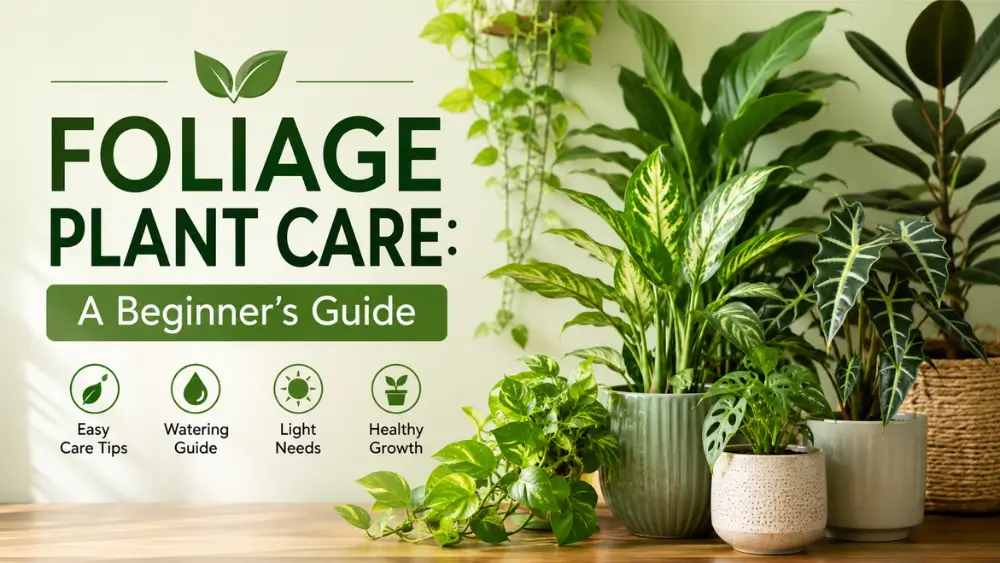
Foliage plants, houseplants grown primarily for their leaves rather than their flowers, generally thrive with bright to medium indirect light, soil that’s allowed to dry out somewhat between waterings, and average household humidity and temperatures. Because “foliage plant” covers a huge range of species with different specific needs, the best approach is to learn a few general principles that apply broadly, then look up the specific care requirements for whichever foliage plants you’re actually growing.
Table of Contents
What Makes a Plant a “Foliage Plant”?
Foliage plants are houseplants grown mainly for the appearance of their leaves, whether that’s bold color, interesting patterns, unusual texture, or simply lush, reliable greenery, rather than for showy flowers. This includes an enormous range of plants, from classic large-leaved statement plants to compact, patterned tabletop varieties, and it’s one of the largest and most popular categories of houseplants overall.
Because the category is so broad, there’s no single watering schedule or light requirement that applies to every foliage plant equally. A snake plant and a calathea are both “foliage plants,” but one thrives on neglect in low light while the other needs consistent moisture and high humidity to avoid crispy leaf edges. That said, a handful of general principles apply to most common foliage plants and are a good starting point if you’re new to growing them, especially if you’re building a collection that spans several different species at once rather than focusing on just one.
General Foliage Plant Care Principles
Light: Most foliage houseplants do best in bright, indirect light, though the specific tolerance varies widely from one species to the next. As a general rule, plants with solid green leaves tend to tolerate lower light better than variegated or brightly patterned varieties, which typically need more light to maintain their coloring over time.
Watering: The single most common way to harm a foliage plant is overwatering rather than underwatering. Unless a specific plant’s care guide says otherwise, it’s generally safer to let the top inch or two of soil dry out before watering again, and to always use a pot with drainage holes.
Soil: A well-draining potting mix is important for the great majority of foliage plants, since soggy, waterlogged soil is the leading cause of root rot across almost every species.
Humidity: Many foliage plants, especially those native to tropical rainforests, appreciate humidity above typical indoor levels. If you notice recurring crispy or curling leaf edges across several plants, increasing humidity with a humidifier is often a more effective fix than watering more.
Fertilizing: Most foliage plants benefit from a light, balanced liquid fertilizer roughly once a month during spring and summer, with little to no fertilizing needed during fall and winter when growth naturally slows.
Repotting: Most foliage plants don’t need repotting more than once every year or two, and many slow growers can go even longer. A good general signal is roots becoming visibly crowded or growing out of the drainage holes; repotting more often than necessary can actually stress a plant rather than help it.
Cleaning leaves: Dust buildup on broad-leaved foliage plants can reduce how efficiently they photosynthesize over time. Wiping leaves down periodically with a damp cloth isn’t just cosmetic; it genuinely supports healthier growth over the long run, particularly for plants with large, flat leaves that collect dust easily and hold onto it for weeks at a time if never cleaned.
Easy Foliage Plants for Beginners
If you’re just starting to build a foliage plant collection, these are among the more forgiving options to start with, each linking to a full, detailed care guide:
Corn Plant tolerates a wide range of light and irregular watering, making it one of the most low-maintenance large foliage plants available. See the full Corn Plant care guide.
Song of India is a slow, compact grower with striking yellow-and-green variegation and minimal care demands beyond basic light and watering. See the full Song of India care guide.
Dracaena Lemon Lime offers some of the boldest leaf coloring of any easy houseplant, tolerating a range of light levels while staying relatively low-maintenance. See the full Dracaena Lemon Lime care guide.
Dragon Tree is a slow-growing, architectural foliage plant that can go weeks between waterings and holds its shape for years with minimal pruning. See the full Dragon Tree care guide.
China Doll has lush, fern-like foliage and is genuinely easy once it’s settled into a stable spot, though it’s worth reading up on its tendency to drop leaves after being moved. See the full China Doll care guide.
Shamrock Plant brings clover-like, purple or green foliage and asks for very little beyond bright light and consistent watering, though its natural dormancy cycle can confuse new owners who mistake it for a dying plant. See the full Shamrock Plant care guide.
Wandering Jew is a fast, forgiving trailing plant that roots easily from cuttings, making it an especially good choice if you want to practice propagation alongside general foliage care. See the full Wandering Jew care guide.
Foliage Plants That Need a Bit More Attention
A few popular foliage plants have more specific requirements and reward a little extra research before you bring one home:
Calathea is prized for some of the most dramatic patterned foliage available, but it’s genuinely particular about humidity and water quality. See the full Calathea care guide before committing to one if you don’t already have a way to boost humidity at home.
Butterfly Plant has unusual, wing-shaped patterned leaves and needs consistent humidity, drainage, and light working together. See the full Butterfly Plant care guide.
Vicks Plant is easy in terms of watering, since it behaves more like a succulent, but it has an unusual care quirk: unlike most foliage plants, it shouldn’t be misted. See the full Vicks Plant care guide.
Goldfish Plant technically flowers, but it’s grown as much for its glossy foliage and trailing habit as for its blooms, and getting it to flower reliably takes a bit more attention to humidity and its winter rest period. See the full Goldfish Plant care guide.
Common Foliage Plant Problems Across Species
While specific causes vary by plant, a few problems show up repeatedly across many different foliage houseplants:
Brown, crispy leaf tips or edges are most often linked to low humidity, tap water sensitivity (particularly common in Dracaena species), or inconsistent watering.
Yellowing leaves, especially when it affects multiple leaves at once rather than just the oldest ones, usually points to overwatering rather than a nutrient problem.
Leggy, sparse growth with long gaps between leaves is almost always a sign the plant needs more light, regardless of species.
Sudden leaf drop after a plant is moved or brought home from the store is often simply stress from the change in environment, and many foliage plants recover on their own once settled into a stable spot.
If a specific plant in your collection is showing one of these symptoms, checking that plant’s dedicated care guide will usually get you a more precise answer than general troubleshooting alone, since the exact cause and fix can vary meaningfully between species.
How to Choose Foliage Plants for Your Space
Rather than choosing a foliage plant based on looks alone, it helps to start with an honest look at your actual growing conditions. A room with only a small north-facing window calls for a different set of plants than a bright, sunny space with south- or west-facing windows. Similarly, if you know you tend to forget to water regularly, choosing more drought-tolerant options and pairing them with well-draining soil will set you up for more success than choosing a plant that demands consistent moisture.
It’s also worth considering humidity honestly. If you don’t already have a humidifier and aren’t planning to get one, it’s generally easier to build a collection around foliage plants that tolerate average household humidity than to fight an uphill battle with more demanding, humidity-sensitive species from the start.
Finally, think about how much visual maintenance you actually want to do. Some foliage plants, like Dragon Tree and Corn Plant, hold their shape for years with only occasional pruning, while others, such as Wandering Jew, grow quickly and need regular pinching to avoid becoming leggy. Neither approach is better overall, but matching a plant’s natural growth habit to how much hands-on styling you enjoy will make the whole experience more satisfying rather than feeling like a chore.
Seasonal Care Summary for Foliage Plants
| Season | General Watering | Fertilizing | Notes |
|---|---|---|---|
| Spring | Resume regular watering as growth picks up | Monthly | Good season for repotting most foliage plants |
| Summer | Most active growth period | Monthly | Watch for faster dry-out in bright, warm rooms |
| Fall | Begin tapering off | Reduce, then stop | Growth naturally slows for most species |
| Winter | Reduce frequency for most plants | None | Watch humidity with indoor heating running |
Frequently Asked Questions
What is considered a foliage plant?
A foliage plant is any houseplant grown mainly for the appearance of its leaves, whether for color, pattern, or texture, rather than primarily for its flowers.
What is the easiest foliage plant to care for?
Corn plant and Dragon Tree are among the most forgiving foliage houseplants, tolerating a range of light levels and fairly infrequent watering with minimal ongoing maintenance.
How often should you water foliage plants?
Most foliage plants prefer being allowed to dry out somewhat between waterings, typically checking the top inch or two of soil and watering once it’s dry, though specific needs vary by species.
Do foliage plants need direct sunlight?
Most prefer bright, indirect light rather than direct sun, which can scorch many foliage plants’ leaves. Some tolerate lower light, though variegated types generally need brighter conditions to hold their coloring.
Why are my foliage plant’s leaves turning brown at the tips?
This is commonly caused by low humidity, tap water sensitivity, or inconsistent watering, and is one of the most frequent complaints across many different foliage houseplant species.
Do all foliage plants need high humidity?
No. While some, like Calathea and Butterfly Plant, are genuinely humidity-sensitive, many popular foliage plants, including Corn Plant and Dragon Tree, tolerate average household humidity just fine.
How much light do foliage plants need?
Most do best with several hours of bright, indirect light daily. Solid green varieties generally tolerate lower light better than variegated or brightly patterned foliage plants, which typically need brighter conditions to hold their coloring well.
Should I fertilize foliage plants in winter?
Generally no. Most foliage plants slow their growth significantly in fall and winter and don’t need regular fertilizing during that period; resume feeding once you see new growth pick up again in spring.
Can I mix easy and demanding foliage plants in the same room?
Yes, though it helps to group plants with similar humidity needs together where possible. A humidifier running near a cluster of humidity-loving plants like Calathea benefits all of them at once, while more tolerant plants like Corn Plant or Dragon Tree can sit comfortably elsewhere in the same room without needing that extra attention.